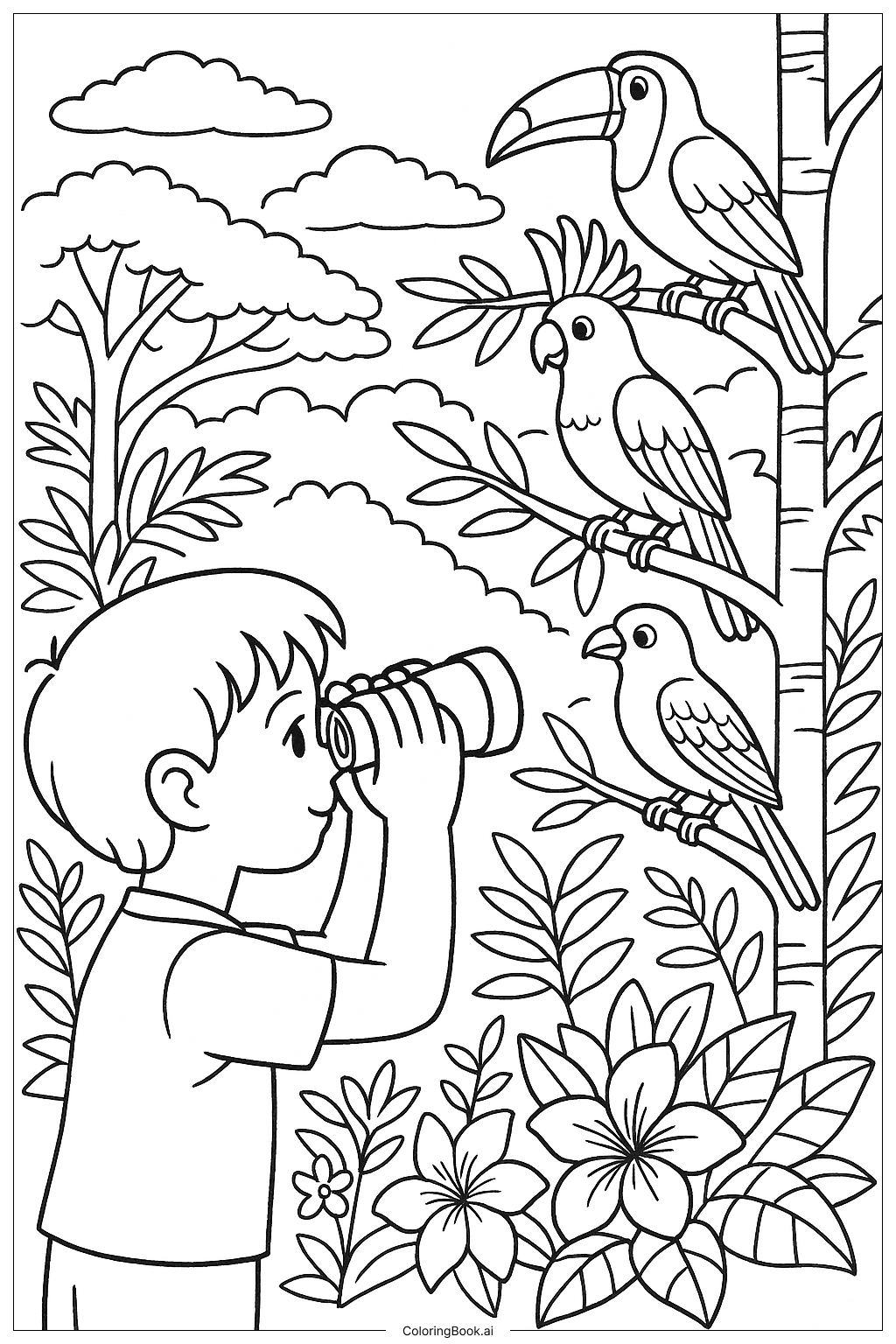
Coloring tips: How to color Spring Break Tropical Bird Watching coloring page well?
Start with the tropical birds first, since they are the stars of the scene. Use bold, bright colors like red, orange, yellow, green, and blue for their feathers. Real tropical birds like parrots and toucans are very colorful, so feel free to go wild with your choices! Use a light yellow or cream color for the beak, then add darker shades around the edges to give it depth. For the eyes, use a dark color like black or dark brown and leave a tiny white dot to make them look alive. Next, move to the background leaves and plants. Use different shades of green — light green, dark green, and even blue-green — to make the jungle feel lush and layered. Add hints of yellow to leaves that catch the sunlight. For the sky or any open background spaces, a soft blue or warm peach works beautifully for a tropical daytime feel. Finally, use warm browns or tans for any tree branches or trunks. Take your time and enjoy every section!
Coloring challenges: Which parts are difficult to color and need attention for Spring Break Tropical Bird Watching coloring page?
• Intricate Feather Details: Tropical birds are known for their elaborate plumage. Each feather contains layers of texture, fine lines, and overlapping sections. Coloring these carefully without going outside the lines requires a steady hand and a sharp pencil or fine-tipped marker. Young colorists may need to slow down and work section by section.
• Layered Tropical Foliage: The background is filled with large leaves, palm fronds, and dense jungle plants. These overlapping layers can be confusing to navigate. Deciding which leaf is in front and which is behind helps guide color choices, but keeping the colors distinct between overlapping areas takes patience and planning.
• Color Blending for Exotic Birds: Many tropical birds display gradients and multiple shades across their bodies — for example, a parrot may shift from bright red to orange to yellow along its wings. Achieving a smooth, natural-looking blend using crayons or colored pencils can be tricky and may require blending techniques that are more advanced for younger children.
• Small Accent Areas: Eyes, beaks, and tiny decorative details on the birds are very small and require precision. Using the wrong tool or applying too much pressure can accidentally color outside these tiny zones. Fine-tipped colored pencils or thin markers work best for these spots.
• Balancing the Overall Color Palette: With so many vibrant elements on the page — birds, flowers, leaves, and sky — it can be challenging to keep the overall image balanced and visually harmonious. Too many bright colors clashing together can make the scene feel overwhelming, so thoughtful color selection across the whole page is important.
Benefits of coloring books: Advantages of drawing Spring Break Tropical Bird Watching coloring page
Coloring this Spring Break Tropical Bird Watching page offers wonderful benefits for kids and families alike. It sparks curiosity about nature and encourages children to learn about tropical birds and their colorful appearances. Choosing the right shades for each bird builds decision-making skills and boosts confidence. The detailed feathers and leaves help improve fine motor skills and hand-eye coordination as kids carefully fill in each section. Focusing on a fun, vacation-themed scene also promotes mindfulness and helps reduce stress — even for young colorists. Sharing the page with friends or family during Spring Break creates a bonding experience full of creativity and laughter. It also introduces children to the beauty of wildlife in a hands-on, imaginative way. Whether completed quietly alone or as a group activity, this page turns free time into a meaningful, educational, and joyful creative adventure that everyone can enjoy.