Coloring tips: How to color Spring Break Tiny Fish coloring page well?
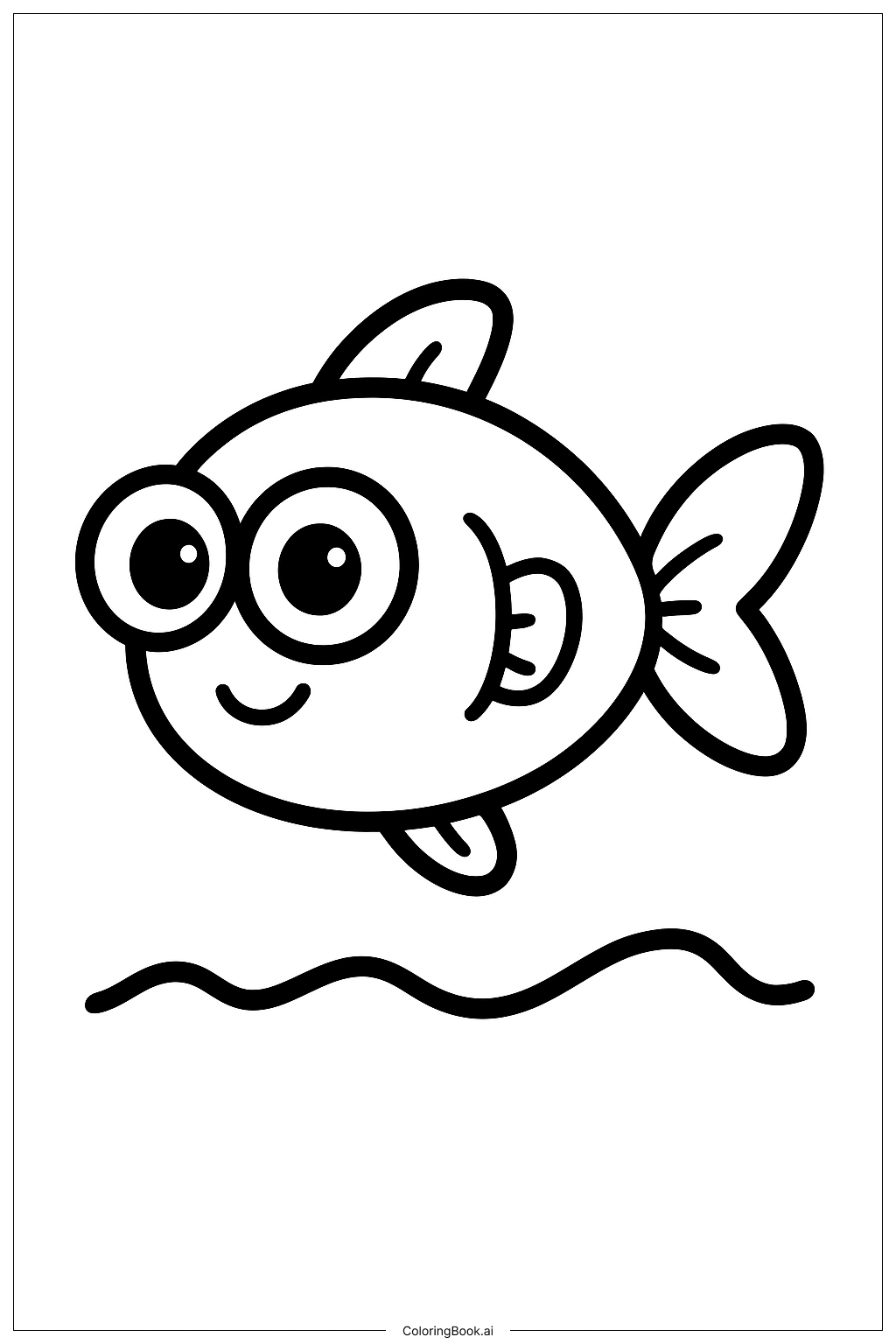
Try using bright colors like orange, yellow, or blue for the fish's body to make it cheerful and lively. You can color the fins and tail in a contrasting color such as pink, green, or purple. For the eyes, use black for the pupils and leave a little white spot to show shine. Color the water in light blue or turquoise. Feel free to add patterns or spots on the fish to make it unique and fun. Use crayons, markers, or colored pencils for smooth coloring.
Coloring challenges: Which parts are difficult to color and need attention for Spring Break Tiny Fish coloring page?
1. Staying inside the lines of the fish’s big round eyes can be tricky because of their size and shape. 2. Coloring the fins and tail neatly might be difficult because they are small and have curved edges. 3. The small gap between different fins and the fish’s body requires careful coloring to avoid mixing colors. 4. Keeping even color on both sides of the fish’s body for a balanced look can be challenging. 5. The wavy water line needs clean coloring to keep it simple and pleasant without smudging.
Benefits of coloring books: Advantages of drawing Spring Break Tiny Fish coloring page
Coloring this tiny fish helps improve hand-eye coordination because kids need to color inside small spaces. It encourages creativity by allowing children to choose bright and fun colors. The simple shapes make it great for young kids to practice control and patience. Coloring the fish also introduces children to underwater themes, sparking curiosity about ocean life. Overall, this activity is relaxing, enjoyable, and boosts fine motor skills.