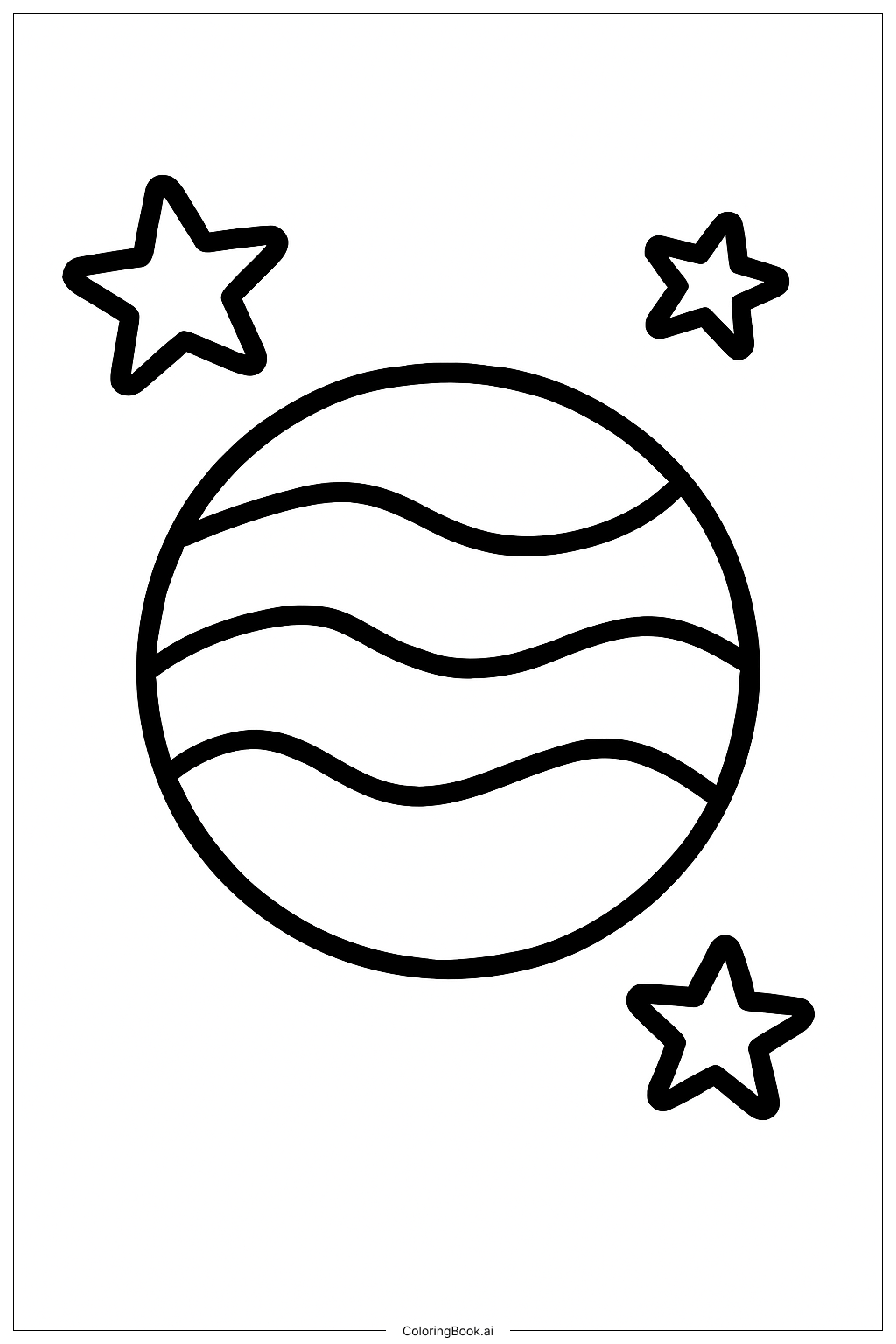
Coloring tips: How to color Solar System Planet With Stars coloring page well?
For coloring this image, use bright colors for the stars to make them stand out against the planet. You could use yellow, orange, or even glitter colors for a fun effect. For the planet, consider using shades of blue, green, or even purple to create a unique look. Mixing colors can add depth. Using lighter shades for highlights and darker shades for shadows will make your planet look more realistic. Don’t forget to outline with a darker color for definition!
Coloring challenges: Which parts are difficult to color and need attention for Solar System Planet With Stars coloring page?
1. Color Blending: Blending colors smoothly can be challenging for kids. They might struggle to create a gradient effect on the planet. 2. Staying Within Lines: Some children might find it difficult to color within the lines of the planet and stars, especially if they have smaller motor skills. 3. Choosing Colors: Deciding which colors to use for the planet and stars may cause confusion. They might not know how to mix colors effectively. 4. Shading Techniques: Understanding shading can be complex. Children may not know how to add shadows to give the planet depth. 5. Patience: Coloring can take time, and some kids may want to rush through, missing details that make the image special.
Benefits of coloring books: Advantages of drawing Solar System Planet With Stars coloring page
Coloring this page helps develop fine motor skills. It improves hand-eye coordination, especially for younger kids. Coloring also boosts creativity, allowing children to express themselves through color choices. It can be a relaxing activity, reducing stress and promoting focus. Understanding color blending and shading can enhance their art skills. Furthermore, learning about the solar system while coloring encourages educational growth. Kids can explore different planets and stars, expanding their knowledge of space.


