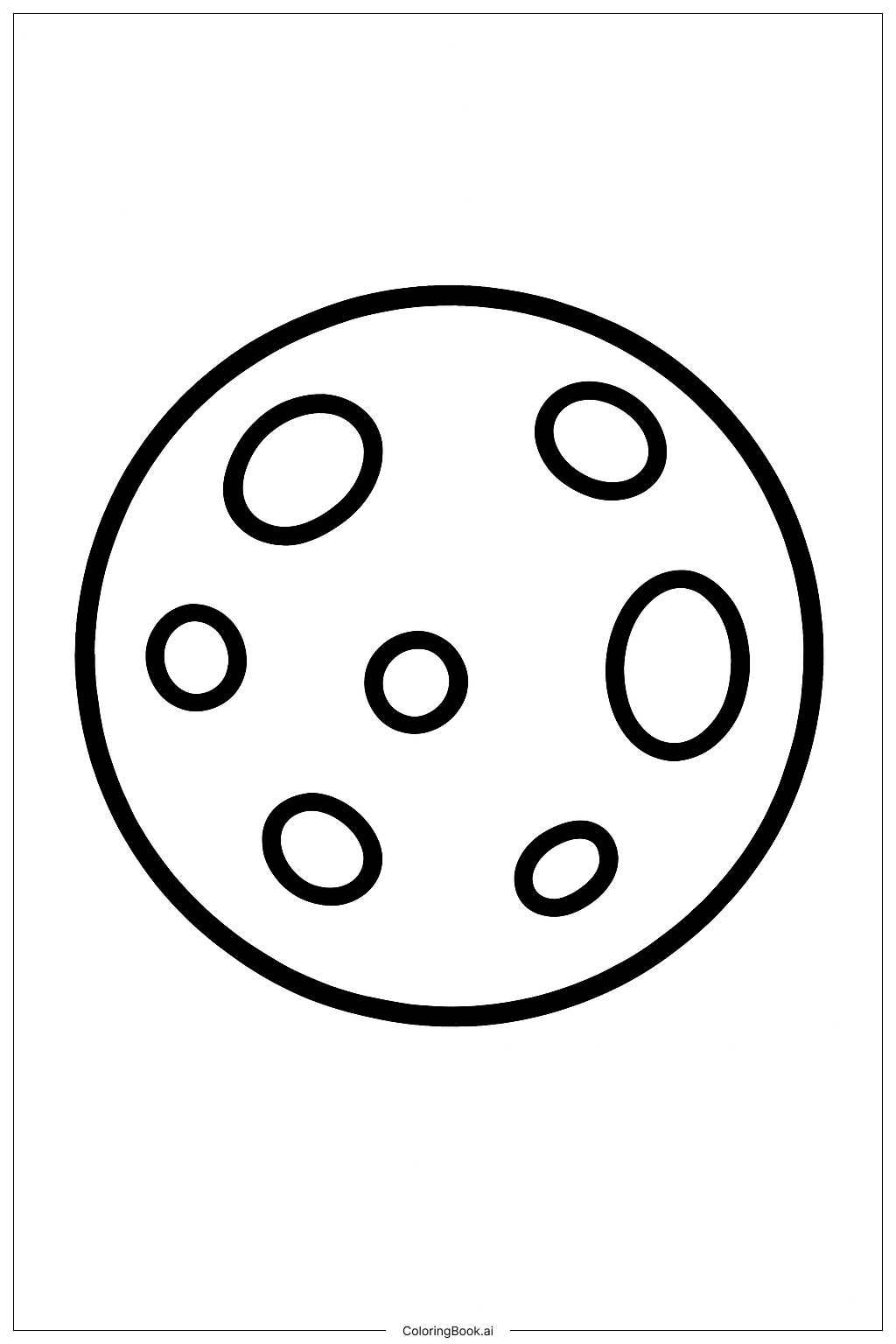
Coloring tips: How to color Solar System Moon With Craters coloring page well?
When coloring this moon, consider using shades of gray to represent its surface. You can add depth by using lighter grays in the raised areas and darker grays in the craters. You could also use some blues for a nighttime effect or even yellows and whites to simulate the moon's glow. For a fun twist, children might enjoy adding stars around the moon using bright colors like yellow or white. Encourage them to be creative!
Coloring challenges: Which parts are difficult to color and need attention for Solar System Moon With Craters coloring page?
1. **Shading Craters**: Children may find it challenging to create a sense of depth. Using a gradient from light to dark can help. They should blend colors to make the craters look realistic. 2. **Coloring Within Lines**: Some kids might struggle to stay within the lines, especially with craters that are oddly shaped. Practicing fine motor skills will help them improve. 3. **Choosing Colors**: Deciding which colors to use can be difficult. Kids need to think about how to represent the moon accurately or creatively. 4. **Balancing Colors**: Kids may want to use too many colors. They should consider using a limited palette for a harmonious look. This can help them learn about color theory and composition.
Benefits of coloring books: Advantages of drawing Solar System Moon With Craters coloring page
Coloring this moon image has many benefits for children. It enhances their creativity, as they can choose colors and patterns that express their unique style. Coloring also improves motor skills, helping kids develop better control over their hand movements. As they focus on the details, they practice concentration and patience. Learning about the moon while coloring sparks curiosity about space and science, encouraging a love for learning. Finally, it can be a relaxing activity, providing stress relief and a sense of accomplishment upon completing their artwork.


