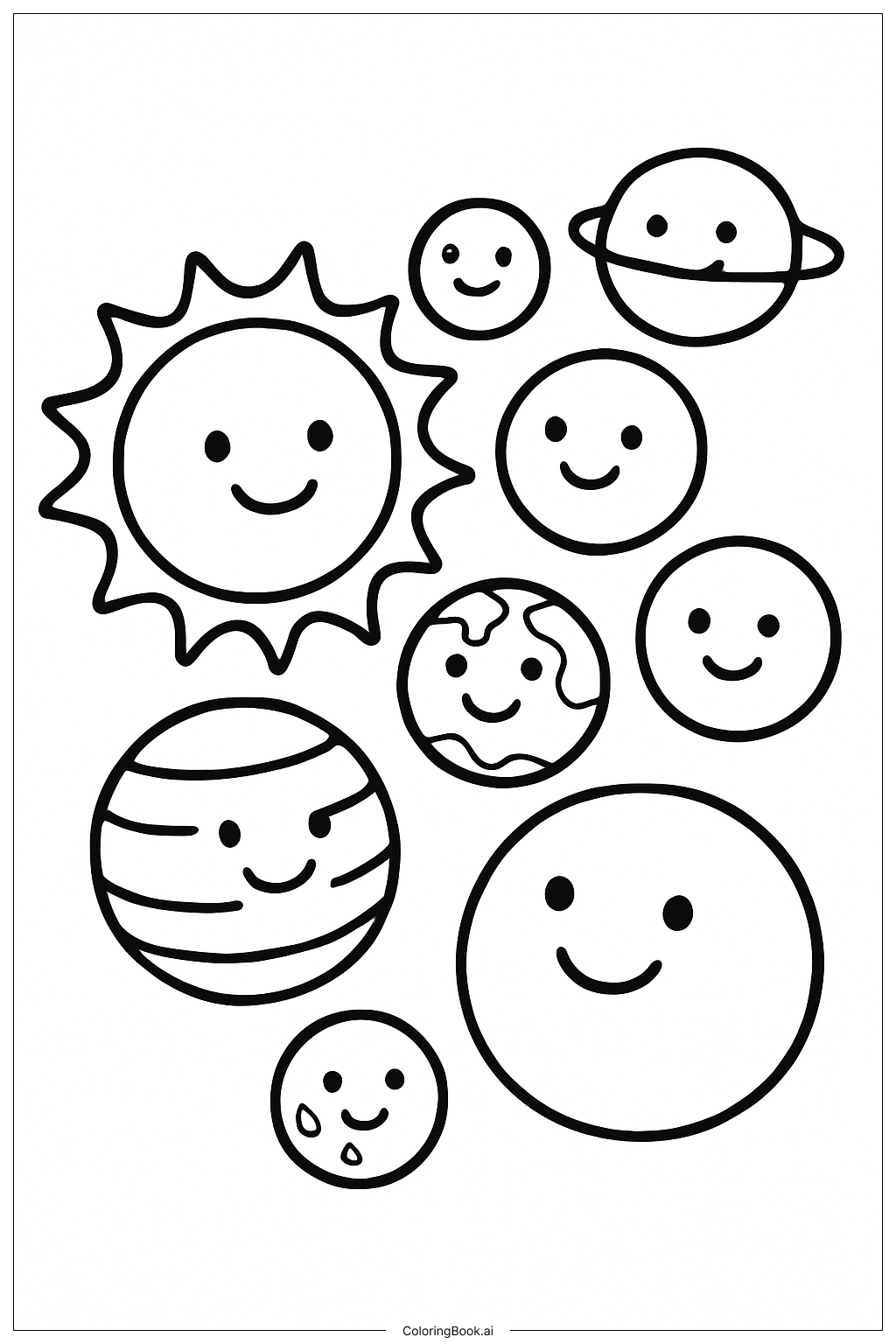
Coloring tips: How to color Solar System Happy Sun And Planets coloring page well?
For coloring the sun, bright yellows and oranges would work wonderfully to capture its warmth. The planets can be colored in various shades. For instance, blue and green for Earth, red for Mars, and light brown or tan for the moon. Kids can also use glitter or metallic colors for a fun touch. Encourage them to be imaginative with the background, perhaps adding stars, comets, or even distant galaxies. Let your creativity shine!
Coloring challenges: Which parts are difficult to color and need attention for Solar System Happy Sun And Planets coloring page?
1. **Choosing Colors**: Kids may find it hard to pick the right colors for each planet. There are many options, so deciding may take time. 2. **Staying Inside the Lines**: The shapes of the sun and planets can be tricky. Younger ones might struggle to stay within the outlines. 3. **Adding Details**: Some planets have unique features, like the rings of Saturn. Adding these details may be challenging for beginners. 4. **Creating a Background**: Kids might feel unsure about what to add in the background. Stars, clouds, or space can be overwhelming to visualize. 5. **Experimenting with Shades**: Blending colors to create depth can be difficult. Young artists might need guidance to create shadows or highlights effectively.
Benefits of coloring books: Advantages of drawing Solar System Happy Sun And Planets coloring page
Coloring this solar system page helps kids learn while having fun. It improves their motor skills and hand-eye coordination. As they choose colors, they enhance their decision-making abilities. This page also sparks interest in space and science. Kids may learn the names and features of the planets, encouraging curiosity. Plus, coloring is a great way to relax and express feelings. It can reduce stress and help them focus. Overall, this activity combines art, learning, and joy!


