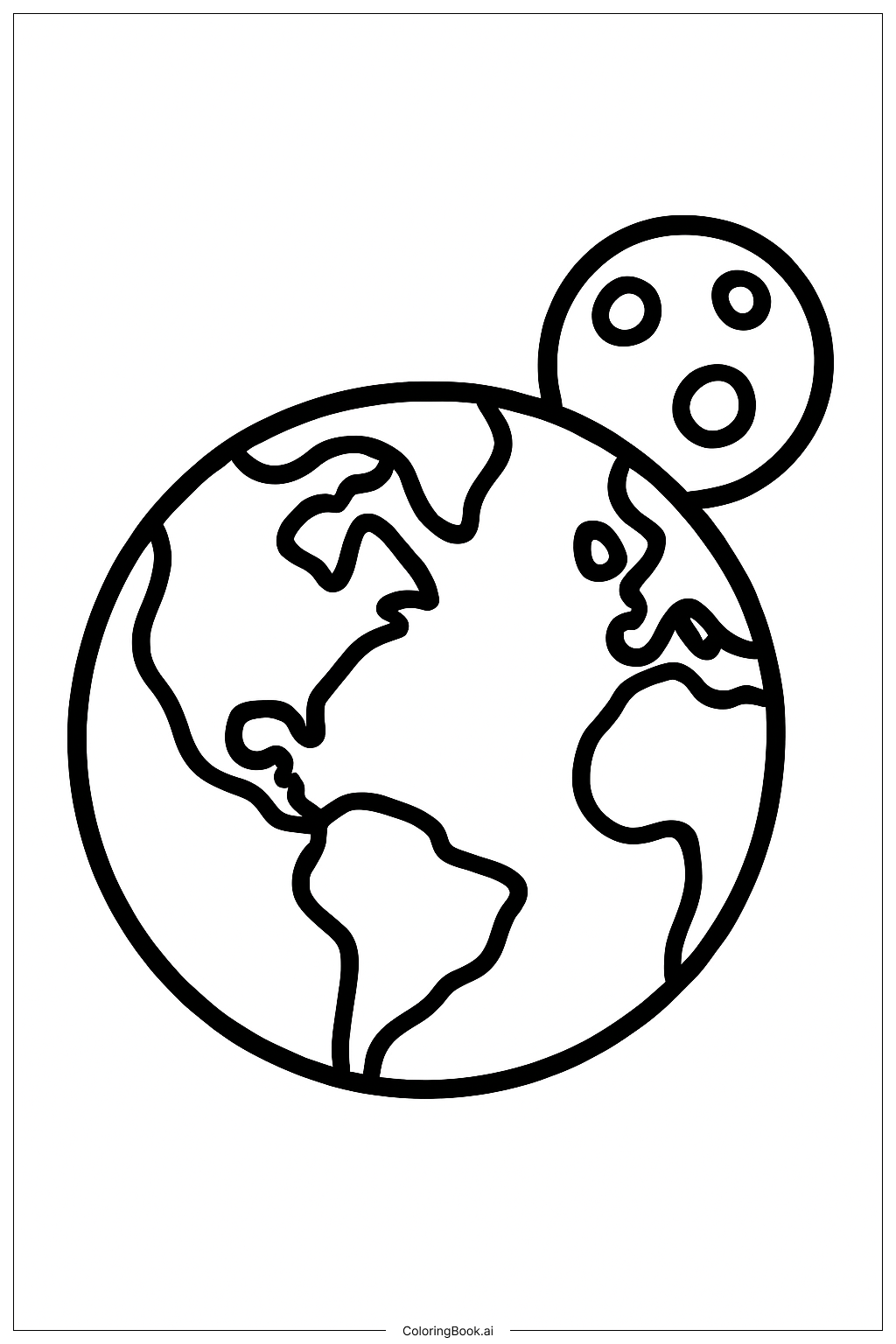
Coloring tips: How to color Solar System Earth With Moon coloring page well?
For the Earth, use vibrant blues for oceans and greens for land. You can blend different shades of green for forests and parks. The moon can be colored in grays and whites to reflect its rocky surface. Consider adding soft yellows or pastel colors for the background, giving a sense of space. Children can also use glitter to highlight the moon or create a starry night around it. This allows them to be imaginative while experimenting with different colors and textures.
Coloring challenges: Which parts are difficult to color and need attention for Solar System Earth With Moon coloring page?
1. Coloring the Earth requires attention to detail. Kids must recognize the shapes of different continents and color them accurately. This can be tricky for younger children. 2. Blending colors can be difficult. To create a natural look for the oceans and land, kids might need to learn how to mix shades, which requires practice. 3. The moon's craters demand precision. Making sure these details stand out while coloring can challenge some children. 4. Keeping colors within the lines might be hard for younger kids. Engaging in this task can help improve their concentration and fine motor skills.
Benefits of coloring books: Advantages of drawing Solar System Earth With Moon coloring page
Coloring this page helps boost creativity by allowing kids to choose colors and design. It enhances fine motor skills, as children learn to control their coloring tools better. Completing a coloring page gives a sense of achievement, boosting their confidence. Additionally, this activity promotes learning about Earth and space, sparking curiosity. Kids can express their feelings through colors, making it a fun emotional outlet. Overall, it's a great mix of education and creativity!


