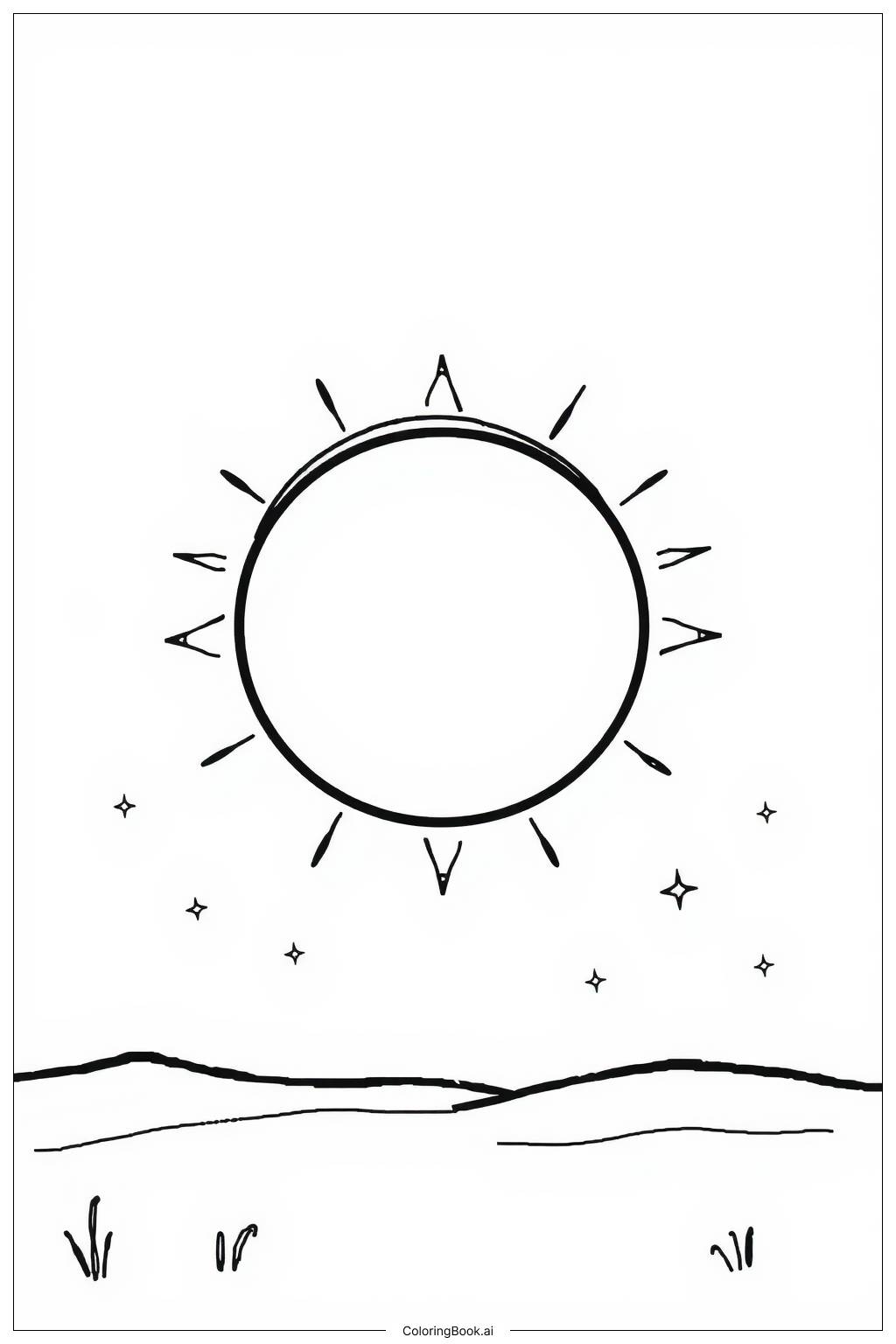
Coloring tips: How to color Solar Eclipse with Stars Appearing coloring page well?
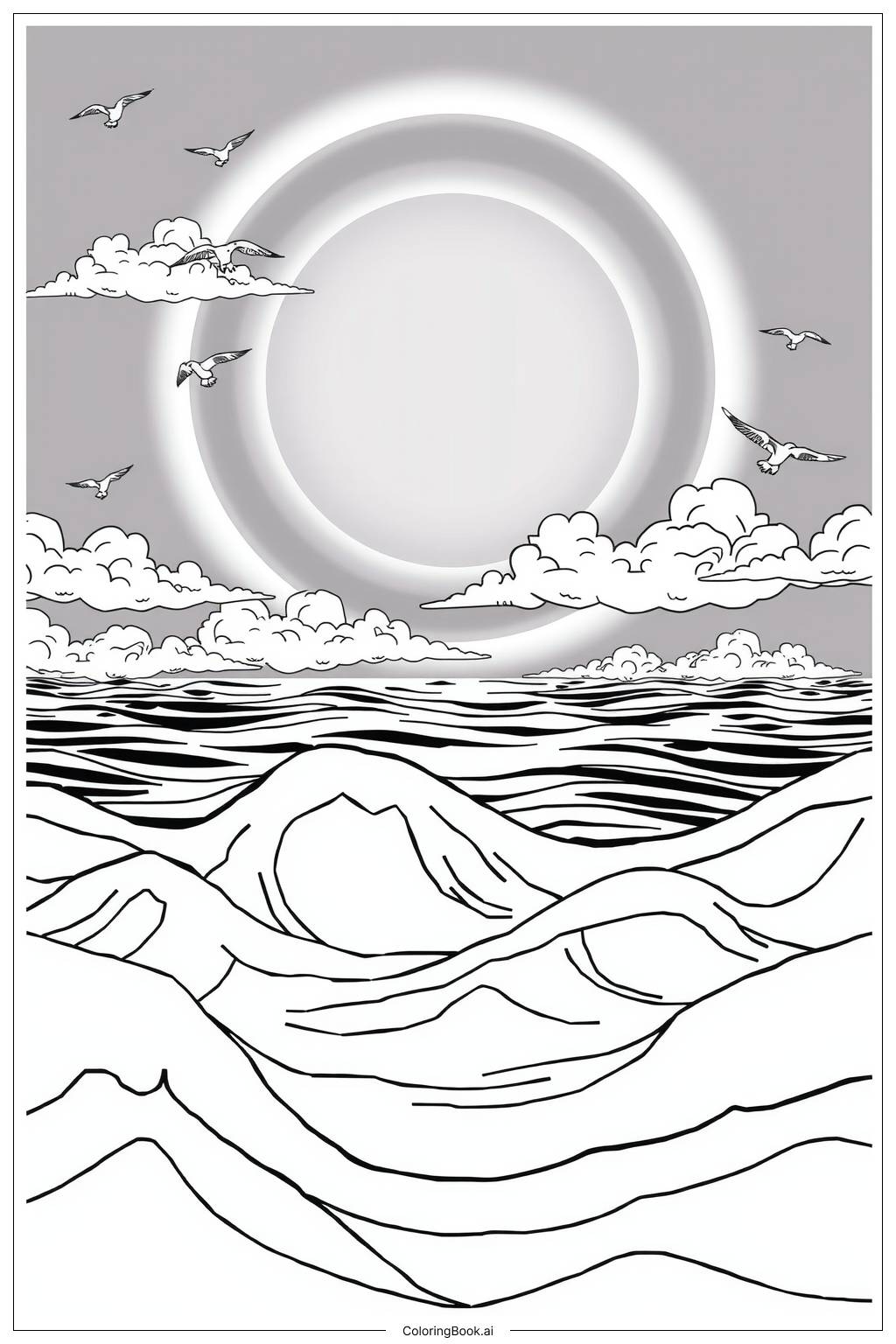
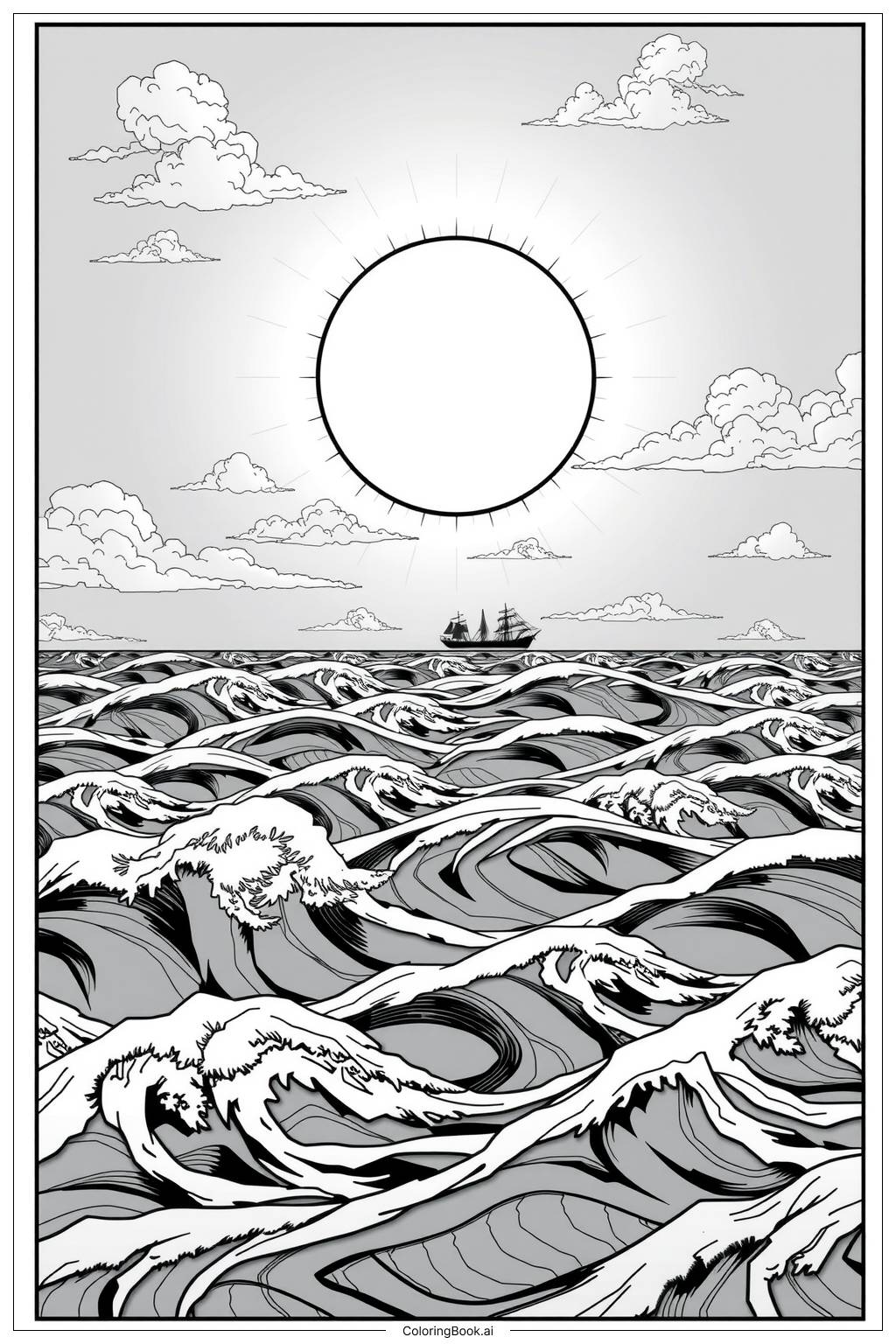
Start with the darkest part first. Fill the moon's silhouette with deep black or dark gray. For the corona, use bright yellow at the tips and blend into warm orange closer to the center. You can also try a white-to-gold gradient to make it glow. Color the sky in deep navy blue or dark purple to show the daytime sky turned dark. Add lighter blue near the horizon if you like. The stars can be white, pale yellow, or soft silver. Try pressing lightly with a white crayon over a dark background for a glowing effect. Color the clouds in soft lavender, light gray, or pale blue. Use slow, circular strokes for smooth blending. Don't rush — taking your time makes the colors look richer and more beautiful.
Coloring challenges: Which parts are difficult to color and need attention for Solar Eclipse with Stars Appearing coloring page?
• Corona Ray Blending: The sun's corona has many overlapping flame-like rays that fan outward. Blending colors smoothly from bright white or yellow at the tips to deep orange at the base is tricky. If the transition is too abrupt, the glow effect is lost. Using light pressure and layering colors gradually will give the best results.
• Dark Sky Gradient: The sky needs to look like daytime has suddenly turned to night. Creating a smooth, even gradient from deep navy or dark purple across a large open area without streaks or blotches takes patience. Colored pencils work best with circular buffing strokes, while markers should be applied quickly in one direction to avoid streaking.
• Small Star Details: The scattered stars vary in size and shape. Tiny dot stars are especially hard to color neatly without accidentally darkening the surrounding sky. Using a sharp pencil tip or a fine-tip marker gives you better control over these small details.
• Moon Silhouette Edge: The boundary between the dark moon disk and the glowing corona is a critical line. Keeping that edge crisp and clean while still blending the corona glow right up to it requires a steady hand. Going too far into the dark area ruins the sharp eclipse outline.
• Cloud Shading: The wispy clouds sit in a very dark sky, so their shading needs to feel soft and subtle. Making them too bright breaks the nighttime mood, while making them too dark makes them disappear. Light lavender or pale blue-gray works well, but the balance is delicate.
Benefits of coloring books: Advantages of drawing Solar Eclipse with Stars Appearing coloring page
Coloring this solar eclipse scene is a wonderful activity for kids and adults alike. It sparks natural curiosity about space, astronomy, and how eclipses happen, making it a fun way to learn while being creative. Filling in the large sky area helps build patience and focus, as even coverage requires slow, steady work. Blending the corona's warm colors strengthens fine motor skills and teaches kids about color mixing in a hands-on way. Choosing the right shades for a dark sky encourages creative thinking and decision-making. The calming, repetitive motion of coloring also helps reduce stress and anxiety, making it a great quiet-time activity. For younger children, it builds pencil grip strength and hand-eye coordination. For older kids and adults, the detailed corona rays and small stars offer a satisfying challenge. Completing the page gives a real sense of accomplishment. Most of all, it encourages wonder — reminding anyone who colors it just how amazing and beautiful our universe really is.