Coloring tips: How to color Solar Eclipse with Birds Flying coloring page well?
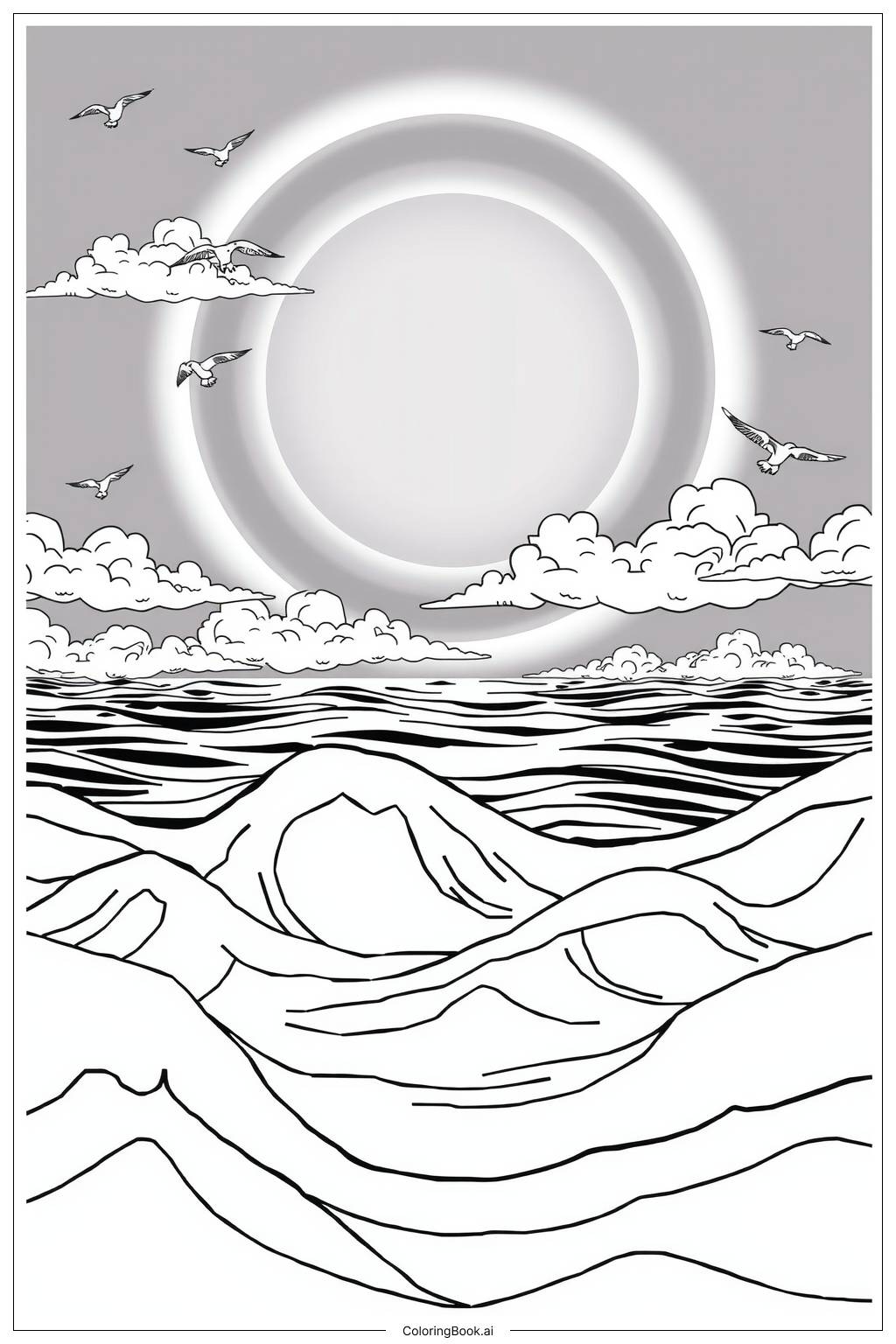
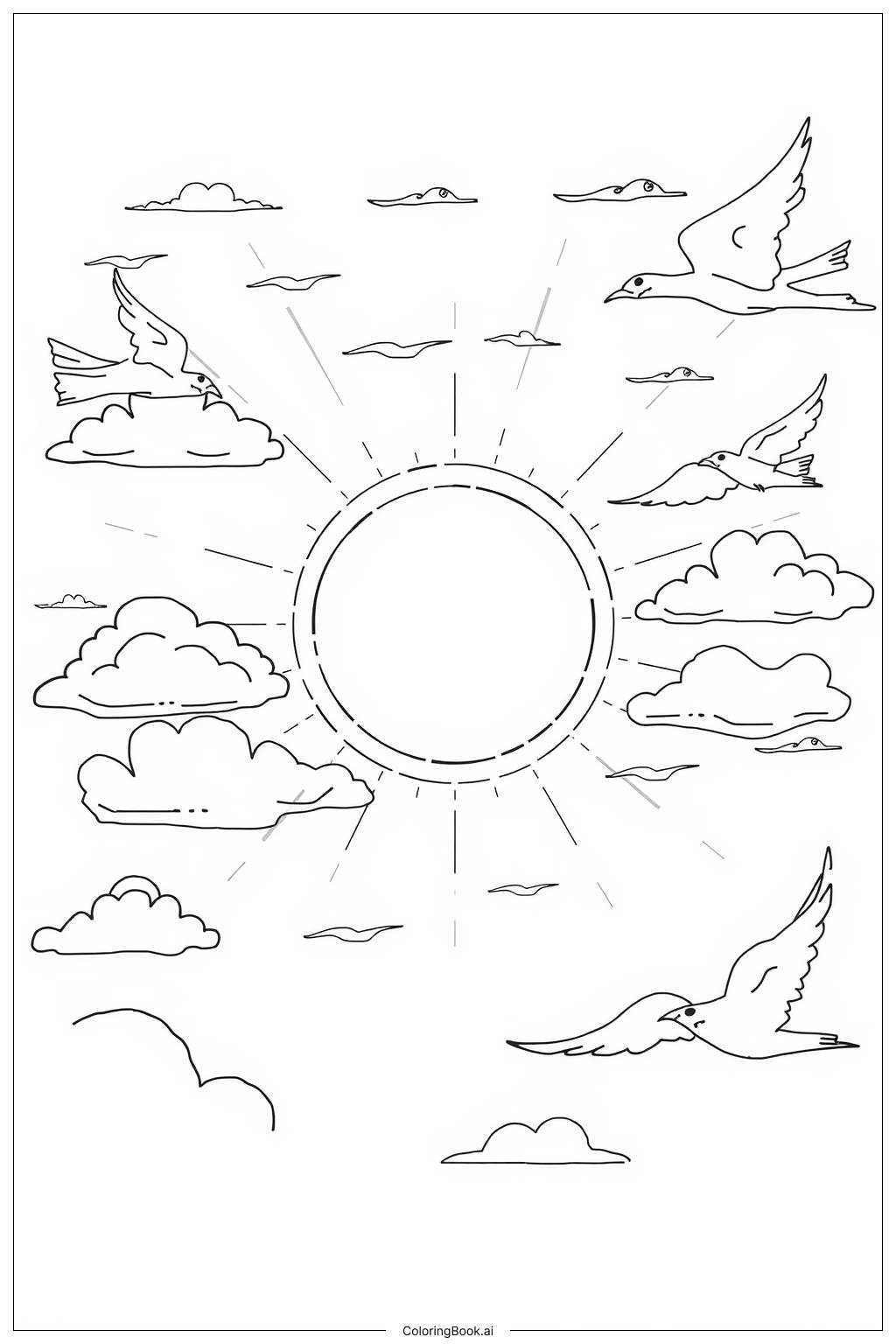
Start with the eclipse at the center. Leave the moon's face uncolored or use a dark gray to show its shadowed surface. Color the corona with warm yellows and bright oranges, blending outward into deep reds and purples to capture the glow. For the sky around the eclipse, try a deep blue or navy that fades to black near the moon, then lightens toward the edges where light still shines through. The birds can be colored in dark shades like deep brown, charcoal, or black to keep them looking like silhouettes against the glowing sky. Add soft white or pale yellow highlights along the corona rays to make them feel luminous. Use light gray or pale blue for the clouds, keeping them soft so they don't compete with the bright eclipse. Younger colorists can keep the palette simple with just a few colors, while older kids and Adults can experiment with gradients and layering to add drama and depth to the scene.
Coloring challenges: Which parts are difficult to color and need attention for Solar Eclipse with Birds Flying coloring page?
• Corona Gradients: The corona surrounding the eclipse is one of the trickiest parts to color. It requires smooth blending from bright yellow at the center to deep orange, red, and eventually dark purple or blue at the outer edges. Achieving this gradient without harsh lines takes patience and careful layering, which can be challenging for younger colorists.\n\n• Birds in Silhouette: The flock of birds needs to appear as dark silhouettes against the bright glow of the eclipse. Keeping the birds consistently dark while the background glows brightly behind them requires careful control of color pressure and clean edges, especially where small feather details appear in the wing shapes.\n\n• Sky Depth and Transition: The sky around the eclipse needs to shift from near-black close to the moon to lighter tones at the edges of the page. Creating this gradual transition across a large area without streaks or uneven patches is a real coloring challenge, even for experienced colorists.\n\n• Ray Details: The sun's rays burst outward in fine, closely spaced lines. Staying within these narrow shapes while still adding color variation requires a steady hand and a sharp colored pencil or fine-tipped marker. Rushing this section can result in colors bleeding across the ray lines.\n\n• Cloud Softness: The wispy clouds must look soft and airy. Using too much color pressure or too bold a shade can make them look solid and heavy, which breaks the dreamy, atmospheric feel of the overall scene.
Benefits of coloring books: Advantages of drawing Solar Eclipse with Birds Flying coloring page
Coloring this solar eclipse scene offers a wonderful mix of creative and educational rewards for Boys, Girls, and Adults alike. Working on the sweeping corona rays and gradients helps develop fine motor skills and hand control, especially when staying within narrow ray lines or blending smoothly across larger sky areas. Choosing colors for the sky, birds, and glowing halo encourages creative thinking and color theory awareness, helping young colorists understand how light and shadow work together. The image also sparks natural curiosity about science. Kids who color this page often become curious about how solar eclipses happen, making it a gentle and fun way to connect art with astronomy. For Adults and older colorists, the complexity of the gradients and silhouette work provides a satisfying, meditative challenge. The focused attention required to blend and layer colors helps reduce stress and promote a sense of calm. The birds in flight add a sense of movement and freedom to the scene, making the finished piece feel alive and expressive. Completing this detailed image gives colorists of all ages a real sense of accomplishment and pride in their work.