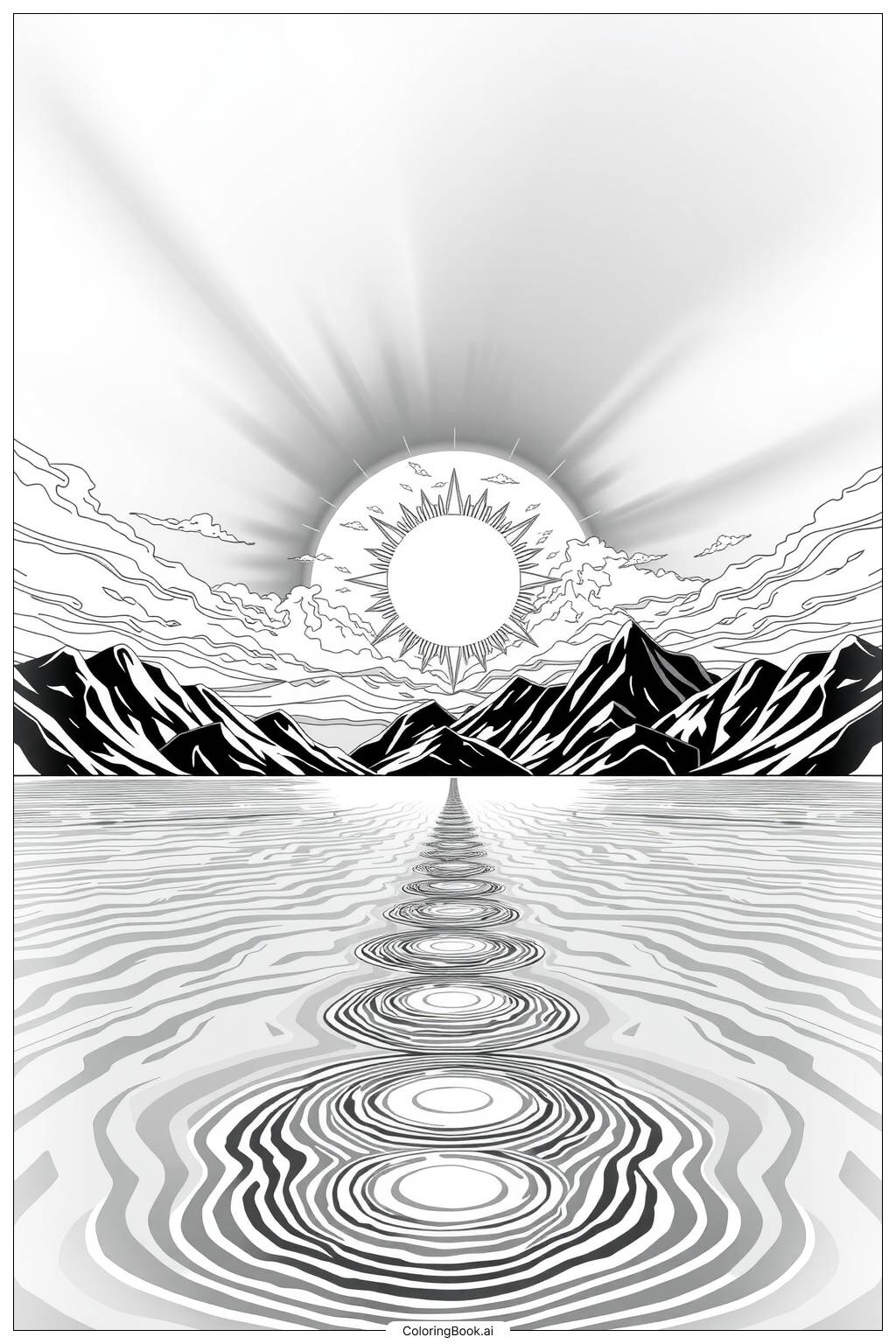
Coloring tips: How to color Solar Eclipse Reflected in Water coloring page well?
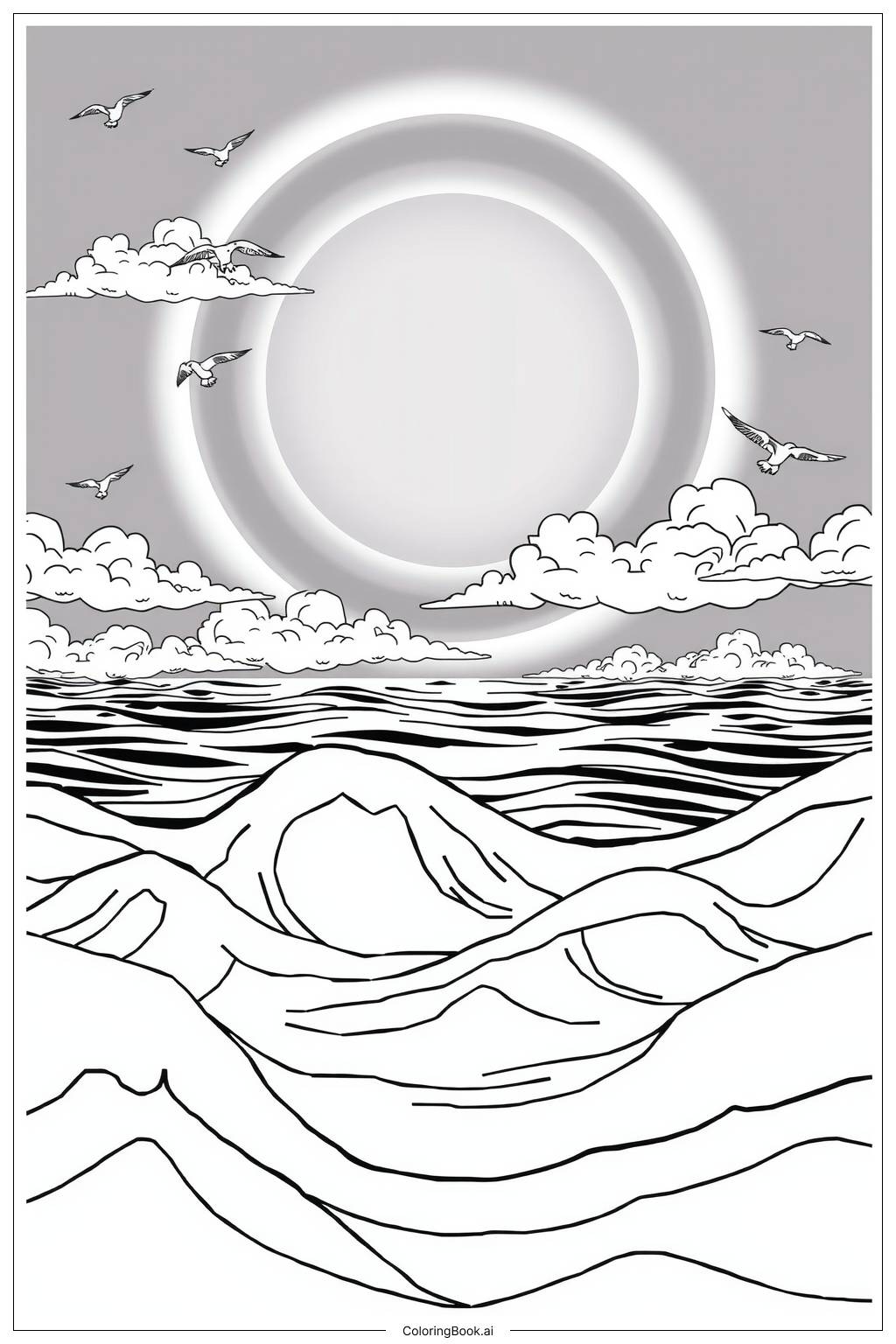
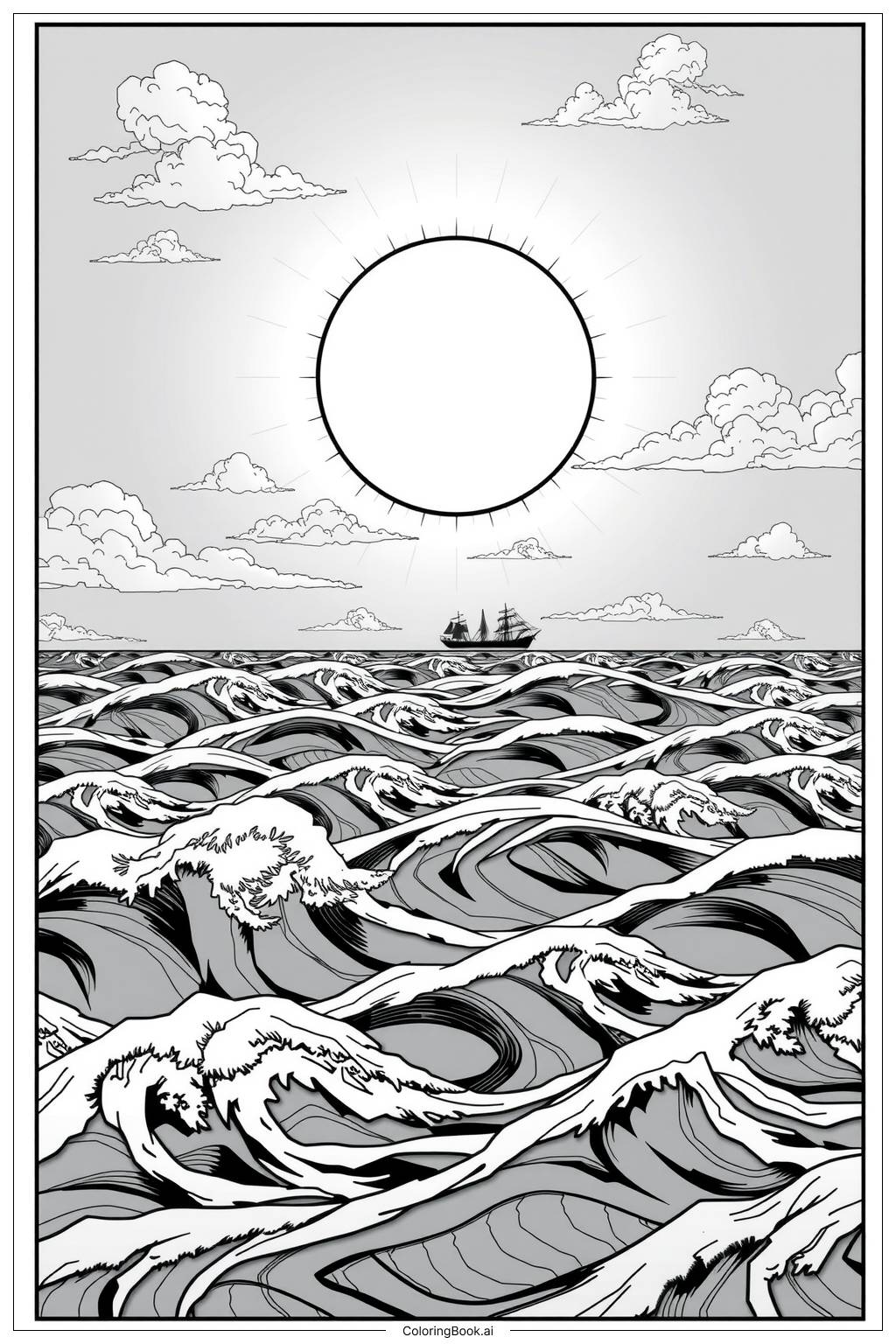
Start with the sky. Use deep blues, purples, and dark grays for the background. Add hints of orange and gold near the eclipse to show the glowing corona. For the eclipse itself, color the outer ring with bright yellow and warm orange. Keep the center very dark — almost black — to show the moon blocking the sun. For the clouds, use soft grays and whites, with golden edges near the light. When coloring the water, mirror the sky colors below. Use slightly darker or muted versions of the same blues and purples. Add light streaks of gold and orange where the eclipse reflects on the water. The ripples in the water can be lighter lines in white or pale blue. For any silhouetted trees or rocks, use solid dark brown or black. This contrast makes the glowing eclipse stand out even more. Take your time blending colors in the sky and water for a smooth, dramatic effect.
Coloring challenges: Which parts are difficult to color and need attention for Solar Eclipse Reflected in Water coloring page?
• Corona Gradient: The glowing ring around the eclipse requires careful color blending. You need to transition smoothly from bright white or yellow at the inner edge to deep orange, then red, and finally fading into the dark sky. Achieving this gradient without harsh lines takes patience and layering. Try using colored pencils in light, circular strokes to build up the glow gradually.
• Sky and Cloud Blending: The dramatic sky in this image involves multiple colors — dark blues, purples, grays, and warm golden tones near the light source. Blending these together smoothly while keeping the clouds looking natural is tricky. Work in layers and blend edges softly to avoid a patchy or streaky look.
• Water Reflection Accuracy: Coloring the reflection in the water so it matches and mirrors the sky above is a real challenge. The colors must be consistent but slightly darker or more muted to feel like a true reflection. Ripples add another layer of difficulty, as they break up the reflection into irregular shapes.
• Silhouette Contrast: Any dark silhouettes of trees, rocks, or land in the scene must be kept very dark and solid. The challenge is ensuring these areas stay completely filled with deep, even color — no gaps or light spots — so they contrast strongly against the glowing eclipse and sky.
• Symmetry and Balance: Because the image is built around a mirror reflection, both halves of the composition must feel visually balanced. Keeping color choices consistent between the sky and its reflection requires attention and planning before you begin.
Benefits of coloring books: Advantages of drawing Solar Eclipse Reflected in Water coloring page
Coloring this solar eclipse scene offers many wonderful benefits for kids and adults alike. First, it sparks curiosity about science and nature. Learning about how a solar eclipse works while coloring makes the experience both fun and educational. Kids naturally start asking questions about the sun, moon, and space. Second, this image helps develop blending and shading skills. The gradients in the sky, the glowing corona, and the water reflection all encourage colorists to experiment with layering colors and creating smooth transitions. These are important artistic techniques that improve with practice. Third, focusing on a detailed, beautiful scene like this is a great way to relax. It requires concentration, which helps quiet a busy mind and reduce stress — a benefit for both children and adults. Fourth, completing a complex image like this builds confidence and a sense of achievement. When the finished piece comes together, it feels truly rewarding. Finally, the reflection element in the image teaches kids about symmetry and observation — noticing how the world above mirrors the world below. This kind of visual thinking supports learning in math, art, and science.