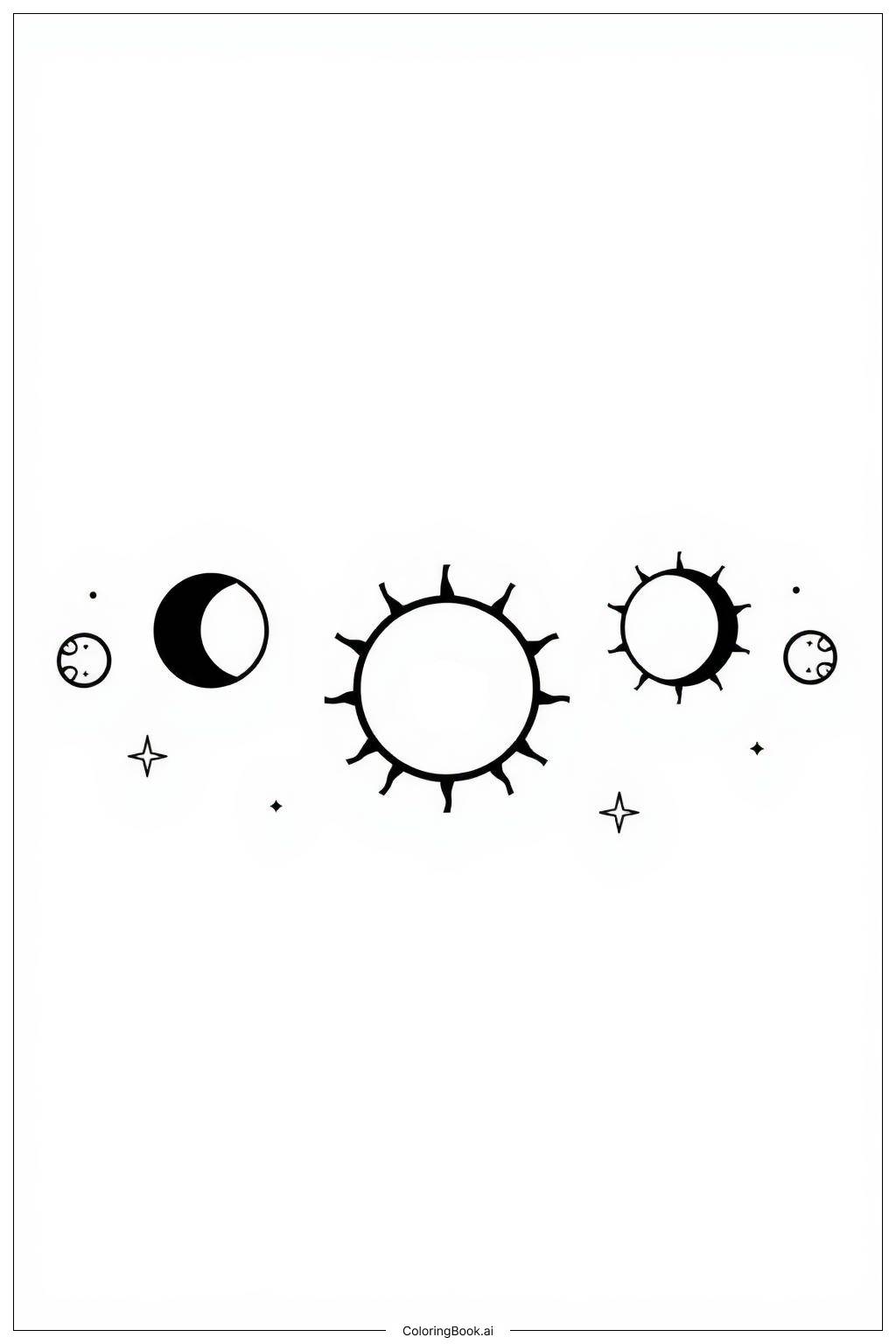
Coloring tips: How to color Solar Eclipse Phases in a Sequence coloring page well?
Start by coloring the full sun phases at each end with bright yellows and warm oranges. As you move toward the center of the sequence, gradually shift to deeper golds and ambers to show the sun being covered. For the total eclipse at the center, use dark navy or black for the moon's silhouette, then add white, pale yellow, and light blue around the edges to create the glowing corona effect. The background sky can be colored in deep blues, purples, and blacks to represent outer space. Add small white or silver dots for the stars. Using colored pencils or watercolor markers works well for blending the gradual color changes between phases. Try blending colors smoothly to show the transition of light across the sequence.
Coloring challenges: Which parts are difficult to color and need attention for Solar Eclipse Phases in a Sequence coloring page?
• Gradual Color Transitions: The biggest challenge is smoothly transitioning colors from phase to phase across the sequence. Each circle must feel slightly different from the last, which requires careful blending and consistent pressure. Rushing this step can make the phases look disconnected rather than part of one fluid event.
• Corona Details: The total eclipse phase features the sun's corona, which has delicate, wispy rays spreading outward. Coloring these fine lines with light, airy colors without overworking the area takes patience. Using too much pressure can flatten the effect and lose the sense of a glowing halo.
• Consistent Sun Shape: Each phase contains a circular sun form that needs clean, even coloring around the curved edges. Staying within the lines along the circular borders, especially where the moon overlaps the sun, requires a steady hand and a sharpened pencil or fine-tip marker.
• Dark and Light Contrast: Creating strong contrast between the dark moon silhouette and the bright sun requires careful color selection. If the colors chosen for the moon are too light, the eclipse effect will not read clearly. Balancing dark shadows against vivid solar light is a key challenge throughout the image.
• Background Space Depth: Filling in the background with a rich, deep space feel without muddying the foreground eclipse details is tricky. Keeping the background colors contained and separate from the phase illustrations takes careful attention, especially around the star details.
Benefits of coloring books: Advantages of drawing Solar Eclipse Phases in a Sequence coloring page
Coloring this solar eclipse sequence is a wonderful way to learn about one of nature's most exciting events. As you work through each phase, you naturally build an understanding of how the moon moves in front of the sun, making science feel fun and visual. This image encourages kids and adults alike to think about color relationships — how light changes, how shadows form, and how contrast creates drama. The repetition of circular shapes across the page is calming and helps build focus and patience. Working on the fine details of the corona and the star-filled background strengthens fine motor skills and hand steadiness. Choosing and blending a range of warm and cool colors also sparks creativity and color awareness. For younger children, it is a relaxed introduction to astronomy. For older kids and adults, it offers a satisfying, detail-rich project that feels both artistic and educational. Completing the full sequence gives a real sense of accomplishment and results in a beautiful piece of space-themed artwork worth displaying.