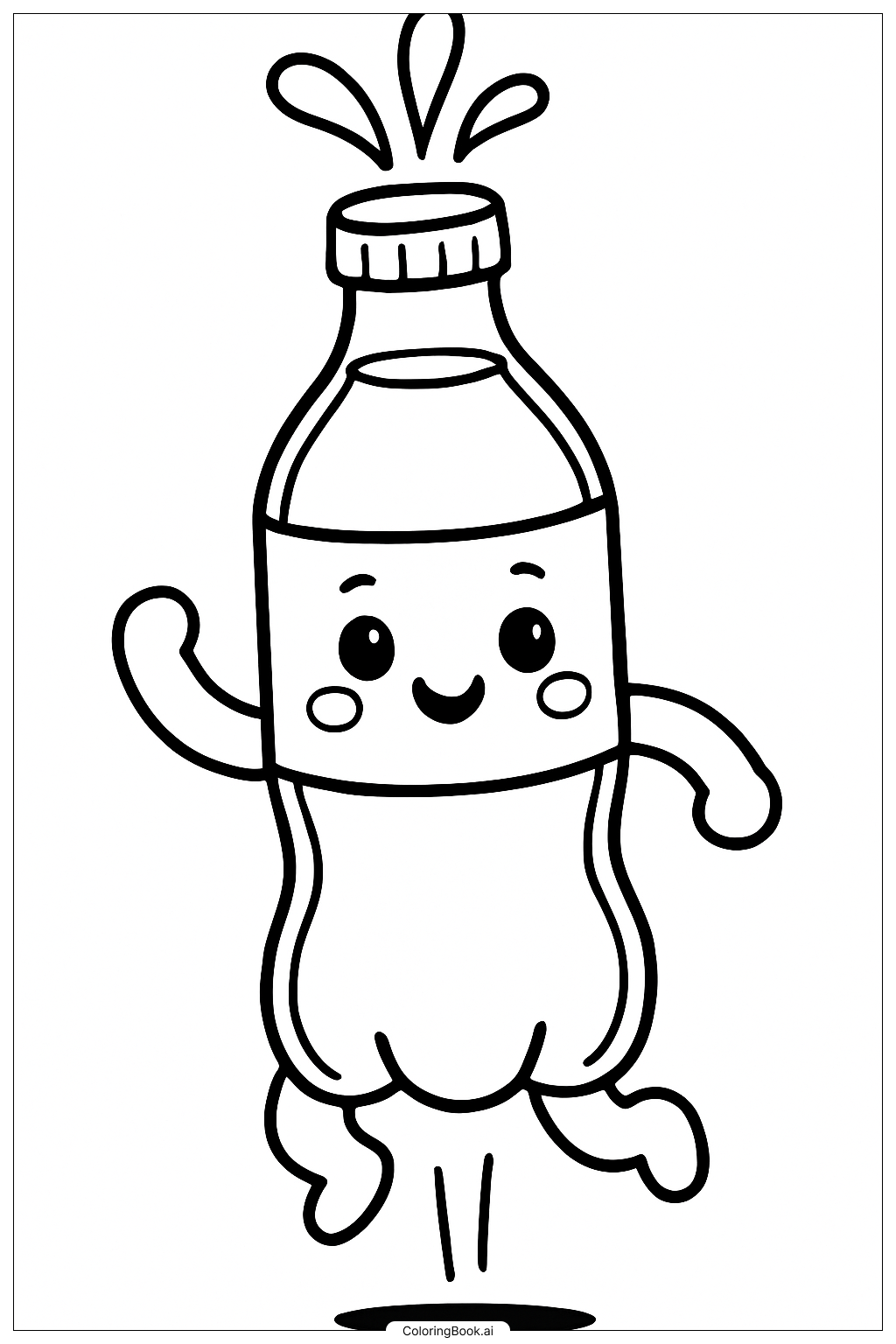
Coloring tips: How to color Jumping Soda Pop With A Splash coloring page well?
Try using bright and fun colors to bring this jumping Soda Pop to life. You can color the bottle in classic soda colors like reds, blues, or greens. Use lighter shades like white or pale yellow for the soda bubbles and splash to show their fizz and freshness. Make the splash droplets shiny with hints of blue or silver to make them look wet and sparkling. For the eyes and smile, you could use black or dark brown to add contrast. Background bubbles can be colored with soft pastels to keep the focus on the Soda Pop. Feel free to mix colors and add your own creative touches to make the scene lively and exciting.
Coloring challenges: Which parts are difficult to color and need attention for Jumping Soda Pop With A Splash coloring page?
• Splash Details: The splash droplets vary in size and shape, which can be tricky to color evenly while keeping them looking dynamic and natural. Coloring them to appear wet and shiny requires careful blending. • Facial Expression: The Soda Pop’s eyes and smile have small details that need precision, especially for younger children who might find smaller areas difficult to color neatly. • Bubble Shapes: The bubbles vary in transparency and overlap each other in places, which can be challenging to color without making the area look cluttered or flat. Managing light and shade here is key. • Soda Bottle Label: The label has letters and patterns that need delicate coloring to keep them clear and readable, which is a good test of fine motor skills. • Movement Effect: Capturing the energy of a jumping character means coloring the background and splash in a way that conveys motion rather than flatness, requiring some practice with color gradients and shading.
Benefits of coloring books: Advantages of drawing Jumping Soda Pop With A Splash coloring page
Coloring this Jumping Soda Pop With A Splash page helps improve hand-eye coordination and fine motor skills as children carefully fill in the small splash droplets and facial features. The varied shapes encourage creativity in choosing colors and experimenting with shading to bring life and motion to the image. This activity engages concentration and patience while being fun and playful. It also teaches about visual storytelling by focusing on how colors can show energy and excitement. For children aged 4 to 16, it offers a delightful challenge that can boost confidence and artistic expression through a familiar and happy character.