Coloring tips: How to color Smiling Snowman coloring page well?
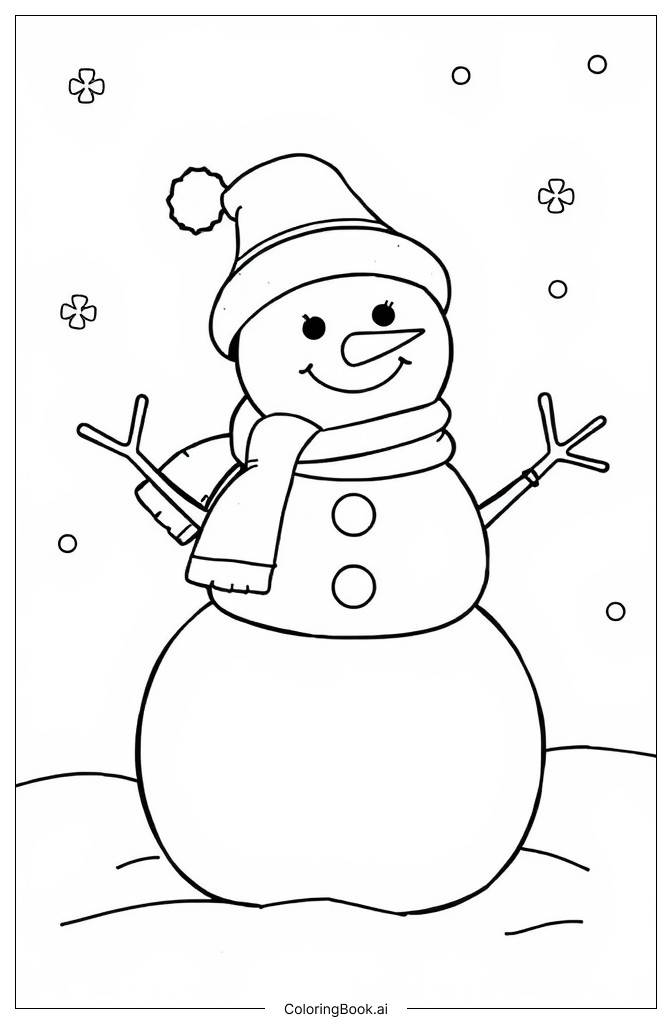
For this snowman scene, consider using cool blues and purples for the shadows on the snow to create depth and dimension. The snowman's body can have light gray or blue shading to show its icy texture. Make the carrot nose a bright orange to create a cheerful focal point. The top hat looks wonderful in classic black, dark blue, or even festive purple. Choose warm colors for the scarf like red, green, or a cheerful plaid pattern with multiple colors. Color the buttons in contrasting shades like black, brown, or bright colors. The background sky can be colored in soft blues, pinks, or lavenders to suggest different times of day. Add yellow or gold to suggest sunlight hitting the snow. The evergreen trees work well in various shades of green with brown trunks. Consider adding sparkle effects with white or light blue to make the snow glisten.
Coloring challenges: Which parts are difficult to color and need attention for Smiling Snowman coloring page?
• Snowman Body Shading: Creating realistic dimension on the snowman's round body sections requires understanding how to shade curved surfaces. Children need to apply lighter pressure in highlighted areas and gradually increase pressure toward the edges to show the spherical shape. Blending white with subtle blues or grays helps create the icy texture without making the snowman look dirty. This requires patience and a gentle touch with coloring tools.
• Scarf Texture and Fabric Folds: The scarf presents multiple challenges with its draped fabric, folds, and fringed ends. Each fold requires darker shading in the creases and lighter colors on the raised portions. The fringe details need careful coloring to maintain separation between individual threads. Young artists must pay attention to how the scarf wraps around the neck and hangs down, maintaining consistent color while showing depth through shading variations.
• Background Depth and Distance: Creating a sense of depth in the winter landscape requires understanding perspective and atmospheric effects. Trees in the distance should be lighter and less detailed than foreground elements. The snow-covered ground needs subtle shading to show contours and hills without appearing flat. Blending sky colors from darker at the top to lighter near the horizon creates realistic atmosphere. This spatial awareness can be challenging for younger children.
• Button and Detail Precision: The small circular buttons and facial features require steady hand control and precision. Staying within the lines of these tiny elements while maintaining even color saturation takes concentration. The stick arms need consistent brown tones along their length, and any small details like texture lines require careful attention to avoid messy results.
Benefits of coloring books: Advantages of drawing Smiling Snowman coloring page
Coloring this smiling snowman helps children develop important fine motor skills through controlled movements needed for small details like buttons and facial features. The varying sizes of elements from large body sections to tiny details provide progressive challenges that build hand-eye coordination. This winter scene encourages creative color choices, allowing kids to experiment with cool and warm color combinations while learning about shadows and highlights. The friendly, cheerful subject matter promotes positive emotions and seasonal awareness, connecting art activities to real-world winter experiences. Working on the detailed scarf patterns and background landscape elements builds patience and focus. Children practice spatial reasoning as they color different depth layers in the scene. The completed snowman provides a sense of accomplishment and can become a source of pride, boosting self-confidence and encouraging further artistic exploration during the winter season.