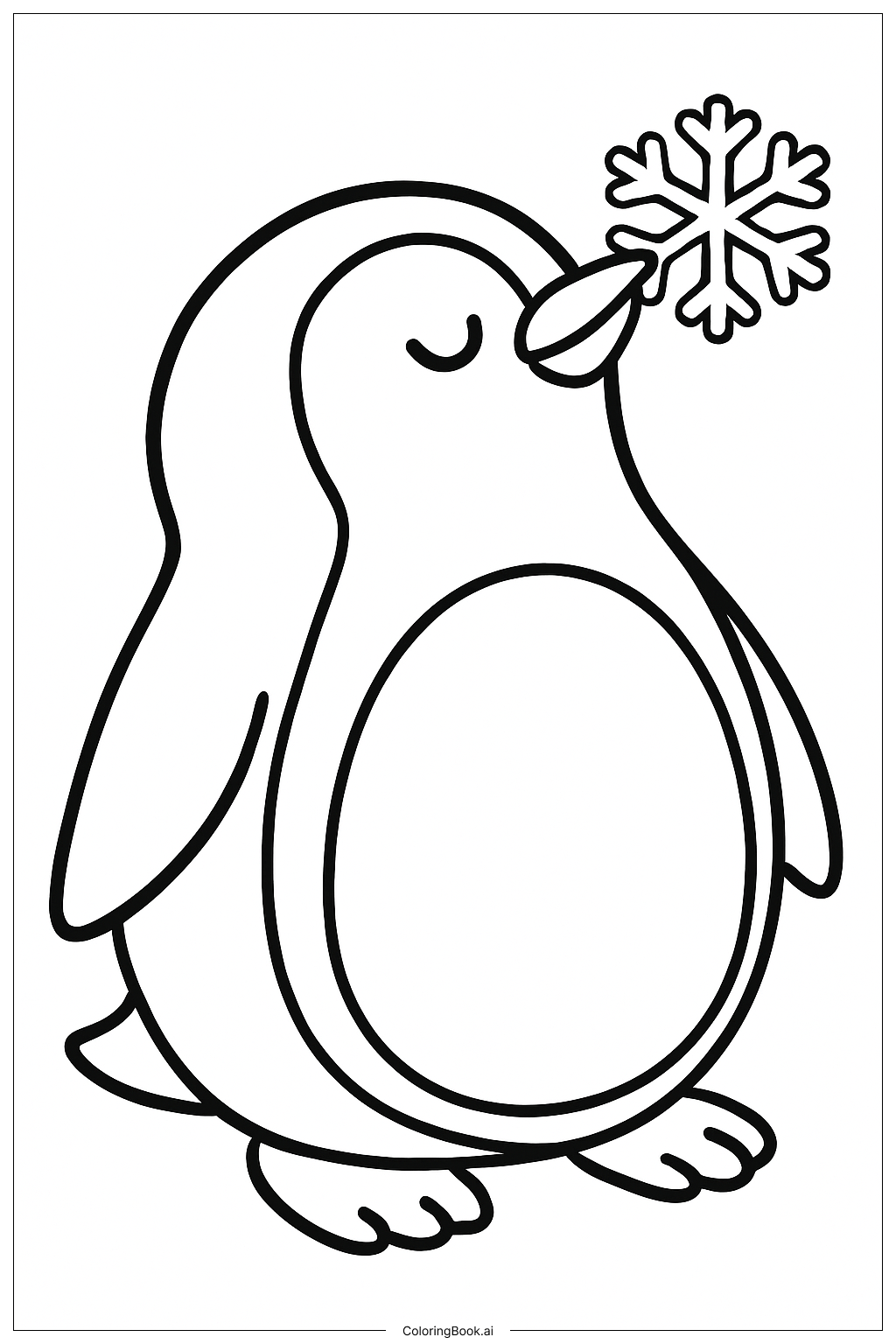
Coloring tips: How to color Snowflake On A Penguin's Beak coloring page well?
Use soft blues and whites to color the snowflake to make it look icy and delicate. For the penguin, you can use traditional colors like black for the back and flippers, white for the belly, and orange or yellow for the beak and feet. Try blending light gray for shadows on the penguin’s body to add depth. You can color the background with light blues or gentle snow patterns to create a snowy atmosphere. Don't forget to color the penguin’s eyes closed gently, maybe using a soft gray or light blue to keep the peaceful mood. Experimenting with gradient colors can create a more 3D effect on the snowflake and penguin’s body.
Coloring challenges: Which parts are difficult to color and need attention for Snowflake On A Penguin's Beak coloring page?
1. Small area on the tip of the beak where the snowflake is perched might be tricky to color precisely because it is narrow and detailed. 2. Coloring the snowflake’s branches requires attention to detail to make each part distinct without coloring outside the lines. 3. Keeping the penguin's belly looking smooth with even coloring can be difficult since it is a big open space. 4. Blending shadows on the penguin’s body may be challenging for young children who are new to coloring techniques. 5. Creating a nice background that complements the penguin without making the picture too busy can be a bit hard to balance.
Benefits of coloring books: Advantages of drawing Snowflake On A Penguin's Beak coloring page
Coloring this picture helps improve fine motor skills due to the detailed snowflake and narrow parts. It encourages creativity as children choose colors for the penguin and snowflake. Coloring also promotes focus and patience, especially when working on the careful areas like the snowflake and beak. This activity can be calming and relaxing, creating a sense of peace similar to the penguin’s expression. Finally, it introduces children to winter themes and nature’s beauty through art.