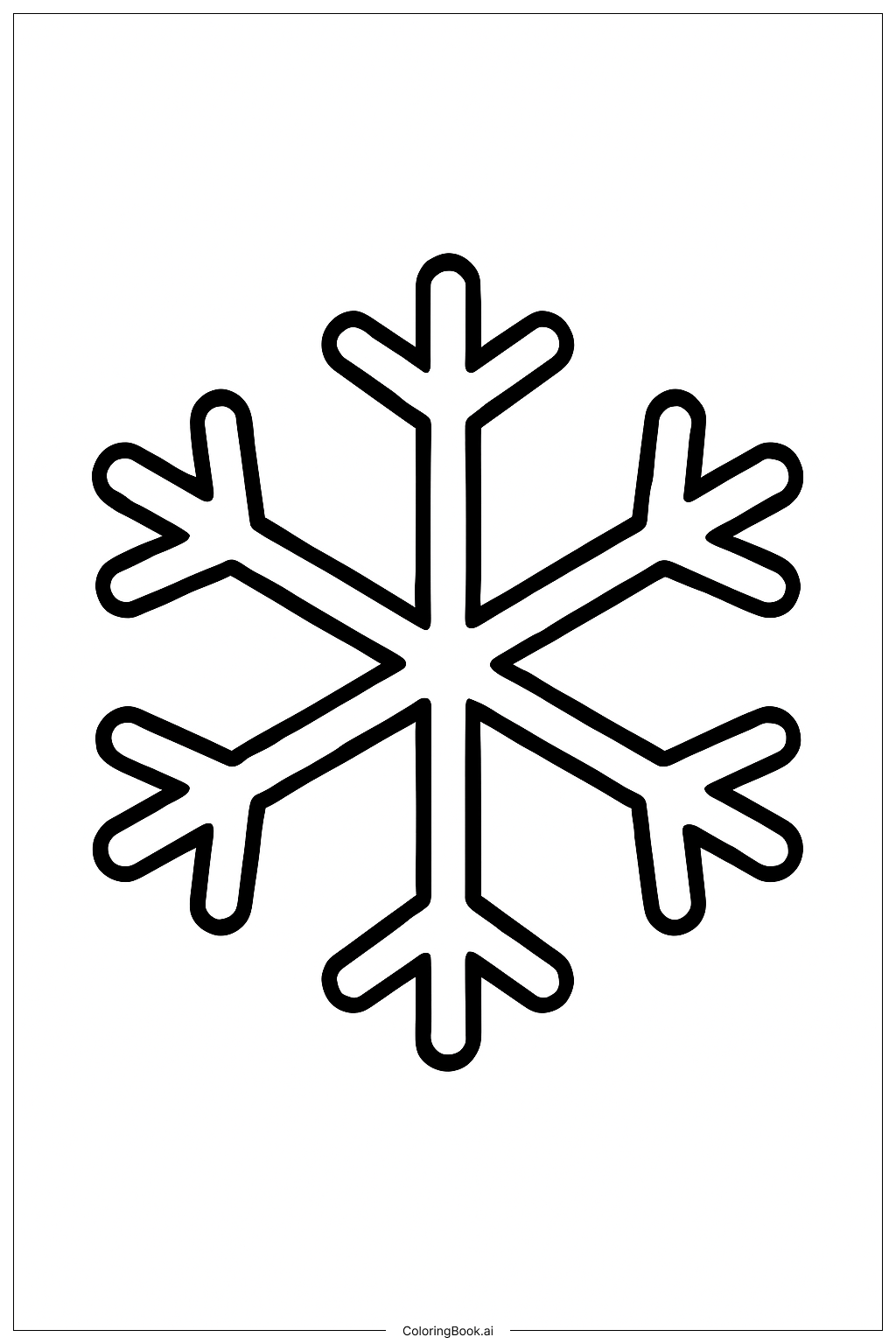
Coloring tips: How to color A Basic Snowflake Pattern coloring page well?
Try using cool colors such as different shades of blue, silver, and white to bring the snowflake to life. You can also add hints of light purple or pale pink for a magical effect. Consider shading the center with a darker shade and then coloring the arms lighter towards the edges to create a glowing look. You might want to fill the background with soft gradients of icy blue or leave it blank to make the snowflake stand out. You can even use sparkly crayons or markers if you have them for a frosty, sparkling effect.
Coloring challenges: Which parts are difficult to color and need attention for A Basic Snowflake Pattern coloring page?
• Small Details: The snowflake has many small branches and points that require careful coloring within narrow spaces to avoid overlapping lines.
• Symmetry: To keep the snowflake balanced and realistic, colors should be applied symmetrically on matching arms, which can be challenging for younger children.
• Consistency: Maintaining a consistent color shade along each arm to avoid uneven patches needs attention and patience.
• Blending: Creating smooth color transitions, such as from dark to light blue, might require practice with shading techniques.
• Precision: Some inner shapes have fine outlines that demand steady hand control to color neatly without smudging other areas.
Benefits of coloring books: Advantages of drawing A Basic Snowflake Pattern coloring page
Coloring this snowflake helps improve focus and attention to detail because the design requires careful filling within clear lines. It encourages creativity by allowing you to experiment with icy color palettes or vibrant winter tones. The symmetrical pattern promotes understanding of shapes and balance. Working with small sections builds fine motor skills and hand-eye coordination. Finally, completing this pretty snowflake pattern gives a satisfying feeling of accomplishment and can be very relaxing, making it perfect for winter-themed fun.