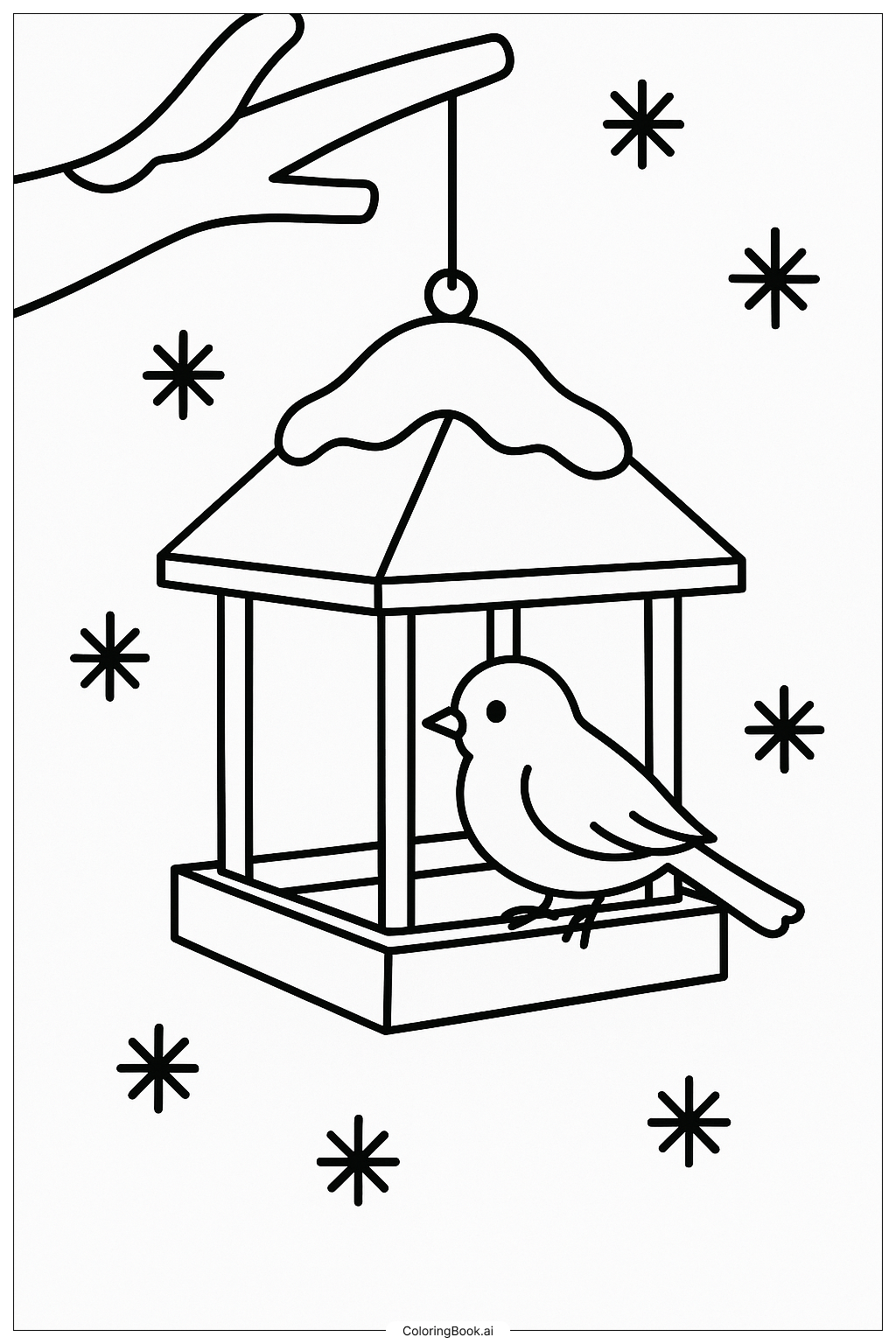
Coloring tips: How to color Snow Day Bird Feeder coloring page well?
Start with the sky and background. Use light blue or pale gray to set a cold, wintry mood. Color the tree branches in brown or dark gray. Add white or very light blue to show the snow sitting on the branches and on top of the feeder. For the bird feeder, use warm wood tones like tan or golden brown. The seeds inside can be dotted with tiny spots of dark brown, tan, or gray. Color the birds with bright, cheerful colors. Try red for a cardinal, yellow for a goldfinch, or soft blue for a bluebird. This makes the birds pop against the snowy scene. Use dark green for any pine needles peeking through the snow. Keep the snowflakes white or leave them uncolored to let the paper show through naturally. Feel free to mix cool and warm colors to create contrast between the cold winter air and the cozy, lively birds at the feeder.
Coloring challenges: Which parts are difficult to color and need attention for Snow Day Bird Feeder coloring page?
• Small Bird Details: The birds in this scene have tiny features like eyes, beaks, wing patterns, and feathers. Coloring these small areas neatly requires a sharp pencil or a fine-tipped marker. It can be tricky to stay within the lines and add detail without making the birds look messy. Take your time and work slowly on each bird.
• Snow Texture and Shading: Snow looks best when it has subtle shading rather than being left completely flat and white. Adding light blue or gray shadows to the edges of snow piles helps them look fluffy and three-dimensional. This technique can be challenging for younger colorists who are just learning about shading and depth.
• Wood Grain on the Feeder: The bird feeder is made of wood, and capturing that natural, textured look requires careful layering of colors. Using multiple shades of brown and drawing light strokes in one direction can mimic wood grain. This level of detail takes patience and a steady hand.
• Background Depth: Creating a sense of distance in the background — showing far-away branches or falling snowflakes behind closer objects — requires understanding how to use lighter colors for things that are farther away. Blending background tones smoothly without covering the line art is a skill that takes practice.
• Color Contrast Balance: Keeping the birds bright and eye-catching while the background stays cool and soft requires careful color choices. If the background colors are too bold, the birds can get lost in the scene. Balancing warm and cool tones across the whole image is one of the biggest overall challenges.
Benefits of coloring books: Advantages of drawing Snow Day Bird Feeder coloring page
Coloring this Snow Day Bird Feeder scene offers a wide range of benefits for kids and adults alike. The peaceful winter setting encourages a calm, focused mindset that helps reduce stress and quiet a busy mind. Sitting down to color a serene nature scene like this is a great way to relax after a long day.
For children, this image builds fine motor skills. Carefully coloring small birds, thin branches, and tiny seeds helps strengthen hand and finger muscles, which supports writing and other daily tasks.
The scene also sparks curiosity about nature. Kids may become interested in learning about different bird species, winter habitats, and how animals survive in cold weather. Coloring becomes a starting point for exploration and conversation.
Choosing colors for the birds, snow, and wooden feeder encourages creative thinking and decision-making. There are no wrong color choices, which builds confidence and a healthy sense of self-expression.
The image also teaches basic art concepts like contrast, shading, and layering in a fun and low-pressure way. Working through these challenges helps develop patience and a growth mindset.
Finally, completing the full coloring page gives a real sense of achievement. For younger colorists especially, finishing a detailed scene like this builds pride and motivation to keep creating.