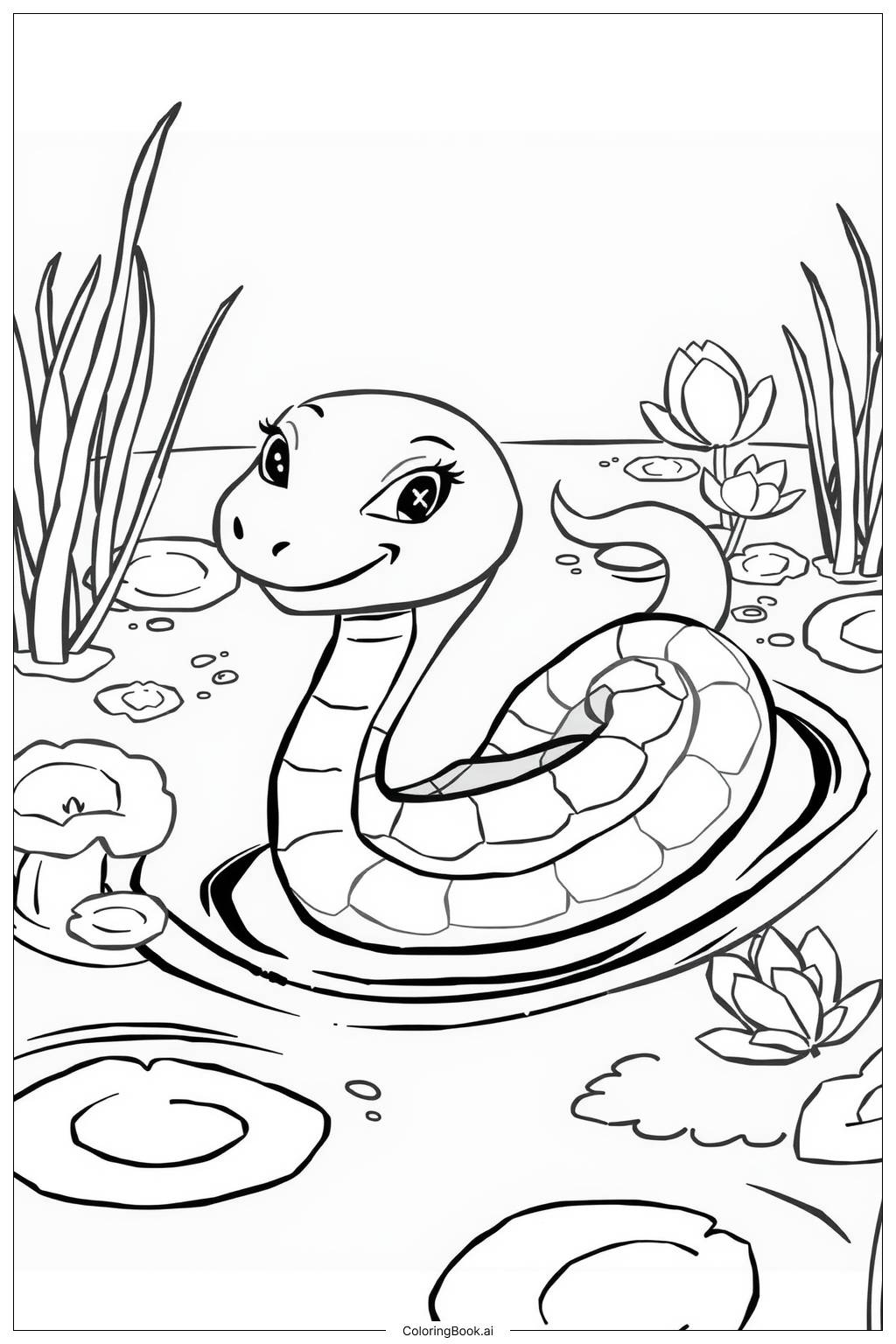
Coloring tips: How to color Water Snake Lake coloring page well?
Start with the water. Use light blue and soft teal to fill the lake surface. Add pale gray or lavender for the ripples around the snake. Color the snake's body in shades of olive green, brown, or dark teal. Use a slightly lighter tone on the belly to show depth. The lily pads look great in medium and dark green. Add yellow or white for any lily flowers. Color the reeds in golden brown and tan. Use deep greens for the trees and bushes along the shore. The sky can be light blue with hints of white. For the dragonflies, try bright blue or purple wings. Keep the fish soft orange or yellow. Use light colors first, then slowly build up darker shades to add depth and a realistic feel to the whole scene.
Coloring challenges: Which parts are difficult to color and need attention for Water Snake Lake coloring page?
• Snake Scale Texture: The snake's body is covered in many small, overlapping scales. Coloring each scale neatly without smudging into the next one takes patience and a fine-tipped tool. Keeping consistent shading across a curved, moving body is especially tricky for younger colorists.
• Water Surface and Reflections: Capturing the look of still water with gentle ripples requires blending multiple shades of blue, teal, and gray. The reflections of plants and the snake on the water's surface need careful color placement so the scene feels realistic rather than flat.
• Overlapping Elements: The snake's body weaves among lily pads, reeds, and water ripples. Where these elements overlap, choosing the right colors for each layer without making the image muddy or confusing can be a real challenge. Planning the color order before starting helps a lot.
• Fine Plant Details: The reeds, cattails, and overhanging branches include many thin lines and small shapes. Filling these in neatly without going outside the lines requires steady hands and thin coloring tools. Using the wrong shade can make detailed plants disappear into the background.
• Depth and Perspective: The image shows objects both above and below the water line. Giving the underwater fish and vegetation a softer, cooler tone while keeping the above-water elements bright and vivid helps create a sense of depth. Achieving this contrast requires thoughtful color selection across the whole page.
Benefits of coloring books: Advantages of drawing Water Snake Lake coloring page
Coloring this Water Snake Lake page offers a wide range of benefits for children and older colorists alike. Working through the detailed scales of the snake builds fine motor skills and strengthens hand-eye coordination. Choosing colors for water, plants, and wildlife encourages creative thinking and helps kids learn about nature and ecosystems in a fun, hands-on way.
Focusing on a detailed scene like this promotes concentration and patience. Kids learn to slow down, plan ahead, and work carefully, skills that carry over into school and everyday tasks.
The calming nature of water scenes makes this page especially relaxing to color. The gentle shapes and flowing lines of the lake environment help reduce stress and bring a sense of calm focus. For younger children, finishing a complex scene like this builds confidence and a sense of accomplishment.
Learning to mix shades for water and animal skin also introduces basic color theory in an approachable way. Children discover how light and dark tones work together to create depth and texture. Overall, this page turns a simple activity into a rich learning experience that nurtures creativity, focus, and a love of the natural world.