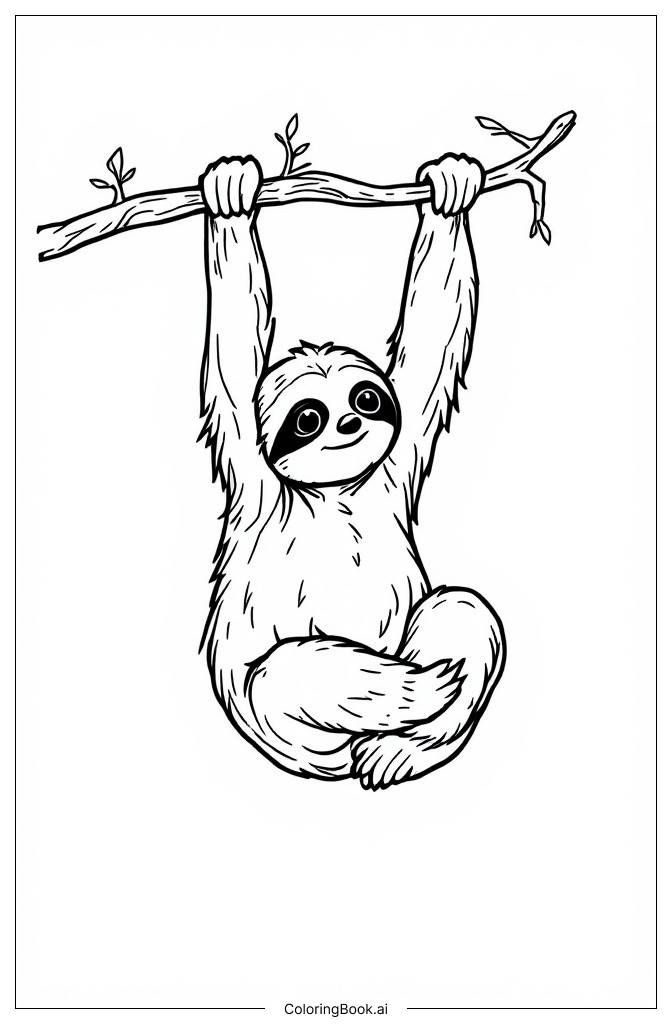
Coloring tips: How to color Sloth Hanging from a Branch coloring page well?
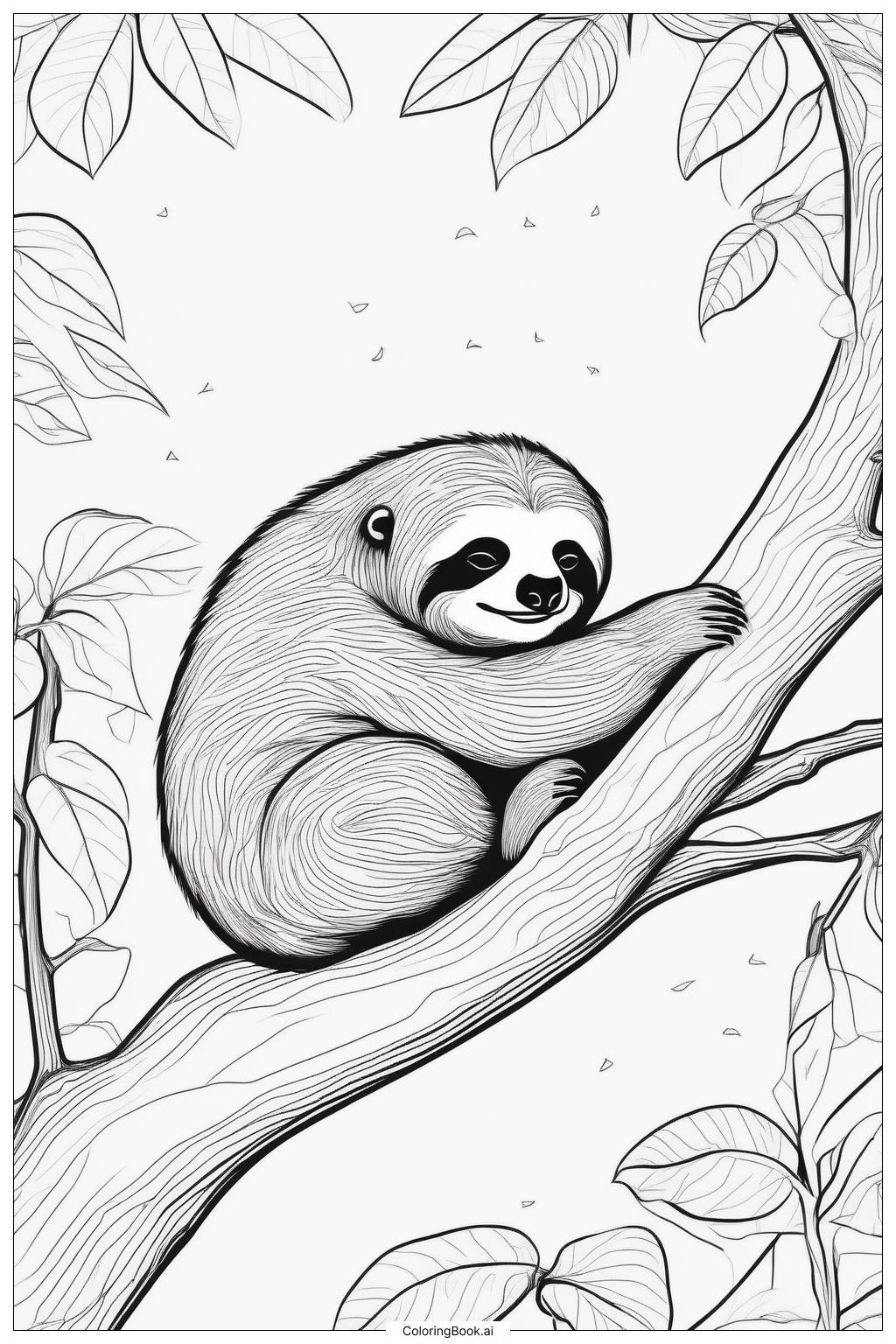
Start with the sloth's body and fur. Sloths are usually grayish-brown or tan, but feel free to get creative with softer shades like warm beige, light brown, or even a gentle golden tone. Use a darker brown for the fur texture lines to add depth. The sloth's face can be a lighter shade, with pink or peach for the inner ears and nose. Give the eyes a dark brown or black center with a lighter highlight dot to make them look bright and friendly. For the tree branch, use medium and dark browns with a hint of gray for the bark. Add green for any leaves. You can even try coloring the background with a light sky blue or soft yellow to make the sloth pop. Layering colors gently will give the fur a fluffy, realistic look.
Coloring challenges: Which parts are difficult to color and need attention for Sloth Hanging from a Branch coloring page?
• Fur Texture Details: The sloth's body is covered in shaggy, layered fur with many fine lines running in different directions. Staying within these small sections while adding color variation to show depth and texture can be tricky, especially for younger colorists. Taking your time with short, light strokes that follow the direction of the fur lines will help create a natural look.
• Curved Claws and Grip: The sloth's long, curved claws wrapping around the branch are small and detailed. These narrow shapes require careful coloring with a fine-tipped colored pencil or marker to avoid going outside the lines. Using a dark brown or charcoal tone for the claws while keeping the branch a lighter shade will help them stand out clearly.
• Facial Expression and Small Features: The face includes small but important details like the eyes, nose, and smile. These areas are compact and close together, making precision important. Using a very fine tool for the eyes and nose will help keep the expression looking sweet and expressive rather than messy.
• Bark Texture on the Branch: The tree branch has a rough, ridged texture with lines and knots that can be challenging to color while maintaining contrast. Using at least two shades of brown, one lighter and one darker, applied in the direction of the bark lines, will bring the branch to life without making it look flat.
• Overall Color Balance: Because the sloth and branch share similar brown tones, keeping them visually separate requires thoughtful color choices. Varying the shades and adding small highlights or shadow areas will ensure each element reads clearly and the composition looks polished.
Benefits of coloring books: Advantages of drawing Sloth Hanging from a Branch coloring page
Coloring this sloth image offers a range of wonderful benefits for kids and beginners alike. The sloth's relaxed, upside-down pose sets a calm and playful mood, making the coloring experience feel fun and stress-free. Working through the fur texture helps children practice fine motor skills and develop better pencil control, as they learn to follow small, directional lines with care. Choosing colors for the fur, branch, and background encourages creative thinking and color awareness. Kids get to explore how different shades of brown and gray can work together to create a natural, lifelike look. The image also gently introduces the concept of layering colors, as blending light and dark tones gives the fur more dimension and depth. Since sloths are beloved animals, this page can also spark curiosity about wildlife and nature. Children may become interested in learning more about where sloths live, what they eat, and why they move so slowly. Coloring can also build patience and focus, as completing a detailed image takes time and attention. Overall, this sloth coloring page is a joyful, educational, and creatively rewarding activity for young colorists.