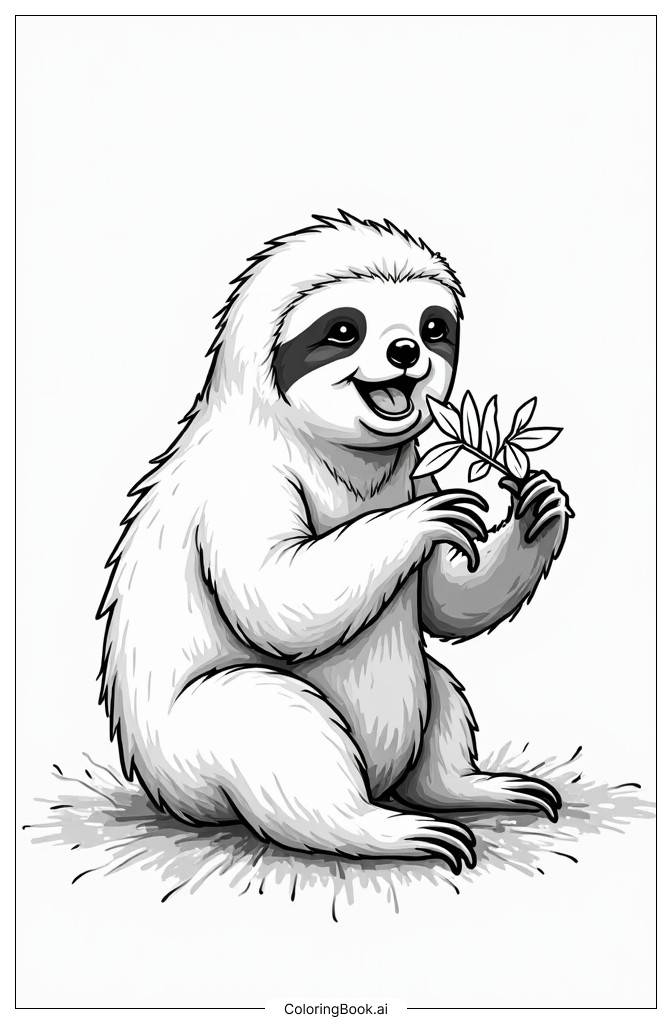
Coloring tips: How to color Sloth eating leaves coloring page well?
Try using soft and natural colors like different shades of brown and beige for the sloth’s fur to show its texture. You can add light highlights with cream or tan tones to make the fur look fluffy. Use green tones in various shades for the leaves to create depth—darker green for shaded parts and lighter green for leaves closer to the light source. The tree branch can be colored with warm brown colors, mixing dark and light browns to make the bark look rough. For the background, consider a soft sky blue or pastel colors to keep the focus on the sloth and the leaves. Keep your coloring neat inside the lines, and don’t be afraid to blend colors gently to create a natural look.
Coloring challenges: Which parts are difficult to color and need attention for Sloth eating leaves coloring page?
• Fur Texture: The sloth’s fur is drawn with many fine lines. It can be tricky to color all these lines without losing the texture. Try coloring slowly and use light strokes to keep detail visible.
• Claws and Branch: The claws wrap around the branch, which requires careful coloring to show their shape clearly. Coloring too dark or too solid might cover the separation between claws and branch.
• Leaves Variation: The leaves come in different clusters and directions. Choosing the right shades of green to distinguish overlapping leaves can be challenging.
• Small Facial Details: The sloth’s eyes, nose, and mouth are smaller features that need attention to keep them clear and expressive.
• Keeping the Background Simple: Since the sloth and leaves have many details, coloring the background lightly without overwhelming the main subject can be hard to balance.
Benefits of coloring books: Advantages of drawing Sloth eating leaves coloring page
Coloring this image helps improve focus and fine motor skills because of the detailed fur and small facial features. It encourages children to observe nature closely, learning about sloths and their environment. Working with different shades of green and brown develops color recognition and blending techniques. Additionally, coloring the relaxed pose of the sloth can have a calming effect, promoting mindfulness. This image invites creativity while teaching patience as children carefully fill in the textured fur and layered leaves. Overall, it supports artistic growth and a better appreciation for wildlife.