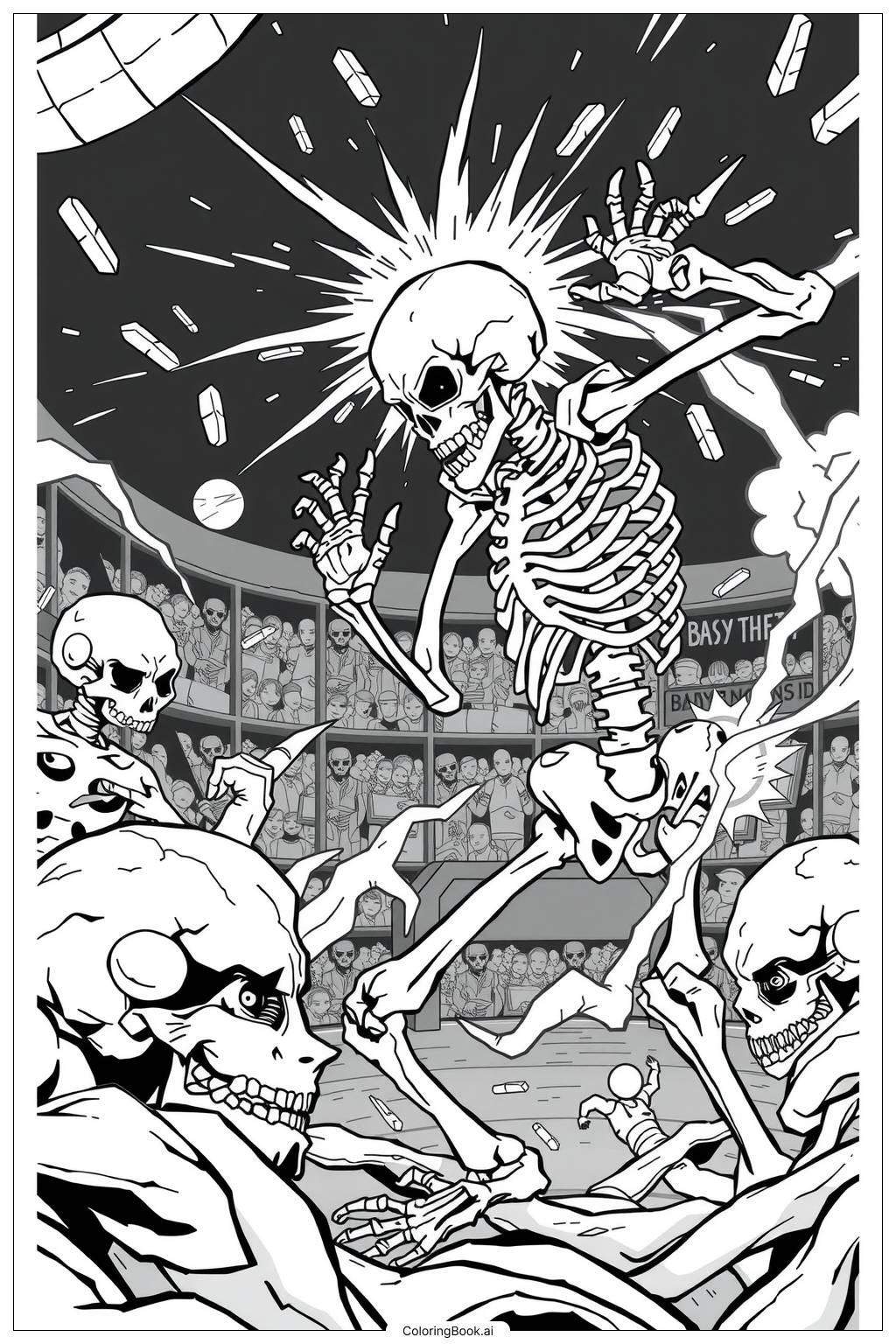
Coloring tips: How to color Skeleton Mutant Battle coloring page well?
Start with the skeleton's bones using light gray or off-white. This keeps the figure looking realistic while leaving room for shading. Add darker gray or blue-gray tones to the hollow areas and deep crevices between the bones to create depth. For the mutant features — like the spiked growths and twisted extra limbs — try sickly greens, dark purples, or toxic yellows to show that something unnatural is happening to the skeleton. The glowing eye sockets can be colored with bright orange, red, or eerie green for a spooky effect. Use darker shades around the edges of each bone to give a three-dimensional look. For the battle background, bold reds, oranges, and blacks work great to show fire, smoke, and explosive energy. Kids can have fun mixing colors to make this mutant feel truly unique and scary.
Coloring challenges: Which parts are difficult to color and need attention for Skeleton Mutant Battle coloring page?
• Bone Detail Accuracy: The skeleton's body is packed with individual bone shapes, including ribs, vertebrae, and limb bones. Each segment needs careful coloring to stay within its own lines. Coloring too broadly can blur where one bone ends and another begins, making the figure look flat and unfinished. Using a fine-tipped colored pencil or thin marker will help a lot here.\n\n• Mutant Texture and Features: The mutated spikes, growths, and deformed bone structures have irregular, jagged edges that are tricky to color neatly. These areas require smooth color transitions to show that the mutation looks different from normal bone. Blending two or more colors gradually in these sections will make the mutations feel more organic and menacing.\n\n• Creating Depth in Hollow Areas: The eye sockets, open jaw, and gaps between bones are meant to look deep and dark. Achieving that sense of depth with coloring tools takes skill. Layering multiple shades from light to dark — starting from the edges inward — helps recreate that hollow, three-dimensional feel effectively.\n\n• Action Background Complexity: The explosive lines, flying debris, and battle effects in the background contain many overlapping shapes. Deciding which elements should be bright and which should stay dark requires planning. Coloring the background without overpowering the main skeleton figure is a real challenge that requires color contrast awareness.\n\n• Color Consistency Across the Figure: With so many bones and mutant features spread across the page, keeping a consistent color scheme throughout the entire figure can be difficult. It helps to decide on your main colors before starting and stick to them, using lighter and darker versions of those same colors for variety.
Benefits of coloring books: Advantages of drawing Skeleton Mutant Battle coloring page
Coloring this skeleton mutant battle scene offers a wide range of benefits for young artists. First, it builds fine motor skills. Carefully coloring the many small bone details trains hand steadiness and pencil control. Second, it encourages creative thinking. Choosing colors for a fantasy creature — like what shade makes a mutant look most dangerous — pushes kids to think imaginatively and make their own artistic decisions. Third, it teaches the concept of shading and depth. This image is a great introduction to using light and dark tones to make a flat drawing look three-dimensional. Fourth, it improves focus and patience. A detailed action scene like this takes time to complete, helping kids build concentration and the ability to stick with a task. Fifth, it offers a healthy way to engage with action and fantasy themes. Many kids love monsters and battles, and channeling that energy into an art project is both fun and constructive. Finally, completing a complex coloring page gives kids a strong sense of accomplishment and boosts their confidence as creators.