Coloring tips: How to color skeleton gothic dance coloring page well?
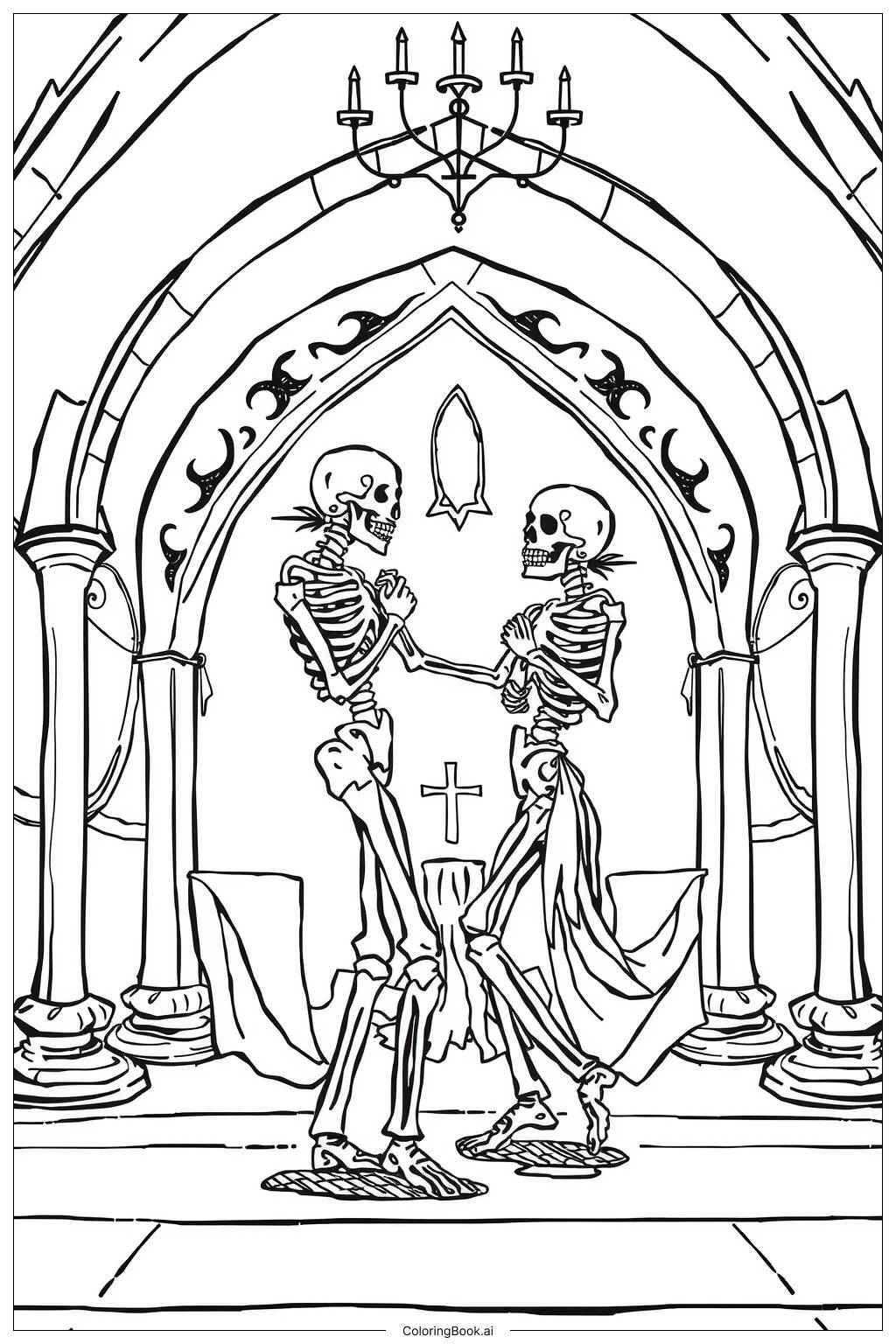
For this skeleton gothic dance image, try using rich and dramatic colors to bring the gothic vibe to life. Deep purples, dark blues, and black shades can be used for the cloak and background to create a mysterious atmosphere. The skeleton bones can be colored in light grays or soft whites with subtle shadows to highlight their structure without overwhelming the details. Adding touches of silver or metallic gray on bones or accessories can give a magical glow. Use bright reds or burgundy for small accents, like ribbons or highlights, to add energy to the dance. When coloring the swirling lines, consider different shades of one color to add depth and movement. Remember to keep the contrast strong so the skeleton stands out boldly against the background.
Coloring challenges: Which parts are difficult to color and need attention for skeleton gothic dance coloring page?
• Bone Structure Details: The skeleton features many small bones and joints that require careful coloring to avoid smudging or blending the edges. Keeping bones distinct helps maintain the image’s clarity.
• Flowing Fabric: The cloak or robes have many folds and tattered edges. Coloring these areas needs attention to shadow and light to represent the fabric’s flow and texture realistically.
• Gothic Background Patterns: The intricate gothic arches and patterns need patience and precision to color inside the fine lines while keeping symmetry and neatness intact.
• Movement and Swirls: The swirling lines around the skeleton suggest motion and rhythm, posing a challenge in blending colors smoothly to portray fluidity without losing line definition.
• Contrast Management: Balancing dark background colors with lighter skeleton areas requires skill to maintain a good visual hierarchy and avoid making the image look flat.
Benefits of coloring books: Advantages of drawing skeleton gothic dance coloring page
Coloring this skeleton gothic dance image helps develop fine motor skills as kids practice filling small, detailed areas carefully. It encourages creativity by choosing dramatic colors that express the gothic theme and mood. Working on the flowing fabric and swirling movement enhances understanding of light, shadow, and texture. It also boosts concentration and patience due to the intricate patterns and bone structures. Furthermore, coloring a lively dancing skeleton inspires imagination, making the activity fun and engaging while building confidence in artistic expression.