Coloring tips: How to color Shoe on a Shelf coloring page well?
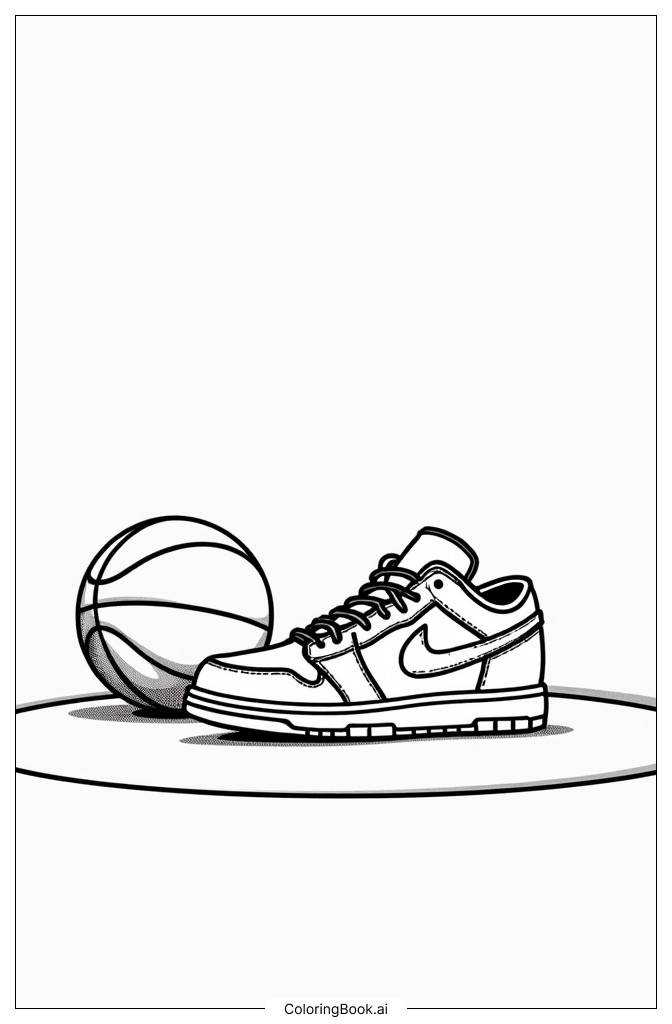
Start by coloring the shoe itself. You can choose a classic look with browns or blacks, or go bold with bright red, blue, or even rainbow colors. Use a slightly darker shade along the sides and bottom of the shoe to give it a rounded, three-dimensional feel. For the laces, white or cream works well, but you can also try a contrasting color to make them pop. Color the sole with a gray or dark brown to separate it from the upper part of the shoe. For the wooden shelf, use warm tones like tan, honey brown, or chestnut. Add darker streaks along the wood grain lines to make it look realistic. The background can be a soft, neutral color like light blue, pale yellow, or warm beige to keep the focus on the shoe. Try blending two colors together in the background for a gentle, gradient effect.
Coloring challenges: Which parts are difficult to color and need attention for Shoe on a Shelf coloring page?
• Shoe Lace Details: The laces are one of the trickiest parts of this image. They have loops and crossings that create very small, narrow spaces. Using a fine-tipped marker or a sharpened colored pencil will help you stay inside the lines. Take your time and work slowly around each loop so the laces look clean and neat.
• Stitching Lines Along the Shoe: The tiny stitching marks along the edges of the shoe are closely spaced and require careful attention. If you color too broadly, you may accidentally cover them. Try using a fine-tipped tool and a steady hand to follow each stitch individually for a polished result.
• Creating Depth and Shape on the Shoe: A shoe is a curved, three-dimensional object. Showing that roundness on a flat page takes a bit of skill. Try using two shades of the same color — a lighter tone on the top and a darker tone on the sides and sole — to create a sense of volume and make the shoe look realistic.
• Wood Grain Texture on the Shelf: The shelf has subtle grain lines that need to be colored carefully to look like real wood. Use a base color first, then lightly layer a darker shade along the grain lines. Pressing too hard may make the texture look muddy, so use light, gentle strokes.
• Balancing the Shoe and Background Colors: Since the shoe sits on a shelf against a background, choosing colors that contrast well with each other is important. If the shoe and background are too similar in tone, the image can look flat. Pick colors that complement but stand apart from each other to keep the composition visually clear.
Benefits of coloring books: Advantages of drawing Shoe on a Shelf coloring page
Coloring this Shoe on a Shelf image offers a wonderful range of benefits for kids and adults alike. For younger children, tracing around the shoe's curves and lace details helps build fine motor skills and hand-eye coordination. Learning to stay within the lines takes focus and patience, which are valuable habits both in art and everyday life.
For older kids and teens, this image is a great opportunity to practice shading and color blending. Giving the shoe a realistic, three-dimensional look using light and shadow is a satisfying creative challenge that builds real artistic confidence.
For adults, the simple yet detailed composition makes it a calming, meditative activity. Focusing on small details like the stitching and wood grain can help quiet a busy mind and reduce everyday stress.
The everyday subject matter — a simple shoe on a shelf — also encourages imagination. Colorists can reimagine it as a magical slipper, a sports sneaker, or a vintage leather boot just by choosing different colors and styles. This sparks creative thinking and storytelling in a fun, low-pressure way.
Overall, this coloring page is a lovely blend of simplicity and detail that rewards patience, creativity, and careful observation.