Coloring tips: How to color Sheep By Windmill coloring page well?
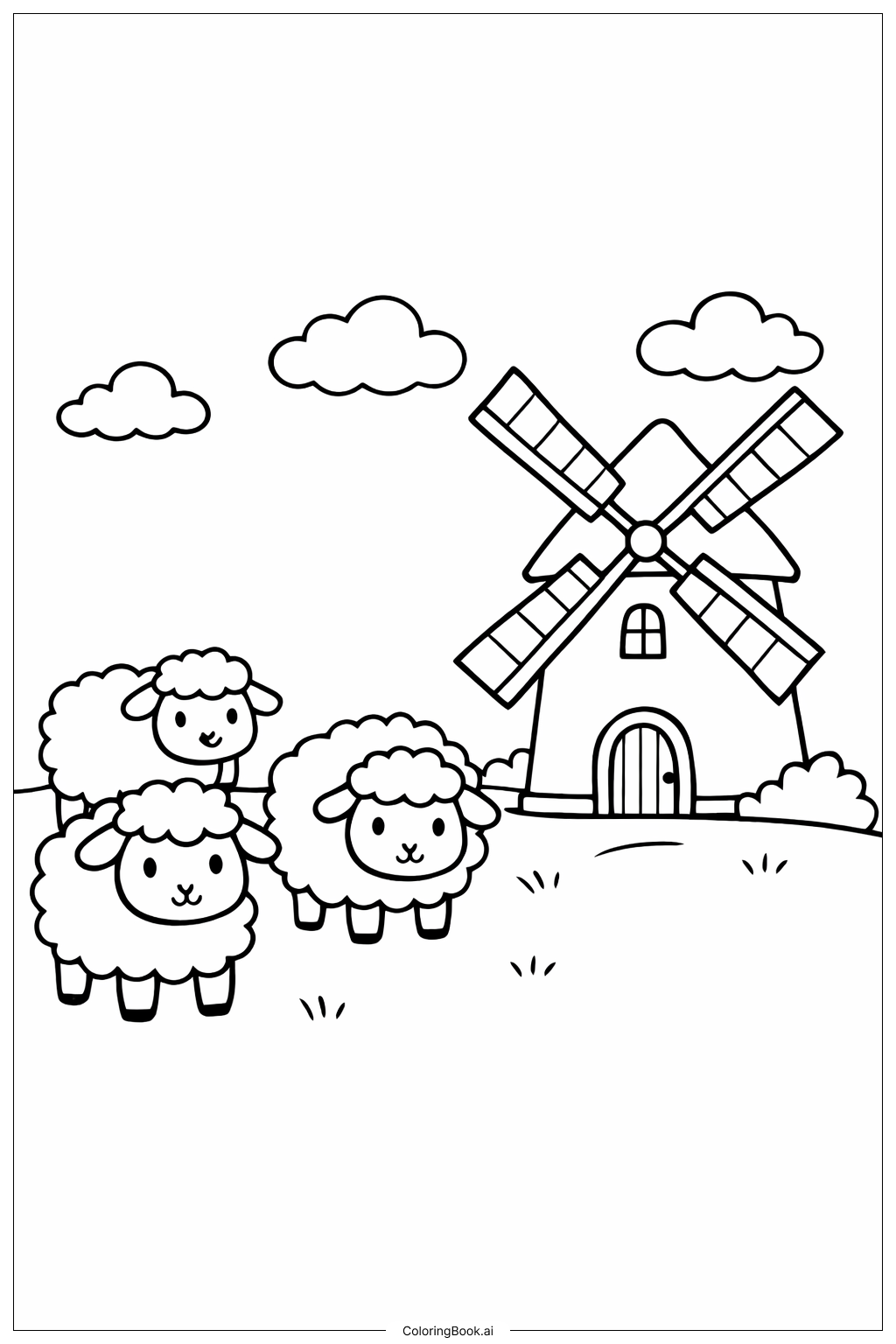
Use light and soft colors for the sheep’s wool, such as white, cream, or light grey, to make them look fluffy. For their faces and legs, try using light brown, beige, or pink tones. The windmill can be colored in bright, cheerful colors like red, yellow, or blue for its body and blades, making it stand out. The roof of the windmill can be a darker shade to add contrast. Use different shades of green for the grass and bushes to create depth. The clouds can be left white or colored with very light blue or grey to keep them soft and fluffy. The sky can be a light blue gradient for a daytime look.
Coloring challenges: Which parts are difficult to color and need attention for Sheep By Windmill coloring page?
1. Coloring the sheep's wool evenly can be tricky because you want to show their fluffy texture without coloring too heavily. 2. The small details on the windmill blades and roof require careful coloring to stay inside the lines and keep the picture neat. 3. The small patches of grass need different green shades to avoid a flat look but might be hard to blend smoothly. 4. Coloring the sheep’s faces and legs with natural colors without making them look too dark or dull can be a challenge. 5. Keeping the clouds light and soft while coloring might be difficult because heavy coloring could make them lose their fluffy appearance.
Benefits of coloring books: Advantages of drawing Sheep By Windmill coloring page
Coloring this picture helps children practice fine motor skills by coloring small and large areas carefully. It encourages creativity in choosing colors for nature and farm elements. Children learn to observe details and color within lines, improving hand-eye coordination. The image promotes relaxation and focus by coloring calming farm scenery. It also introduces children to outdoor and animal themes, sparking interest in nature and farming life.