Coloring tips: How to color Shadow Bunny Hop coloring page well?
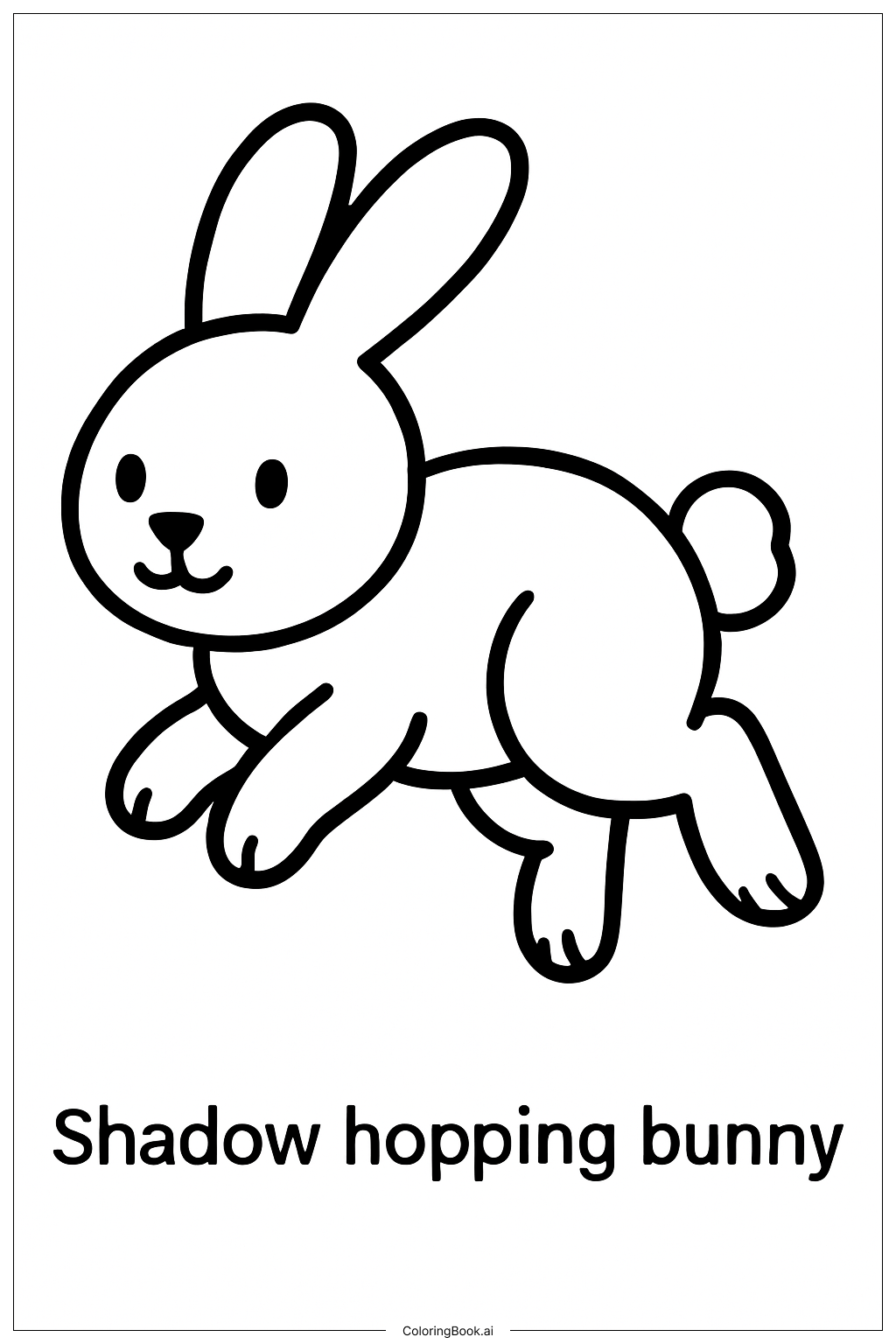
Start with the bunny itself using warm browns, soft grays, or even imaginative colors like pink or lavender. Color the inner ears a lighter shade of pink or peach to create depth. Use bright, cheerful colors for the eyes, perhaps blue or green with black pupils. The nose can be a darker pink or brown. For the shadow, use dark gray, deep purple, or black to show contrast with the bunny above. The grass can be various shades of green, mixing light and dark tones for texture. Add pops of color to the flowers with reds, yellows, purples, or blues for the petals, and yellow or orange for the centers. Consider using colored pencils to blend the bunny's fur and create a soft, fuzzy appearance. The background can remain white to emphasize the sunny day, or add a light blue wash for sky.
Coloring challenges: Which parts are difficult to color and need attention for Shadow Bunny Hop coloring page?
• Shadow Consistency: Coloring the shadow uniformly requires careful attention to stay within the lines while maintaining a darker tone that clearly distinguishes it from the bunny above. Young colorists may find it challenging to keep the shadow solid and consistent without leaving white gaps or coloring too heavily in one area. The shadow's shape mirrors the bunny, so maintaining the same darkness throughout helps reinforce the concept visually.
• Fur Texture and Blending: Creating a realistic or appealing fur texture on the bunny involves blending multiple shades of the same color family. Children may struggle with applying light pressure for highlights and heavier pressure for shadowed areas. The rounded body, ears, and legs each require subtle color variations to appear three-dimensional rather than flat, which demands patience and practice with color layering techniques.
• Small Detail Work: The bunny's facial features, including the eyes, nose, whiskers, and inner ear details, are relatively small and require precision. Staying within these tiny areas without coloring over the lines can be frustrating for younger children or those still developing fine motor control. The small flowers and grass blades also demand careful attention and a steady hand.
• Color Coordination: Choosing colors that work well together for the bunny, shadow, grass, and flowers requires some understanding of color harmony. Children might select clashing colors or make the shadow too light, reducing the visual impact. Balancing bright, cheerful colors for the main subject while keeping the shadow appropriately dark presents a subtle artistic challenge that develops color sense and planning skills.
Benefits of coloring books: Advantages of drawing Shadow Bunny Hop coloring page
Coloring this Shadow Bunny Hop page offers wonderful developmental benefits for children. It strengthens fine motor skills and hand-eye coordination through careful coloring within defined spaces, especially in the detailed facial features and small flowers. The shadow element introduces basic science concepts about light, helping children understand how shadows are formed and why they appear beneath objects. This educational aspect makes coloring both fun and informative. The image encourages creativity as children choose their own color palettes for the bunny and scenery, building confidence in artistic decision-making. The joyful, energetic scene promotes positive emotions and can boost mood during the coloring process. Working on the different textures between the solid shadow and the detailed bunny helps develop visual discrimination skills. Completing this page provides a sense of accomplishment, enhancing self-esteem and encouraging further creative exploration.