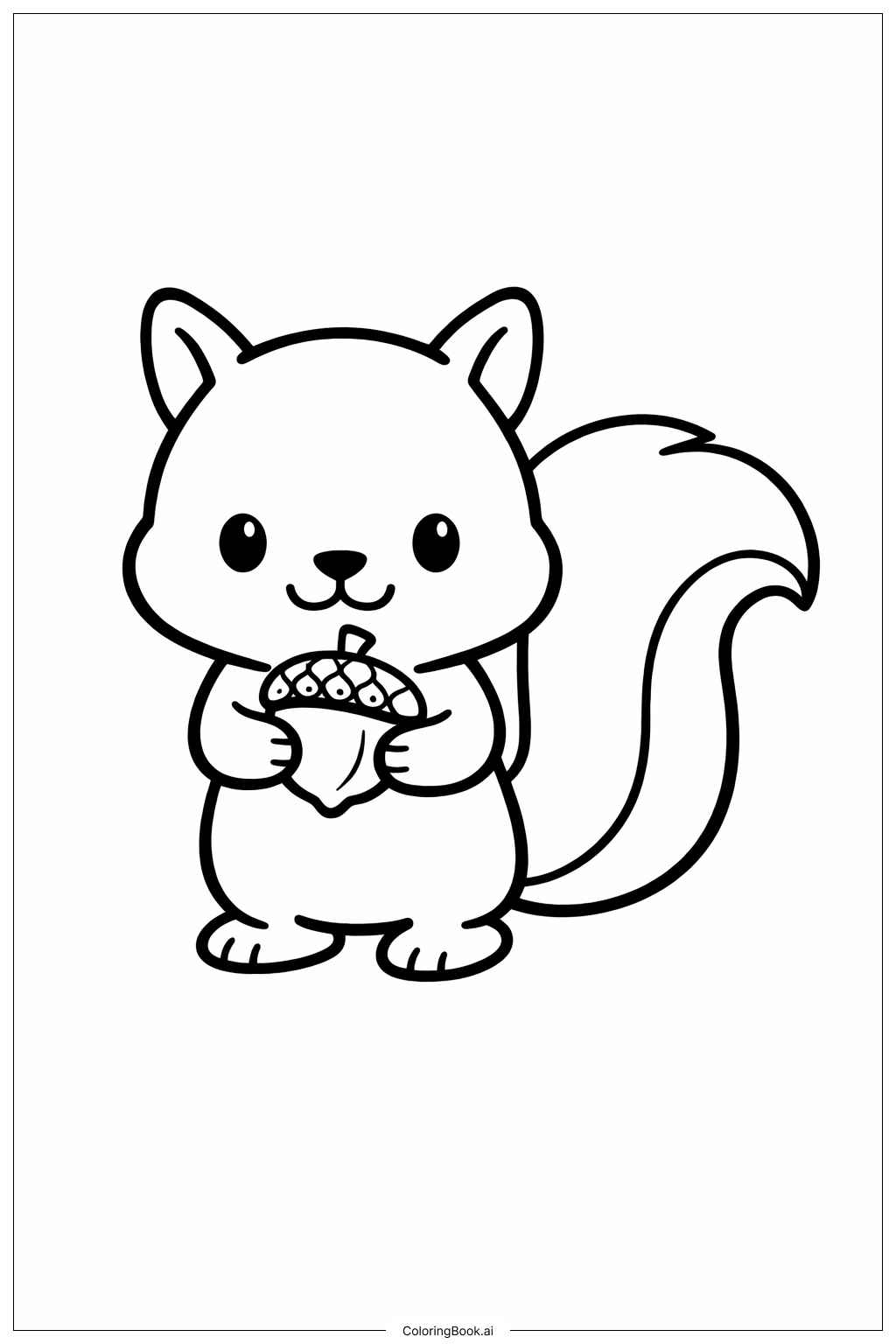
Coloring tips: How to color September Squirrel Holding Nut coloring page well?
Use warm colors like browns, oranges, and yellows to color the squirrel’s fur, which fits the autumn season. Try different shades of brown to make the squirrel look soft and fluffy. The acorn can be colored in dark brown for the nut and a lighter brown or tan for the cap. The eyes should be black or dark brown, with little white spots left blank for shine. The tail can have a mix of light and dark colors to show its fluffiness. The background can be left white or filled with soft green or orange to suggest autumn leaves and grass. Use smooth strokes to color inside the lines carefully, and take time to blend colors for a nice effect.
Coloring challenges: Which parts are difficult to color and need attention for September Squirrel Holding Nut coloring page?
1. The squirrel’s tail has a flowing shape that may be tricky to color evenly because of its curves. 2. The acorn’s textured cap needs careful coloring to show its pattern without crossing the lines. 3. Coloring the small paws and ears requires fine motor skills because they are tiny and close to the outline. 4. Blending different shades to make the squirrel look furry can be challenging for beginners. 5. Keeping the eyes shiny means leaving tiny spots white, which requires precise coloring and control.
Benefits of coloring books: Advantages of drawing September Squirrel Holding Nut coloring page
Coloring this squirrel helps children practice hand-eye coordination as they color inside the lines. It encourages creativity by choosing colors that remind them of autumn. The detailed parts, like the acorn cap and paws, improve fine motor skills and attention to detail. Coloring an animal in a natural setting also teaches kids about wildlife and seasons. Overall, it is both fun and educational, giving children a calming activity that boosts confidence as they finish their artwork.