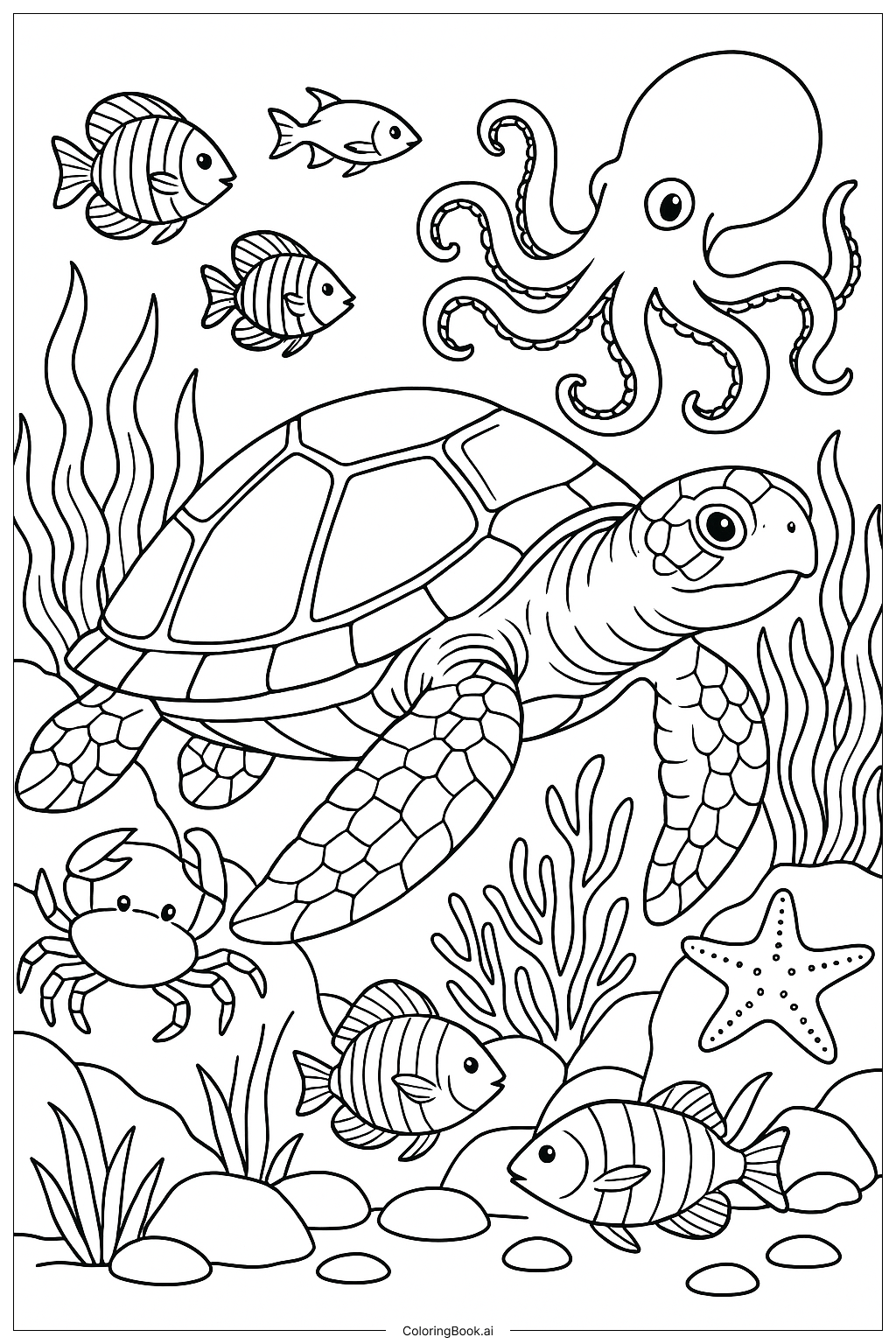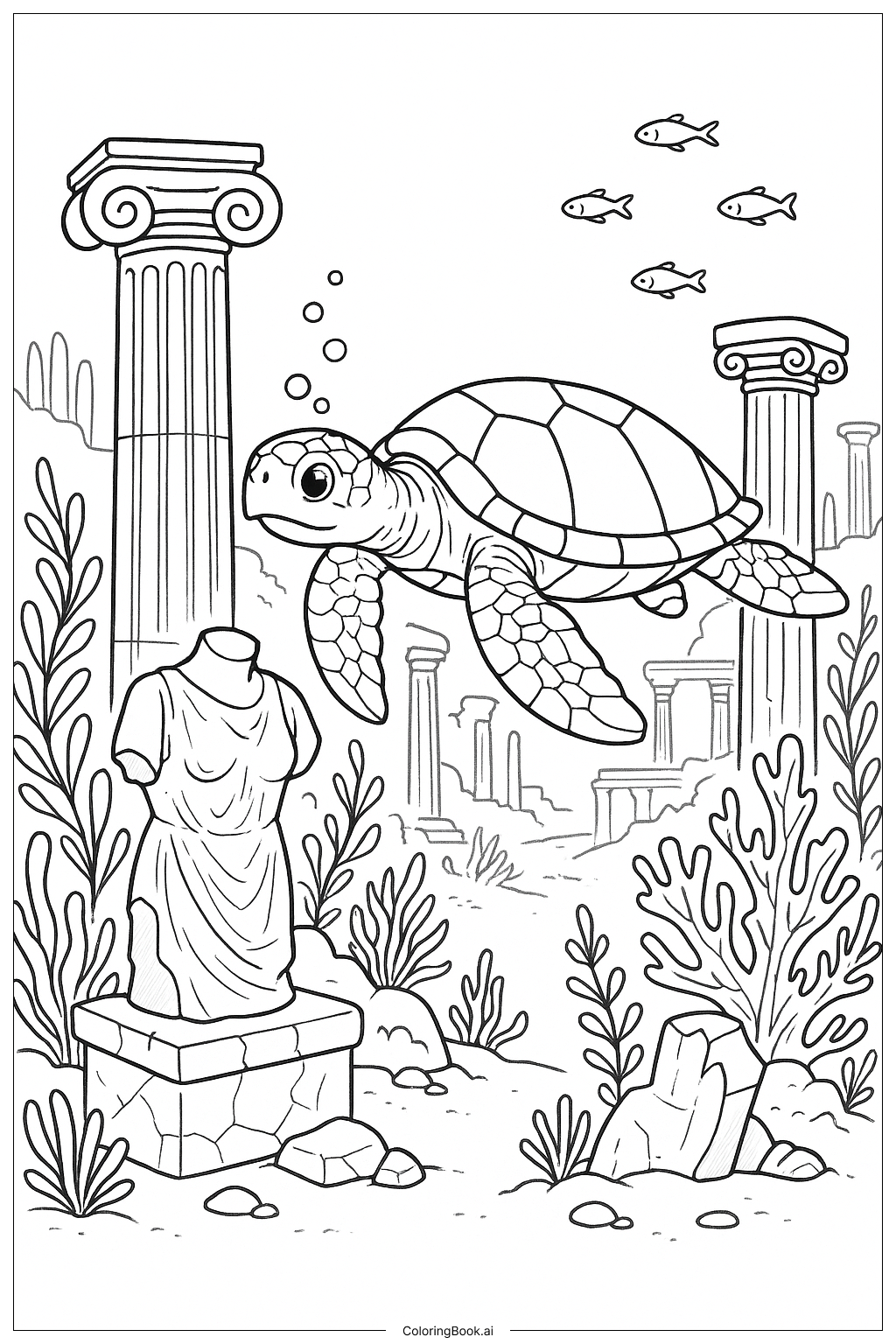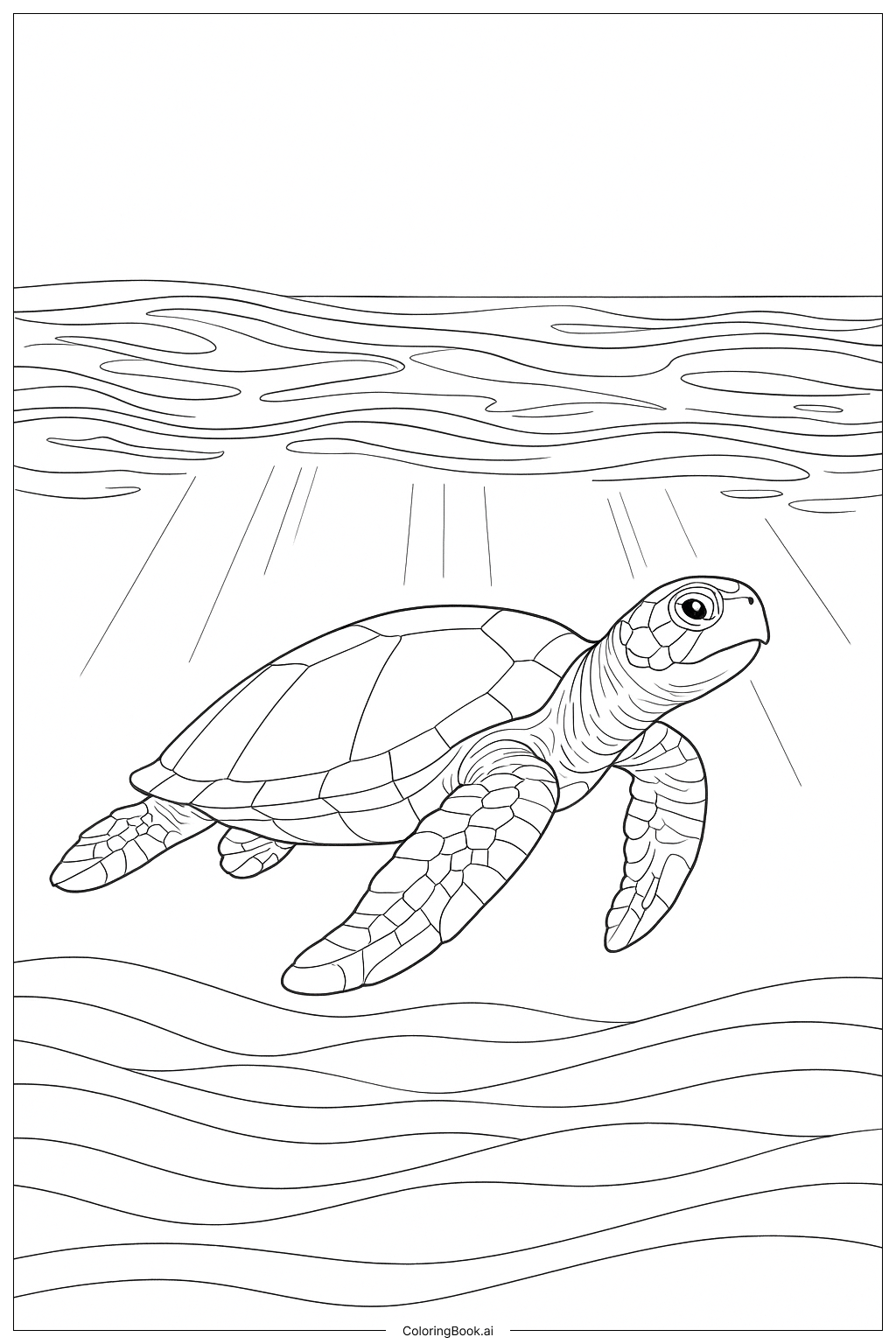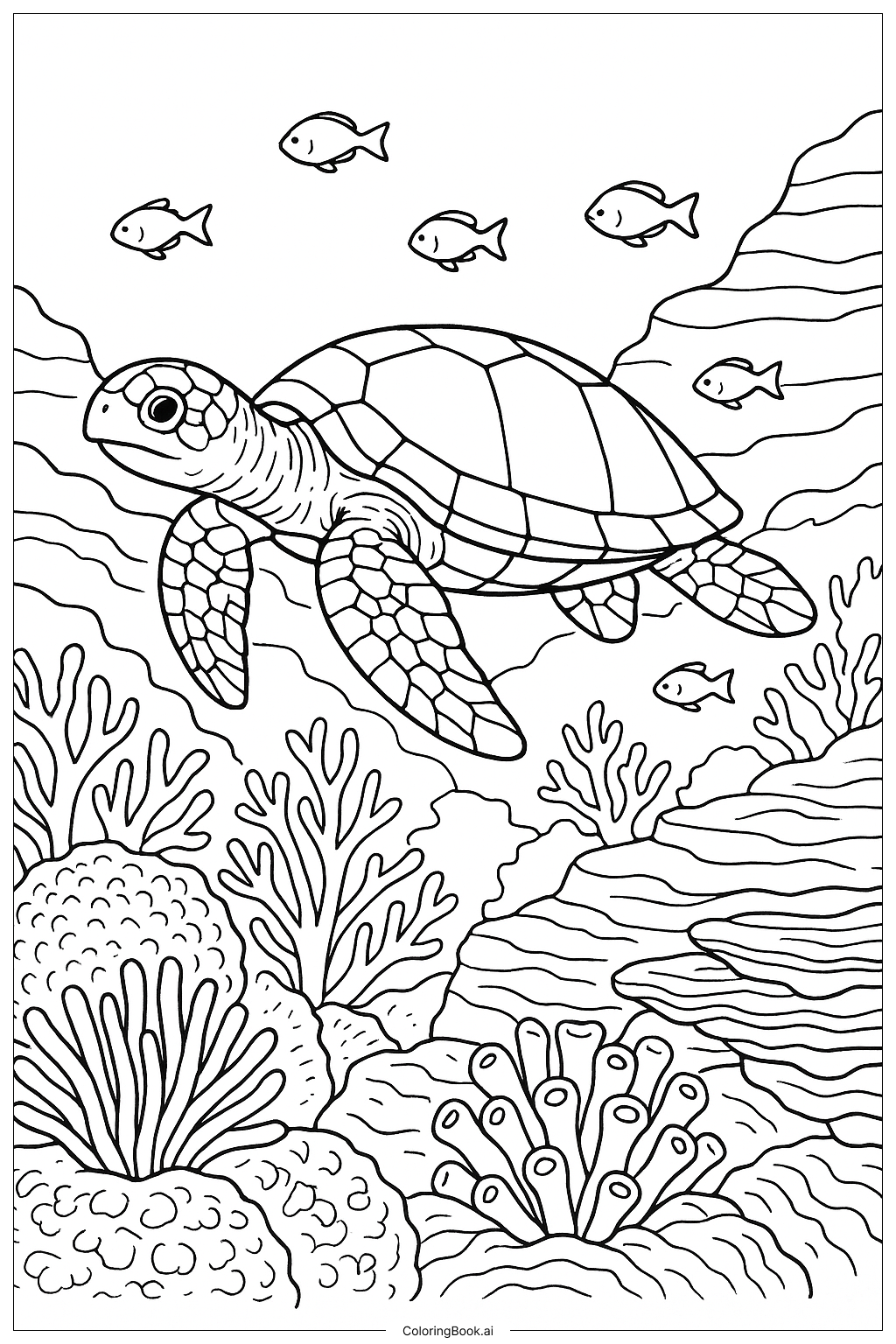
Coloring tips: How to color Sea Turtle With Bubble Trail coloring page well?
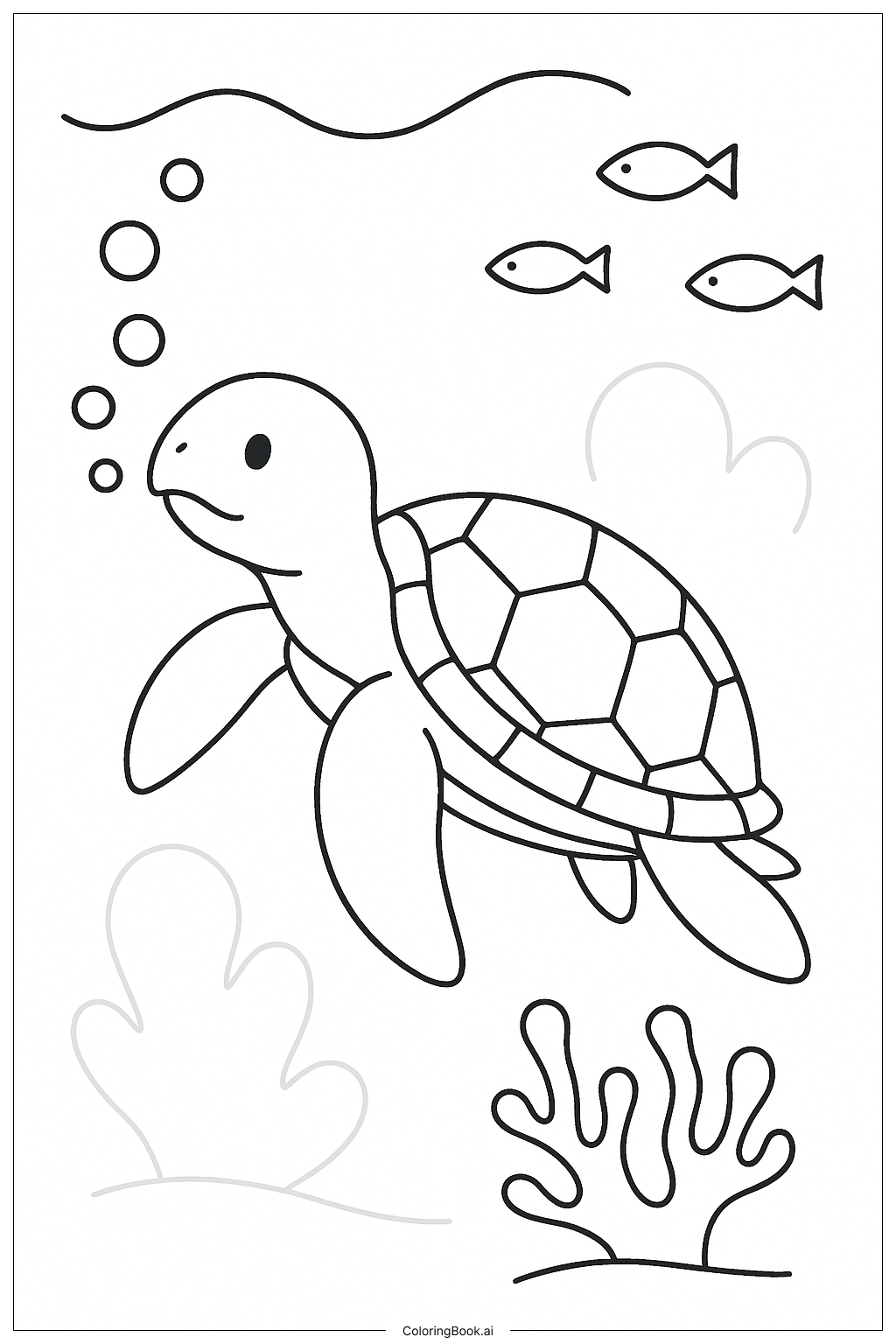
Use different shades of green and brown to color the turtle's shell and flippers. You can make the shell stand out by coloring each hexagonal part with a slightly different tone. The turtle's body can be a mix of lighter greens or blues. Color the bubbles with light blue or leave them white to show they are transparent. For the small fish, try bright colors like orange, yellow, or red to make them pop. The sea plants can be green or a mix of green and light brown. Use blue or turquoise shades for the water and the waves at the top to give the picture a fresh underwater feel.
Coloring challenges: Which parts are difficult to color and need attention for Sea Turtle With Bubble Trail coloring page?
1. The turtle’s shell has many small geometric sections that require careful coloring to avoid going outside the lines. 2. Coloring the bubbles can be tricky because they should look transparent or very light, which means using soft colors or very light strokes. 3. The small fish are close together, so it might be hard to color each one neatly without mixing colors. 4. The sea plants have irregular shapes, and coloring inside their curves demands patience and control. 5. The turtle’s flippers touch the shell and sea plants, so distinguishing between these overlapping parts might be difficult for younger children.
Benefits of coloring books: Advantages of drawing Sea Turtle With Bubble Trail coloring page
Coloring this sea turtle page helps improve fine motor skills because of the small and detailed shapes. It encourages creativity as children decide the colors for the turtle, fish, and plants. Working on the bubbles teaches children to use gentle strokes and understand the concept of transparency. This page also sparks curiosity about sea animals and their habitats. Overall, it is both fun and educational, making kids more confident in their coloring abilities.