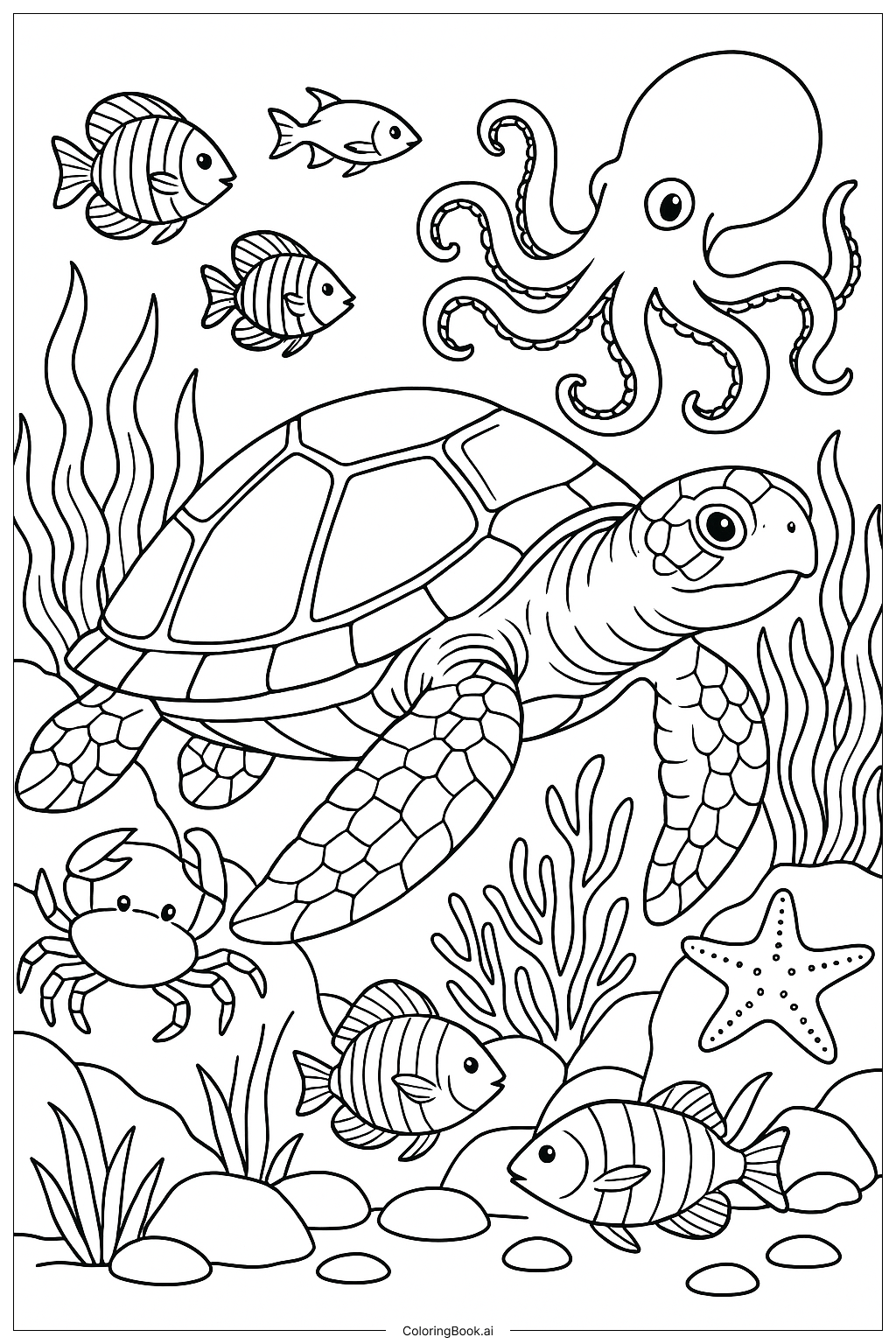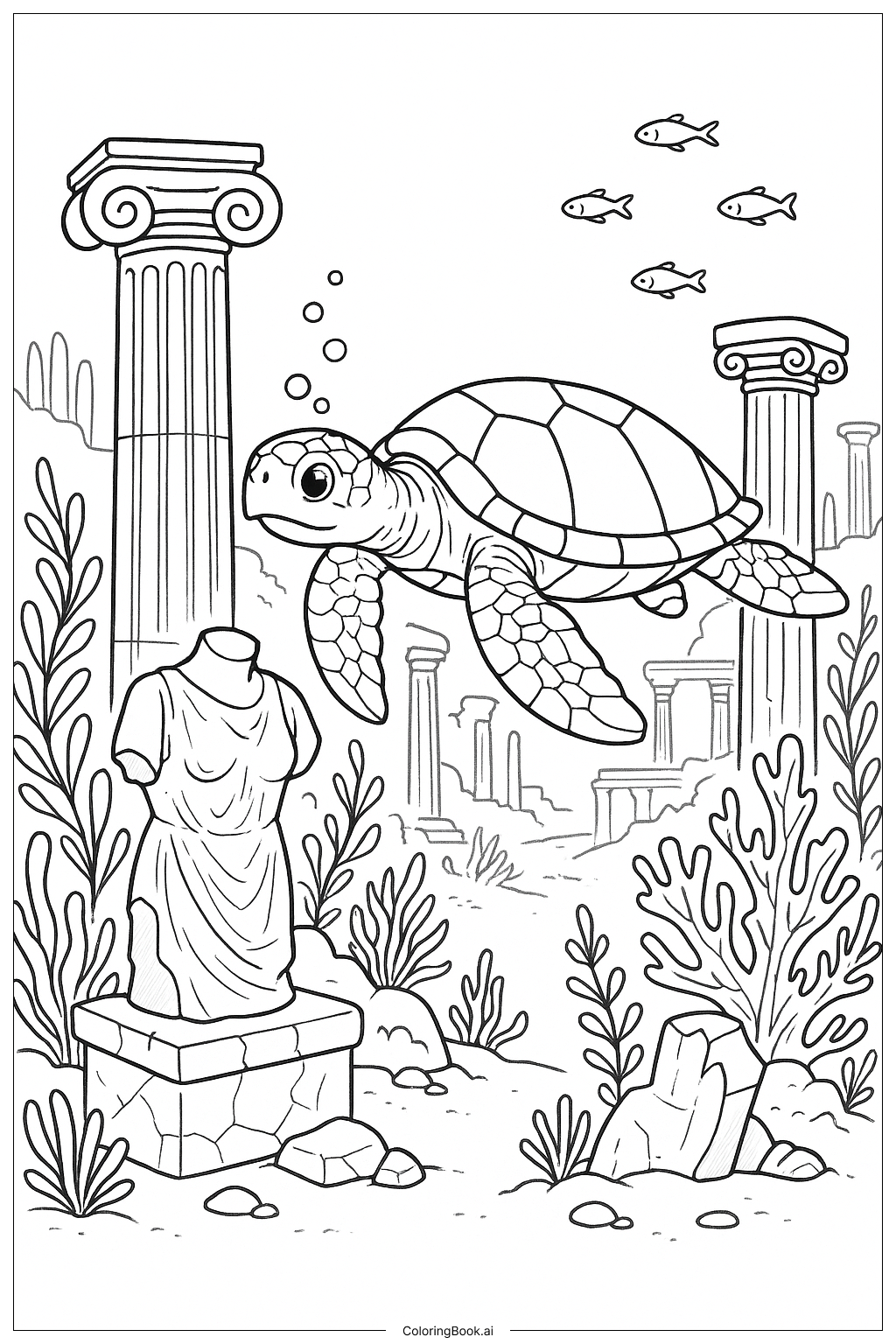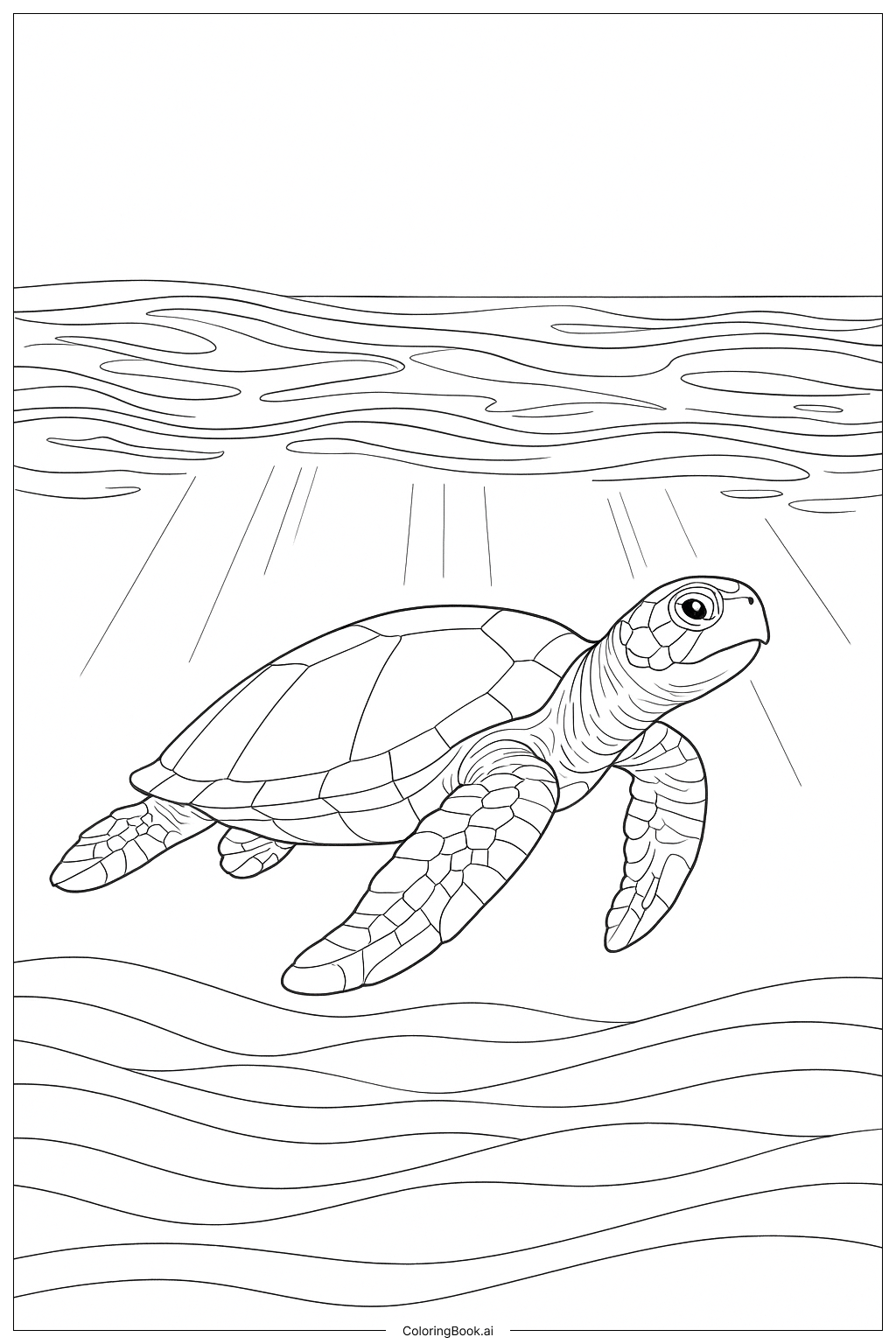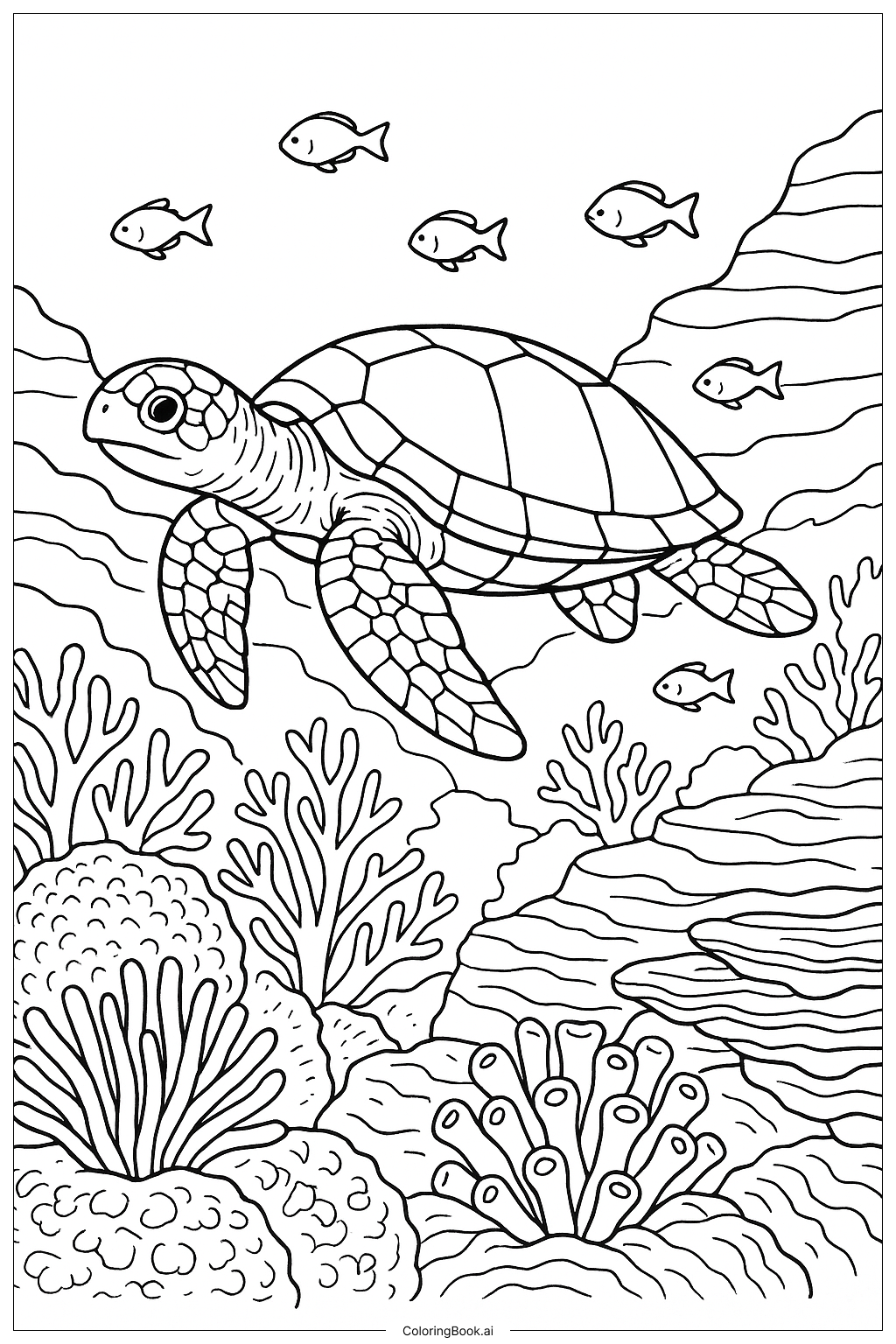
Coloring tips: How to color Sea Turtle In Kelp Forest Panorama coloring page well?
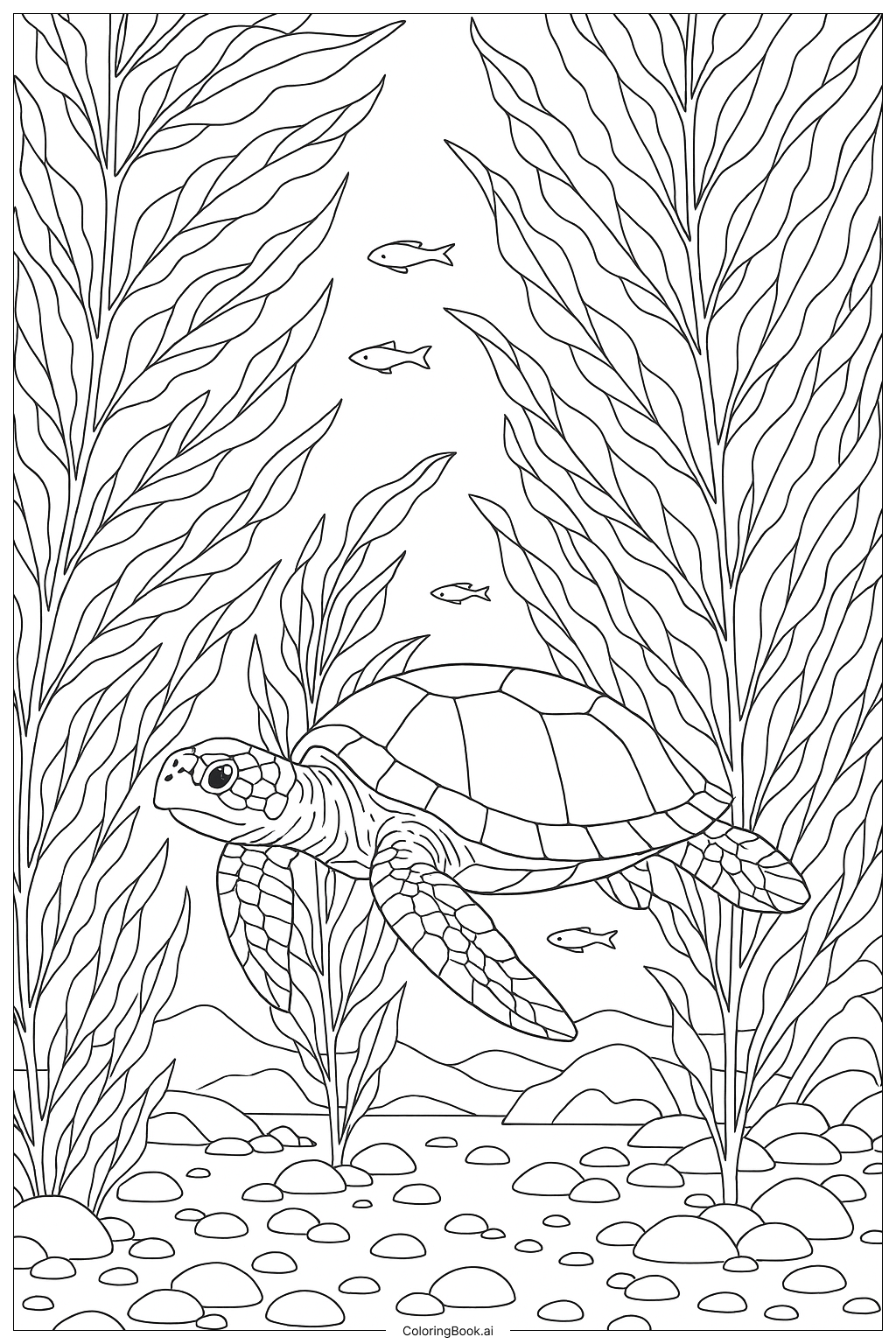
Use shades of green and yellow-green for the kelp leaves to show their natural glow under water. For the Sea Turtle's shell, try blending browns, oranges, and soft yellows to bring out its unique patterns. The turtle's skin can be colored in grayish-green or light olive shades. For the water background, consider light blues, teal, or aqua to create a sense of depth and clarity. Adding touches of silvery white or pale blue on the fish can make them stand out gently. Remember to vary the shades to give the picture a lively underwater feel.
Coloring challenges: Which parts are difficult to color and need attention for Sea Turtle In Kelp Forest Panorama coloring page?
• Shell Pattern Details: The Sea Turtle's shell has many small, intricate patterns that require careful coloring within tight spaces to maintain clarity.
• Kelp Texture: The long kelp leaves have wavy edges and overlapping sections that can be challenging to shade smoothly while showing the natural flow.
• Depth and Layering: Creating a sense of depth with the overlapping kelp, fish, and turtle requires mindful choices of light and dark shades to avoid a flat look.
• Small Fish Details: The tiny fish need fine attention to detail to color them without blending into the background.
• Water Effects: Conveying the look of underwater light and transparency can be tricky but is important to make the scene feel immersive and realistic.
Benefits of coloring books: Advantages of drawing Sea Turtle In Kelp Forest Panorama coloring page
Coloring this Sea Turtle In Kelp Forest Panorama helps improve fine motor skills, especially with detailed patterns on the turtle's shell and the flowing kelp leaves. It encourages focus and patience as younger artists work carefully to stay inside the lines and blend colors. Through exploring natural colors like greens and blues, children learn about ocean environments and underwater life. The image also boosts creativity by inviting experimentation with shading and texture. Finally, coloring marine animals can foster an appreciation and curiosity for wildlife and ocean conservation.