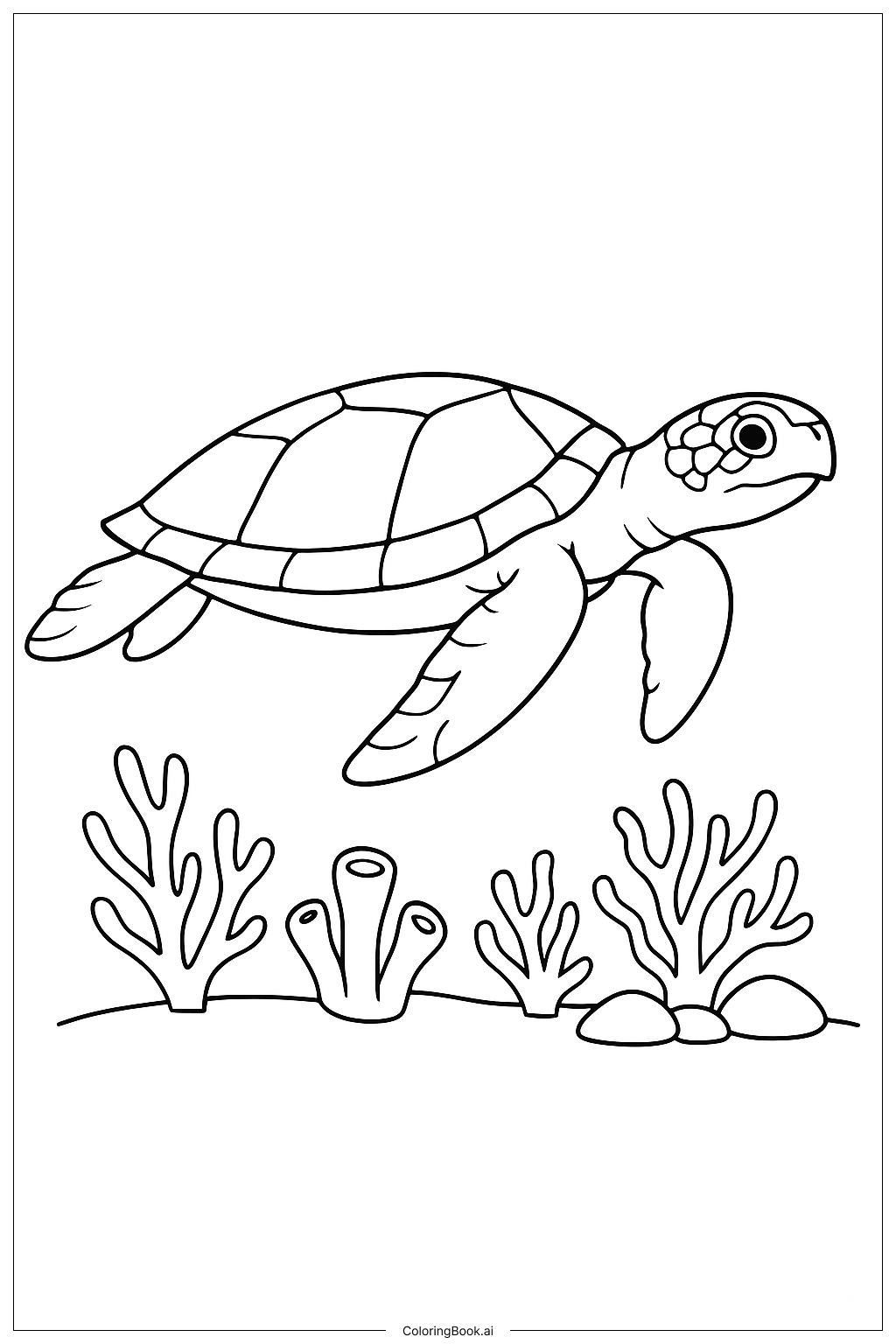
Coloring tips: How to color Sea Turtle Gliding Over Reef coloring page well?
Try using soft blues and greens for the ocean water to show the calm sea. The Sea Turtle’s shell can be colored with shades of brown, olive green, and yellow to give it a realistic look. Use a mix of colors for the reef like reds, oranges, purples, and pinks to reflect different types of coral. You can add small dabs of white or light blue to create the effect of sunlight shining through the water. For the turtle’s flippers and head, blend softer shades that match its shell but are a little lighter. Feel free to use bright colors for any fish or sea plants you imagine around the reef. This coloring page is a great chance to explore many colors found in nature.
Coloring challenges: Which parts are difficult to color and need attention for Sea Turtle Gliding Over Reef coloring page?
• Detailed Shell Patterns: The Sea Turtle's shell has many small patterns and shapes that require careful coloring to stay within the lines, which can be challenging for younger children.
• Texture Variation: The differing textures on the turtle’s skin and the reef below need varied coloring techniques to show depth and realism.
• Layering Colors: Creating the look of water and sunlight requires blending different shades of blue and green, which can be tricky to achieve smoothly.
• Small Reef Details: The coral reef has fine details and smaller sections that need patience and a steady hand to color without overlapping.
• Light and Shadow Effects: Adding subtle shadows on the turtle and the reef to make them look three-dimensional takes practice and attention to light direction.
Benefits of coloring books: Advantages of drawing Sea Turtle Gliding Over Reef coloring page
Coloring this Sea Turtle image helps improve focus and hand-eye coordination as you work on detailed areas. It encourages creativity by blending colors to depict the ocean environment realistically. Working on the texture and patterns of the turtle and reef builds fine motor skills. This image also raises awareness of marine life and nature, fostering appreciation for sea creatures. Coloring calming nature scenes can reduce stress and promote relaxation for kids and adults alike. Overall, it’s a fun way to learn about the ocean while practicing artistic skills.