Coloring tips: How to color Sea Turtle Exploring Seagrass coloring page well?
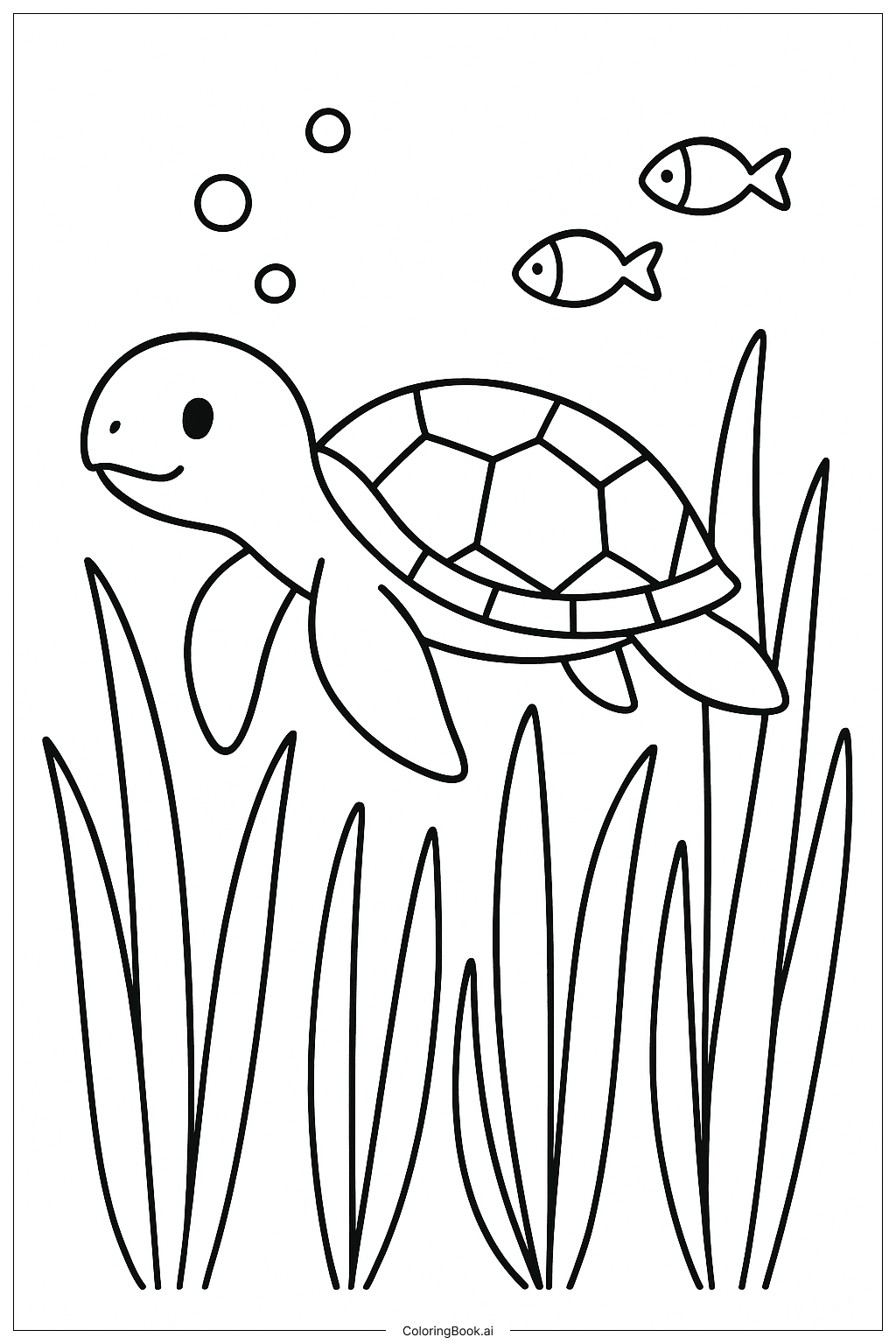
Use different shades of green for the seagrass to create depth. Color the sea turtle's shell with brown and green tones to make it look natural. The turtle's skin can be a lighter green or gray. Use bright colors like orange or yellow for the small fish to make them stand out. For the bubbles, use light blue or white with some shine to make them look real. The background can be a soft blue to represent water.
Coloring challenges: Which parts are difficult to color and need attention for Sea Turtle Exploring Seagrass coloring page?
1. The seagrass has many long, thin blades that are close together, which can be tricky to color carefully without going outside the lines.
2. The turtle's shell is divided into many small shapes, so coloring each section evenly can require patience.
3. Adding shading and blending different greens on the seagrass and turtle to make them appear realistic may be challenging for beginners.
4. Coloring the small fish and bubbles with bright and soft colors might require careful brush or pencil control to avoid overlapping.
5. Keeping the turtle's face and eye details clear while coloring can be difficult but important for showing its friendly expression.
Benefits of coloring books: Advantages of drawing Sea Turtle Exploring Seagrass coloring page
Coloring this picture helps improve hand-eye coordination and fine motor skills as children color small and detailed parts like the turtle's shell and seagrass blades. It also encourages creativity by choosing colors to bring the underwater scene to life. Kids can learn about sea turtles and their habitat while coloring, which supports knowledge about nature and animals. Additionally, using different shades and blending colors helps develop color recognition and artistic skills. This relaxing activity can also boost focus and patience as children work to complete the picture.