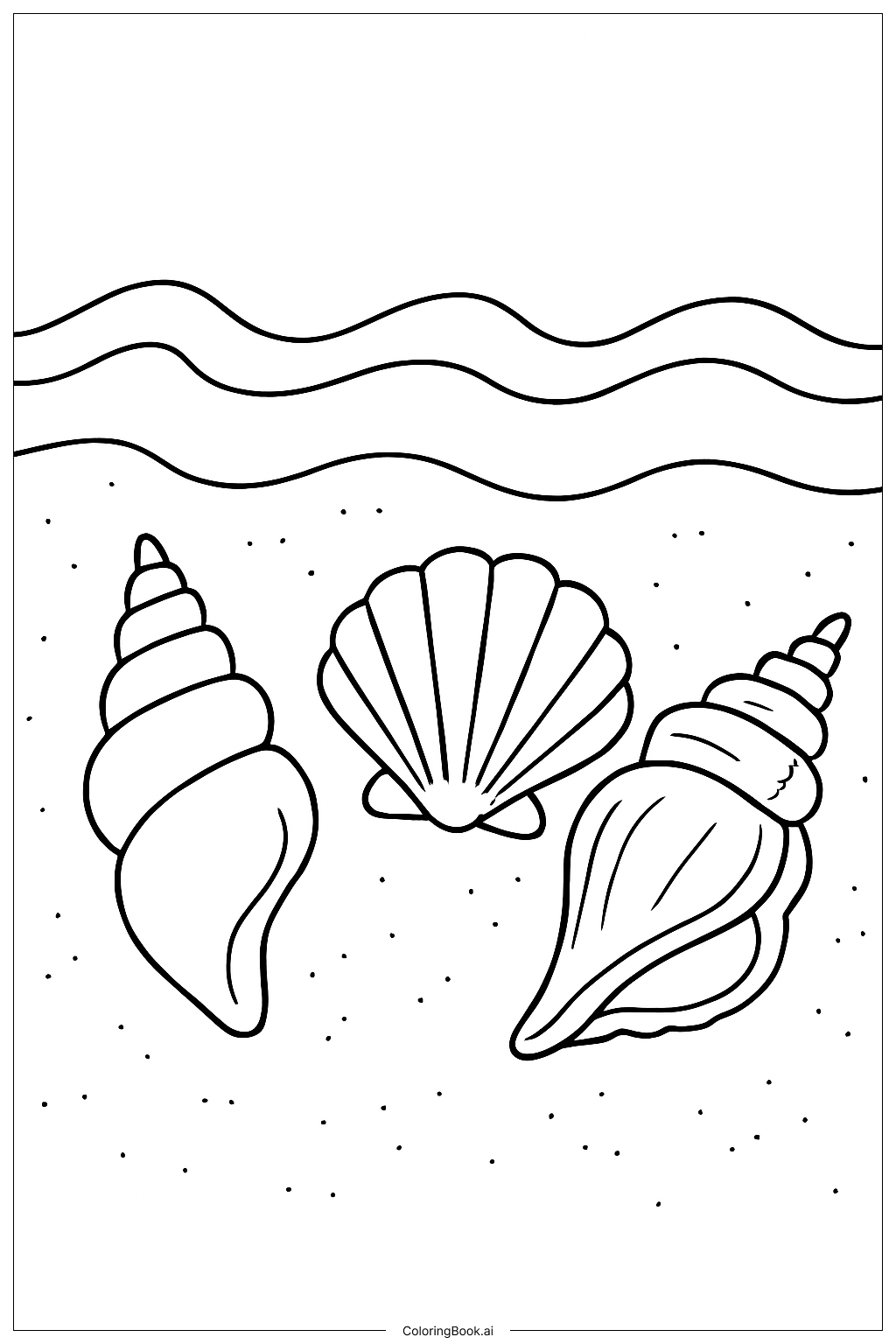
Coloring tips: How to color Sea Shells Near Shoreline Waves coloring page well?
Try using soft blues and greens for the waves to show the moving water near the shore. Use sandy yellows, light browns, and creams for the beach and sea shells. You might color each shell with different warm colors like soft pinks, oranges, and purples to make them stand out. Adding white highlights on the waves can make the water look shiny and lively. You can also add green or dark brown for the seaweed to give contrast. Remember to keep the colors flowing naturally from the sea to the sand for a smooth look. Have fun mixing bright and calm colors to bring this beach scene to life!
Coloring challenges: Which parts are difficult to color and need attention for Sea Shells Near Shoreline Waves coloring page?
• Fine Details of Shells: Some sea shells have small ridges and lines that need careful coloring to keep their texture clear.
• Blending Water Colors: The waves have gentle curves and changing shades of blue, which can be tricky to blend smoothly.
• Light and Shadow Effects: Showing the wet sand and the shine of water requires paying attention to light areas and shadows.
• Small Elements: Seaweed and little stones are tiny parts that demand patience to color without going outside the lines.
• Layering Colors: To create a natural look, you might need to color in layers, especially on the shells where colors mix from one part to another.
Benefits of coloring books: Advantages of drawing Sea Shells Near Shoreline Waves coloring page
Coloring this image helps improve focus and fine motor skills as you work on the details of the sea shells and waves. It encourages creativity by choosing different colors for the shells and the water. The calming beach scene promotes relaxation and mindfulness while coloring. It also teaches observation skills by noticing how natural elements like water and sand change color and shape. Overall, coloring Sea Shells Near Shoreline Waves is a fun way to connect with nature and practice artistic techniques.