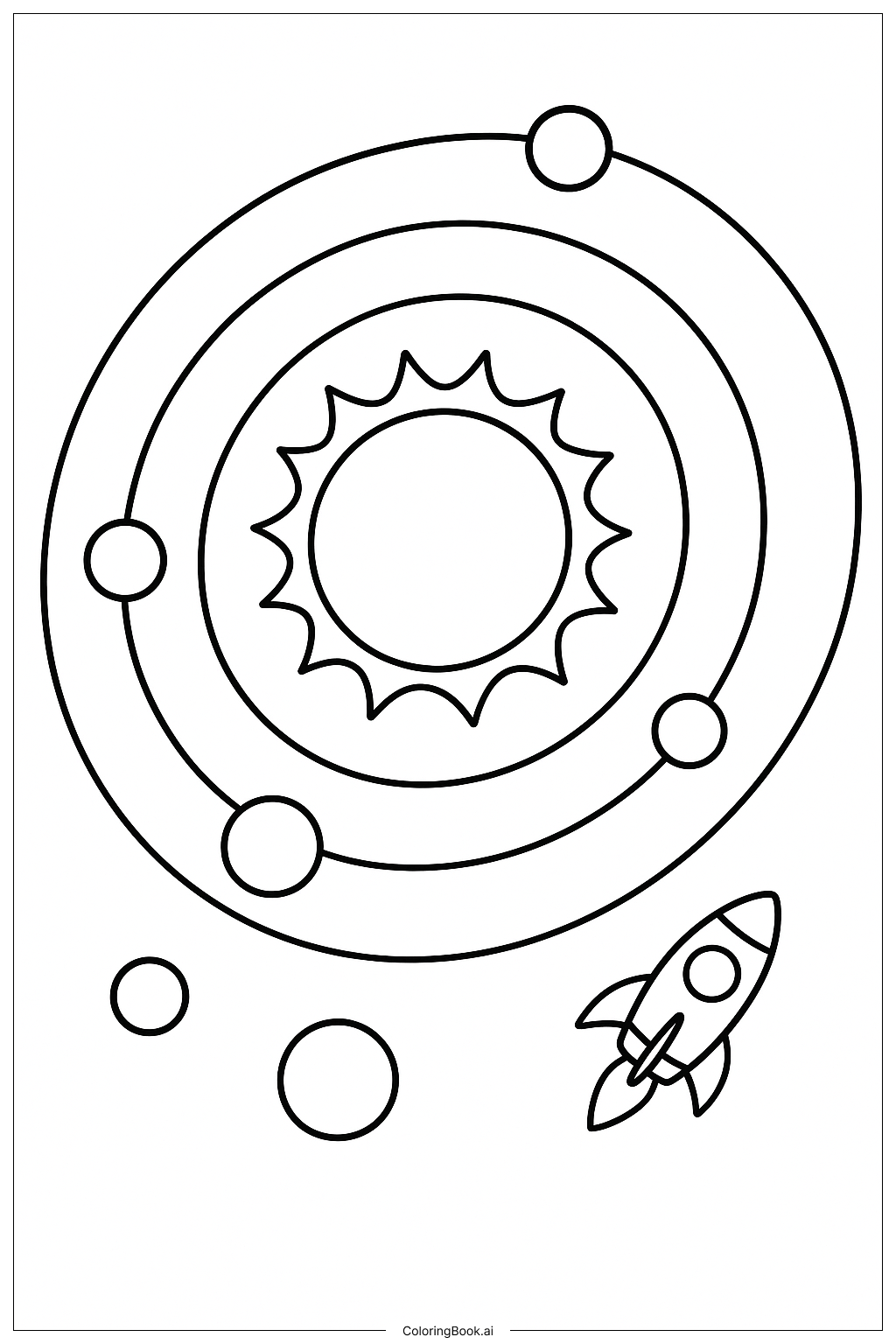
Coloring tips: How to color Science Solar System coloring page well?
Try using bright yellows and oranges for the Sun to show its heat and light. Color Mercury, Venus, Earth, and Mars with shades of gray, brown, green, and red to reflect their rocky surfaces. For Jupiter, use bands of brown, white, and orange stripes. Saturn’s rings can be colored light yellow or tan with touches of gray for depth. Uranus and Neptune look good in blue and aqua tones to represent their icy gas atmospheres. Use different shades to add texture and realism. You can also color the stars white or light yellow and add some sparkles around the small comets. If you want, try mixing crayons, colored pencils, or markers to see different effects and bring the solar system to life.
Coloring challenges: Which parts are difficult to color and need attention for Science Solar System coloring page?
• Planet Size Proportions: Maintaining the correct size differences between the planets can be tricky, especially since some planets like Jupiter are much larger than others such as Mercury. Coloring with attention to scale adds realism but requires careful detail. • Rings Around Saturn: The rings have fine lines and curved shapes that need steady handwork. Coloring inside these areas without bleeding into the planet or background may challenge younger children. • Surface Details: Several planets, especially Jupiter and the Sun, have textured belts and swirling patterns. Bringing out these subtle surface features needs patience and a good choice of shading tools. • Color Selection: Knowing which colors best represent each planet can be confusing, as some planets have multiple tones. Choosing shades that contrast well yet look natural requires planning. • Background Space: The starry background with tiny stars and comets demands delicate coloring to avoid smudging or over-coloring, which could hide the faint details.
Benefits of coloring books: Advantages of drawing Science Solar System coloring page
Coloring this Science Solar System image helps improve fine motor skills and hand-eye coordination as children carefully color within lines and shapes. It encourages creativity while learning about planets, sparking curiosity about space and science. Working on detailed surface patterns promotes focus and patience. Coloring different planet sizes and textures can enhance understanding of scale and diversity in our solar system. This activity is both fun and educational, making kids feel connected to astronomy while developing concentration and color recognition.