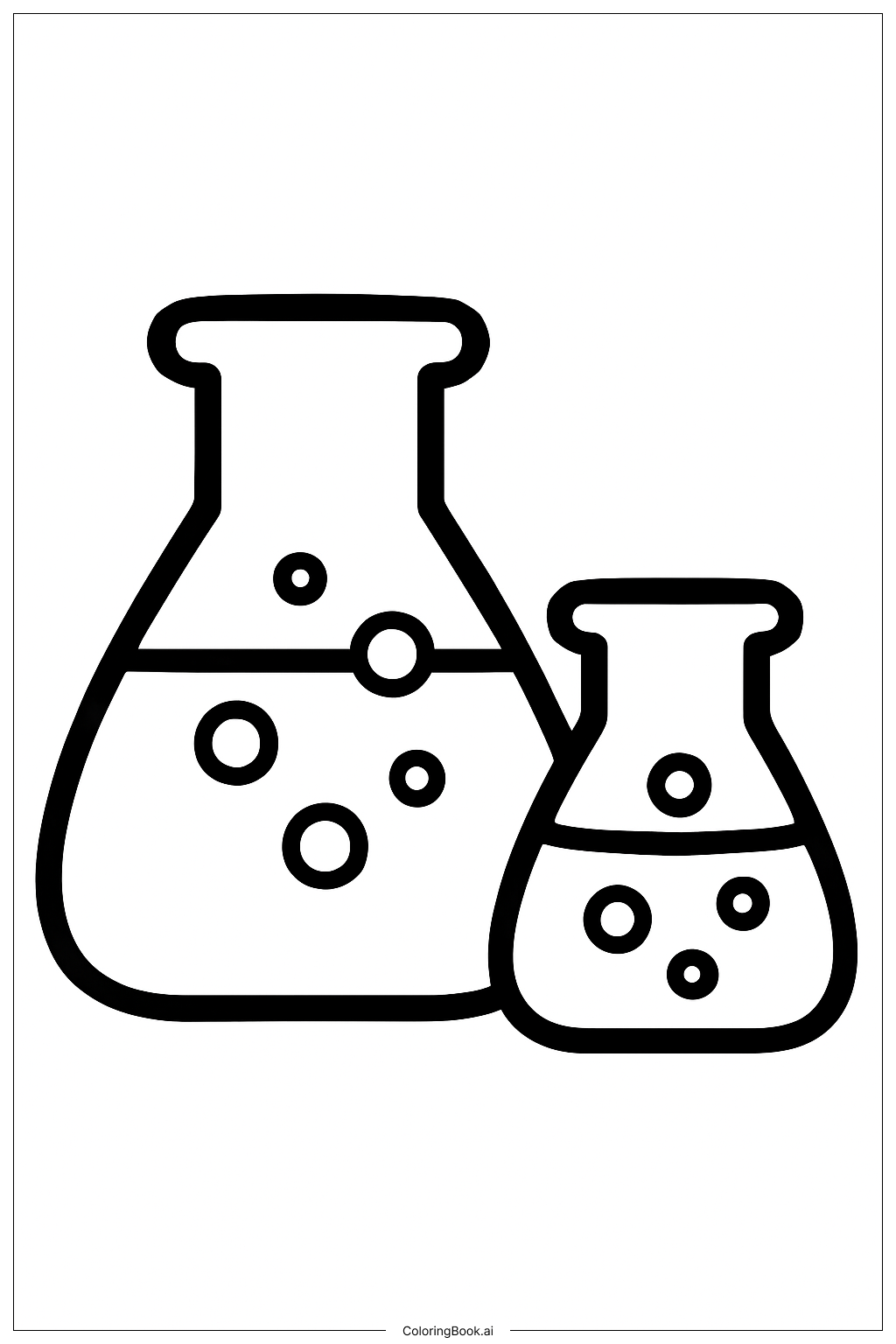
Coloring tips: How to color Science Beaker Stack coloring page well?
Try using bright, bold colors for the liquids inside the beakers to make the image come alive. You can pick green, blue, red, or purple to show different chemicals bubbling away. For the glass itself, use very light shades of blue or gray to give a transparent effect, leaving some areas uncolored to represent clear glass. The measurement marks can be colored in black or dark gray for contrast. The base and rims of the beakers may be colored a little darker to show shadows and depth. Feel free to add your own creative touch by imagining glowing or sparkling liquids to make the Science Beaker Stack even more exciting.
Coloring challenges: Which parts are difficult to color and need attention for Science Beaker Stack coloring page?
• Glass Transparency: The beakers have clear glass surfaces that should look see-through. Coloring them while keeping this transparent effect can be challenging because you need to avoid coloring them with solid, heavy colors. Light shading or leaving parts uncolored works best.
• Measurement Marks: The tiny measurement lines require careful coloring to avoid filling them in accidentally, which could ruin the detail.
• Small Bubbles and Liquid Lines: These fine details inside the beakers are delicate and may be hard to color precisely without going outside the lines.
• Overlapping Shapes: Since the beakers are stacked and overlapping, it can be tricky to use different colors without the stacks blending together or creating confusion.
• Maintaining Dimension: Showing the roundness and volume of the beakers through shading or color gradients takes extra attention and skill for younger colorers.
Benefits of coloring books: Advantages of drawing Science Beaker Stack coloring page
Coloring this Science Beaker Stack helps develop fine motor skills through the careful attention needed for the small details. It encourages children to explore themes of science and experimentation, sparking curiosity and learning. Working on the transparent glass parts improves understanding of light and shading concepts, boosting artistic abilities. This image also promotes patience and concentration, as children balance coloring the overlapping shapes and delicate measurement lines. Overall, it combines creativity with educational value, making it a great activity for kids interested in science and art.