Coloring tips: How to color School Science Lab Table coloring page well?
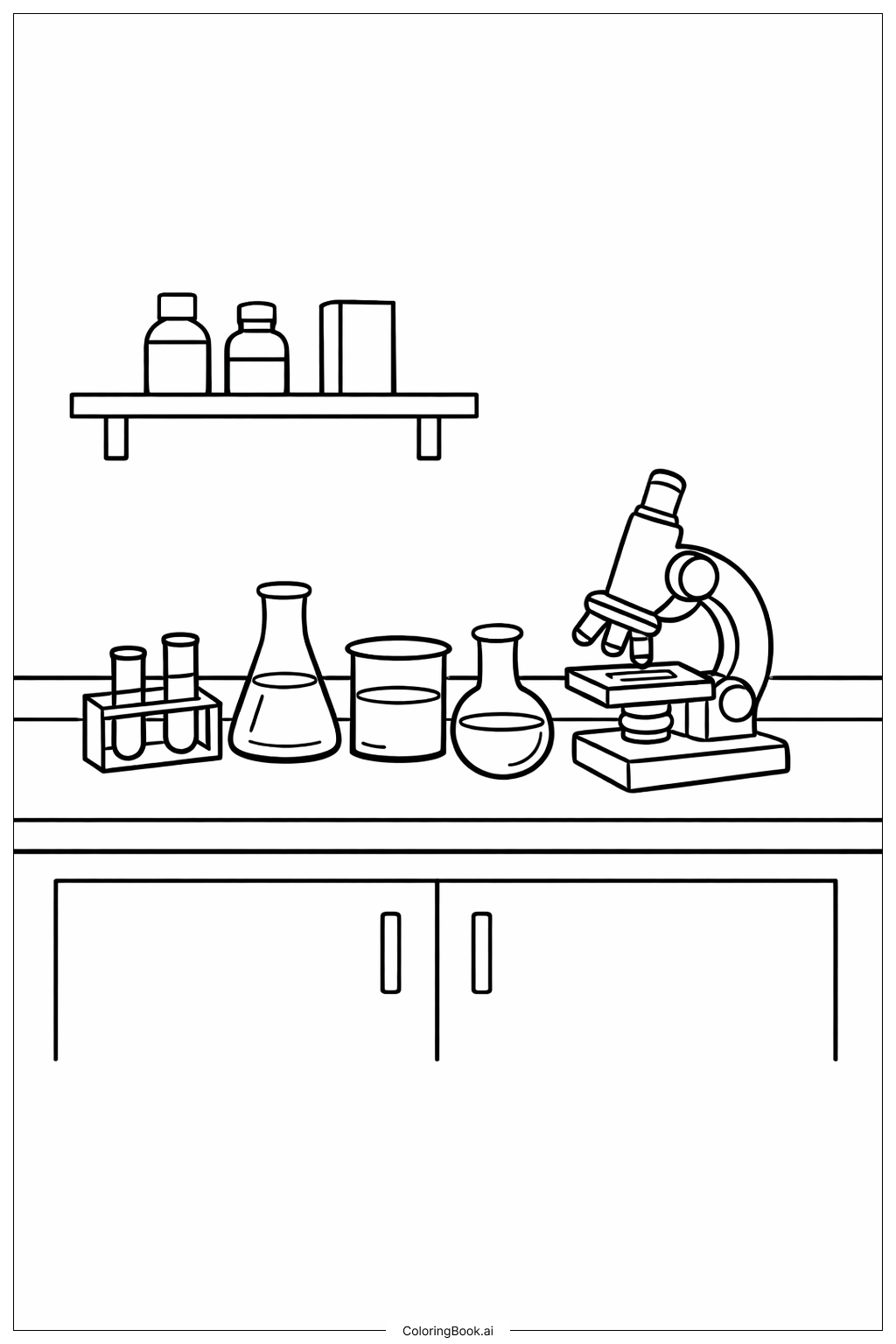
Use bright colors to make the science lab look interesting. Color the glass beakers and flasks with light blue or green shades to show they contain liquids. The microscope can be colored grey or black. Use different colors for the test tubes to show different chemicals inside. The shelf items can be colored using shades of brown, red, and blue. The table can be a light wood color or grey. Try to keep the background simple with light colors so the lab items stand out.
Coloring challenges: Which parts are difficult to color and need attention for School Science Lab Table coloring page?
1. Coloring the glass containers can be tricky because they are transparent. Try using light colors or shading to show the glass effect.
2. The microscope has many small parts, which need careful coloring to stay within the lines.
3. Different liquid levels in the containers need attention to detail for coloring inside the shape.
4. The small bottles and test tubes on the shelf and table are tiny and require precision.
5. The table surface and cabinet doors need smooth and even coloring to look neat.
Benefits of coloring books: Advantages of drawing School Science Lab Table coloring page
Coloring this science lab image helps children learn about different lab tools and their shapes. It improves fine motor skills by coloring small objects like test tubes and microscope details. It encourages attention to detail and using colors to show transparency and liquid effects. Coloring this scene can make kids more interested in science and experiments. It’s a fun way to combine art with learning about school science labs.