Coloring tips: How to color School Globe coloring page well?
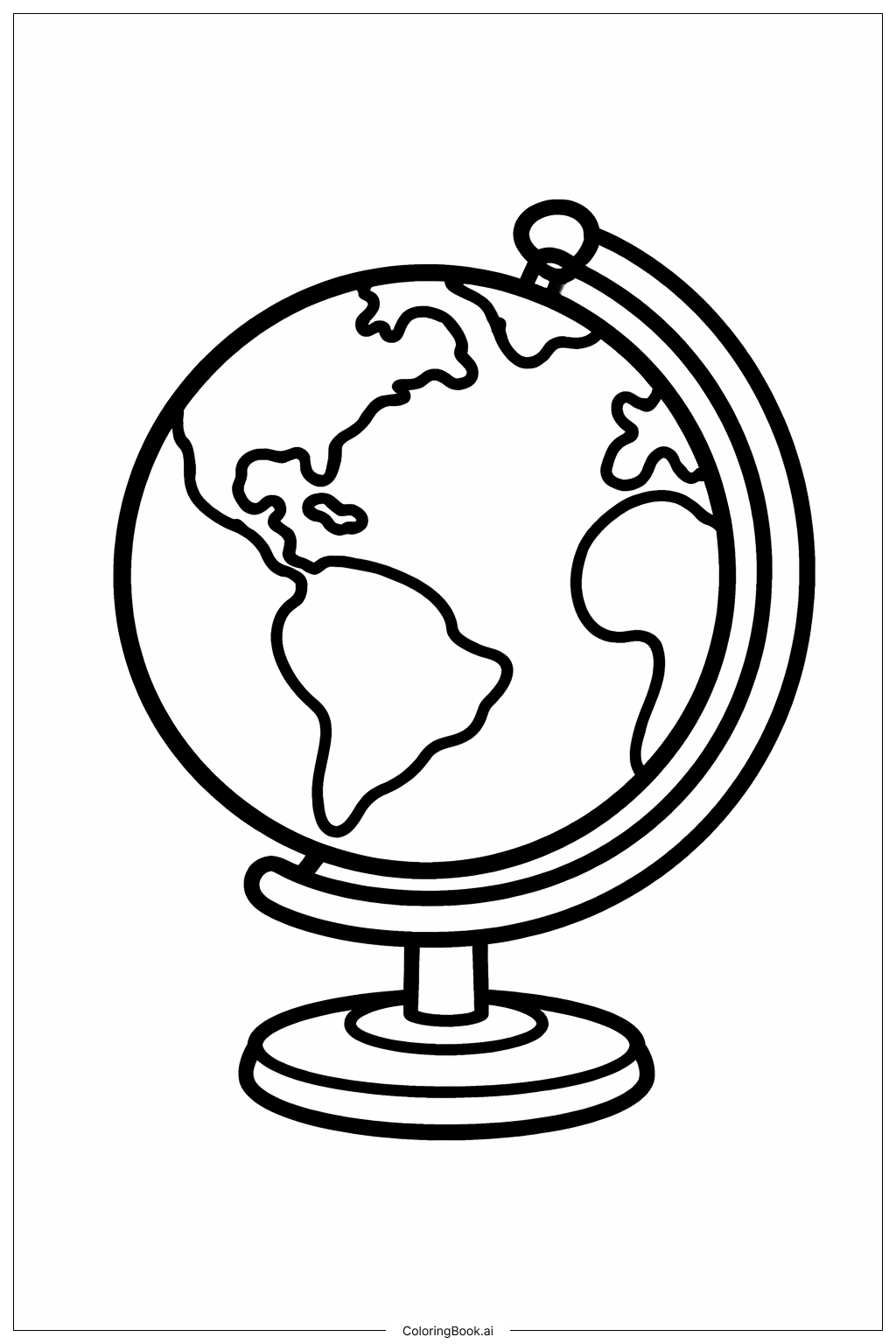
Use blue and green primarily to color the globe. Blue can represent the oceans and seas, while green can color the continents and land areas. You may also mix in shades of brown or yellow to show deserts or mountains on the land. For the stand and base, use colors like gray, brown, or black to make it look realistic. Try to stay within the lines for a neat finish. Feel free to add some creative colors to the background or the stand to make your globe unique and vibrant.
Coloring challenges: Which parts are difficult to color and need attention for School Globe coloring page?
1. Coloring inside the small and curved shapes of the continents can be tricky. 2. Staying within the narrow lines of the globe's stand requires careful attention. 3. Deciding which colors to use for different land areas might be confusing because of the simple shapes. 4. Balancing colors between the ocean and land to create a natural look takes some planning. 5. Avoiding color overlap in the areas where the globe meets the stand needs precision.
Benefits of coloring books: Advantages of drawing School Globe coloring page
Coloring this globe helps children learn about different continents and oceans in a fun way. It improves hand-eye coordination and fine motor skills by requiring careful coloring inside curves and small areas. The activity encourages creativity by letting kids choose colors for the land and sea. It also introduces concepts of geography and shapes of the Earth, sparking curiosity and interest in the world around them.