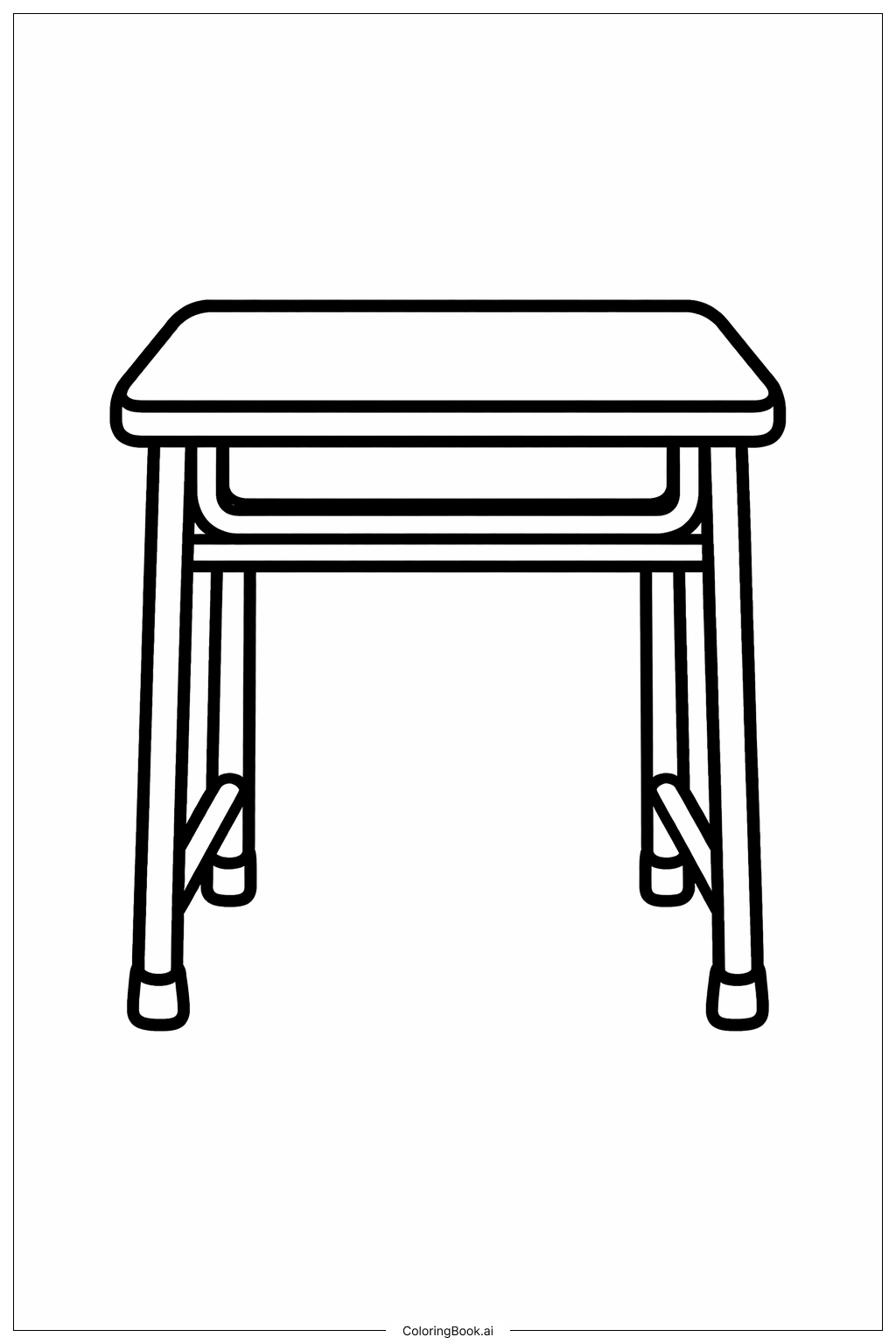
Coloring tips: How to color School Desk coloring page well?
Try using different shades of brown, beige, or gray for the desk to make it look like wood or metal. You can color the top of the desk one shade and the legs another to add variety. Don’t forget the small storage area under the desktop—it can be darker or lighter than the top. You may also add a colorful background to make the picture more lively, like drawing a classroom wall or floor. Keep your strokes neat and follow the lines carefully to stay inside the desk’s shape.
Coloring challenges: Which parts are difficult to color and need attention for School Desk coloring page?
1. Coloring the thin lines and small spaces under the desk requires careful attention and control to stay inside the lines.
2. The legs and bars have narrow spaces that might be tricky to color evenly.
3. Making the desk look three-dimensional with shadows or different shades might be challenging for younger children.
4. Balancing the colors between the desktop and the legs to look natural can be difficult.
5. Adding a background without covering the desk lines needs patience and precision.
Benefits of coloring books: Advantages of drawing School Desk coloring page
Coloring this school desk helps children develop fine motor skills as they practice staying within the lines. It encourages attention to detail, especially when coloring the smaller parts like the legs and supports. This activity also helps kids learn about everyday objects found in a classroom, promoting connection and understanding of their environment. Additionally, choosing different colors fosters creativity and decision-making. Overall, coloring this picture combines education and fun in a simple, engaging way.