Coloring tips: How to color The Akedah Story For Rosh Hashanah coloring page well?
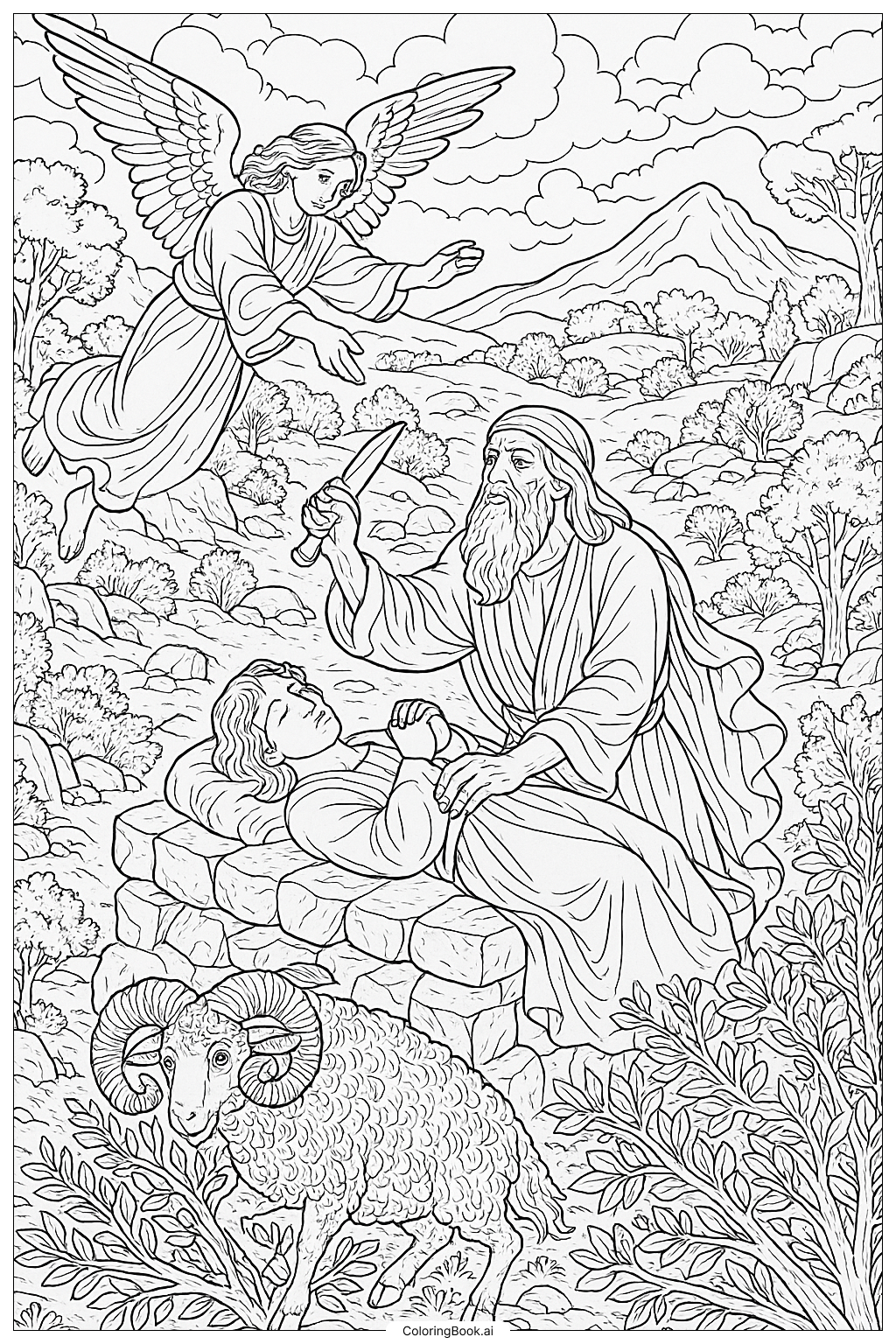
Use warm colors like browns and tans for Abraham’s and Isaac’s clothes to keep the scene natural and grounded. You can color Abraham’s robe in soft earth tones and Isaac’s tunic in lighter shades to contrast. The angel can be colored in bright white or pale blue to show purity and divine presence. The ram caught in the bush can be white or cream with golden highlights to emphasize its importance. For the background trees and grass, use various shades of green and brown to create depth. The sky can be a soft blue with light gray or white clouds. Adding gentle shading on the stone altar will make the scene more realistic. Encourage using calm, natural colors to reflect the solemn yet hopeful mood of the story for Rosh Hashanah.
Coloring challenges: Which parts are difficult to color and need attention for The Akedah Story For Rosh Hashanah coloring page?
• Detailed Figures: The faces and hands of Abraham, Isaac, and the angel have small details that require careful coloring to keep the expressions clear and gentle.
• Small Elements: The ram and the thorny bush have fine lines and intricate patterns that need attention to avoid coloring outside the lines.
• Clothing Folds: The robes and tunics of Abraham and Isaac have folds and pleats, which may be tricky to color smoothly while showing light and shadow.
• Background Complexity: Trees, clouds, stones, and grass offer many small areas to color, which might be challenging but good for practicing patience and precision.
• Balancing Colors: Choosing colors that highlight the main characters without overwhelming the background requires thoughtful use of shades and contrast.
Benefits of coloring books: Advantages of drawing The Akedah Story For Rosh Hashanah coloring page
Coloring this image helps children learn about an important story related to Rosh Hashanah in an engaging way. It encourages focus and fine motor skills by managing detailed areas and gentle shading. The page also promotes creativity through color choices that reflect different moods and elements of nature. By coloring the angel, ram, and landscape, children can explore symbolism and deepen their understanding of themes like faith, trust, and divine intervention. Overall, it combines artistic expression with learning about cultural and religious traditions, making it both fun and meaningful for kids aged 4 to 16.