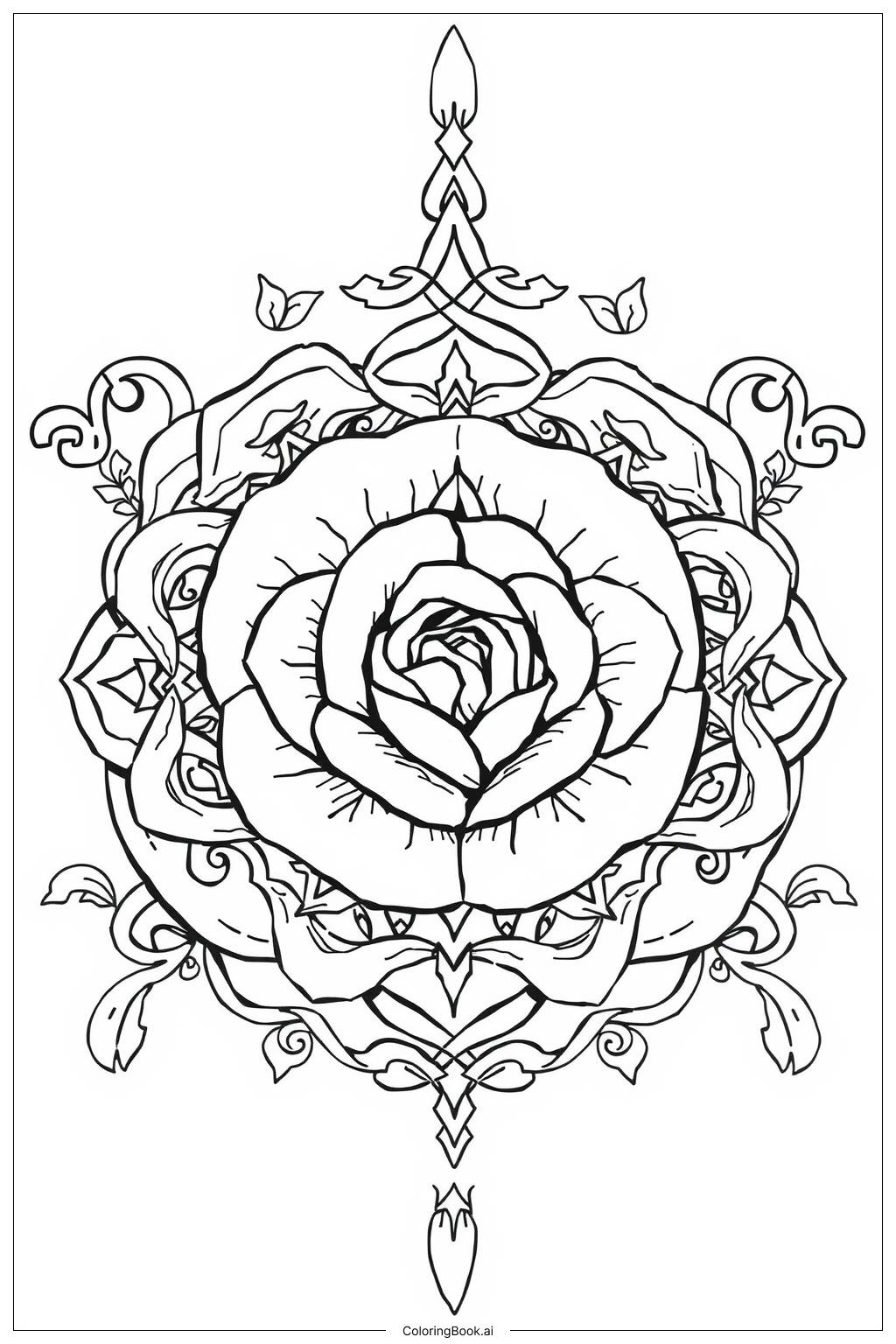
Coloring tips: How to color Celtic Rose Pattern coloring page well?
Start by coloring the central rose first. Use soft pinks, deep reds, or warm purples for the petals. Add a light yellow or cream tone at the center of the bloom to give it a glowing effect. For the Celtic knotwork, try using gold, earthy greens, or deep blues to honor the traditional Celtic color palette. You can also use complementary colors — like a red rose with green knotwork — to make each element pop. Color the leaves in shades of forest green or olive. For a magical look, try using jewel tones throughout, such as emerald, sapphire, and burgundy. Work slowly through the knotwork sections, keeping neighboring areas distinct by using alternating shades. Younger colorists can keep things simple with just two or three colors, while older kids and Adults can experiment with shading and blending for a richer result. Take your time and enjoy the process!
Coloring challenges: Which parts are difficult to color and need attention for Celtic Rose Pattern coloring page?
• Complex Knotwork Sections: The Celtic knots are made up of continuous interlacing lines that loop over and under each other. Keeping track of which strand goes on top can be tricky. It helps to trace the path of each strand with your eye before you apply color, so you can maintain a consistent over-under pattern throughout the design.
• Tiny Petal Details: The rose at the center has multiple layers of petals, each with its own small curves and edges. Coloring these neatly without bleeding into neighboring petals requires a fine-tipped colored pencil or a thin marker. Rushing this section can make the petals look muddled, so patience is key.
• Maintaining Color Consistency: Because the knotwork wraps all around the page, keeping the same strand the same color throughout the entire pattern is challenging. It is easy to lose track of which line connects to which, especially at crossing points. Using a light pencil sketch to number or mark strands beforehand can help a lot.
• Symmetry and Balance: The circular composition means that coloring choices on one side of the design should mirror or complement the other side. Achieving visual balance — so the finished piece looks harmonious and not uneven — takes planning. Laying out your color palette before you begin will save you from mismatched results.
• Shading in Narrow Spaces: Many sections between the knotwork lines are very narrow. Applying smooth gradients or shading in these tight spaces without going outside the lines is one of the hardest parts of this page, especially for younger colorists.
Benefits of coloring books: Advantages of drawing Celtic Rose Pattern coloring page
Coloring this Celtic Rose Pattern page offers a wide range of wonderful benefits for Boys, Girls, and Adults alike. The detailed knotwork encourages focus and concentration, helping colorists practice staying in small, precise areas — a great way to build fine motor skills in younger children. For older kids and Adults, the complexity of the design offers a genuine mental challenge that sharpens attention to detail and spatial reasoning.
Working through the interlacing patterns also promotes a calm, meditative state. Many people find that concentrating on repetitive, flowing lines reduces stress and anxiety, making this page a relaxing activity after a long day. It is a screen-free way to unwind while still keeping the mind engaged.
The creative freedom in choosing colors for the rose and knotwork sparks imagination and self-expression. There is no single right answer — every colorist can make the page uniquely their own. This builds confidence and encourages artistic exploration.
Finally, completing a complex design like this gives a strong sense of accomplishment. Finishing such a detailed piece — whether it takes one sitting or several — teaches persistence and patience, qualities that are valuable far beyond the coloring page itself. It is a fun, rewarding, and enriching activity for all ages.