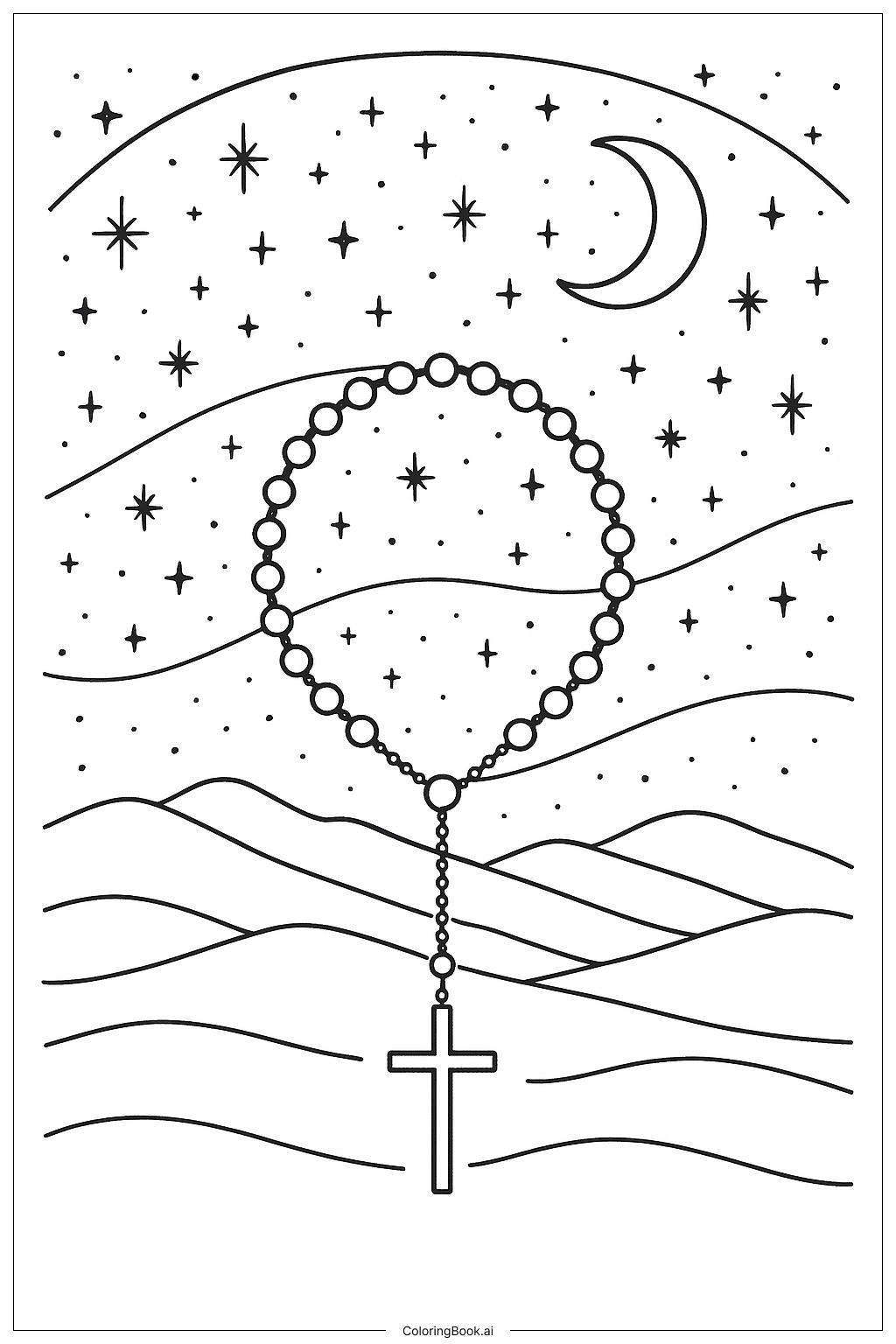
Coloring tips: How to color Rosary Starlight Night coloring page well?
Try a calm color scheme to reflect the night scene. Start with the sky: use a gradient from navy at the top to soft indigo near the horizon. Add stars in white, pale yellow, or silver. The crescent moon can be pale gold or cool silver. The hills can be layered with different greens or bluish purples; add light shading along the curves to show distance. The rosary beads can be colored similarly to pearls: light ivory for highlights, or pastel blues and pinks for variety. The chain between beads should have a slightly darker gray to give a metal feel. The cross pendant can be metallic: silver, gold, or bronze, with a darker edge to show depth. Leave some white spaces to keep the illustration bright and fresh. Consider using a blending pencil or water-soluble colored pencils to achieve smooth gradients. For younger children, use broad strokes and simpler colors; for older kids, blend colors to create a luminous night atmosphere. Remember to color inside the lines and enjoy the moment of calm as you color.
Coloring challenges: Which parts are difficult to color and need attention for Rosary Starlight Night coloring page?
Difficulties include:
- Shading the bead loop: The rosary forms a large circle with many uniform beads. Each bead needs a soft curve and a tiny highlight to look round. It’s easy to press color too hard on the beads or miss the light source, which makes them flat. It’s important to plan light and dark areas and color beads in a consistent order, so the loop looks even.
- Keeping lines crisp: The page is full of thin outlines—the stars, moon, hills, and the rosary chain. Crayons can leave waxy streaks; markers can bleed through. For clean edges, use colored pencils or fine-tipped markers, and color slowly. If a line bleeds, let it dry and then carefully retrace with a darker pencil. A light touch preserves the design’s delicate, prayerful feel.
- Night sky blending and star contrast: The sky should look deep at the top and lighter near the horizon. Layer blues gently and leave blanks for stars to shine. Use whites or pale yellows for stars, and a pale yellow moon. Avoid over-blending; a few bright stars can pop against the dark blue, creating a magical, starlit atmosphere.
- Layered hills depth: Multiple hills overlap; shading helps show distance. Make far hills darker and near hills lighter, following the curves. Follow the contour lines to add shadows on the back hills and brighten the fronts for depth.
- Cross and tassel details: The cross pendant and tassel have tiny shapes that must stay sharp. Use a dark outline and a small white highlight to suggest metal. Take your time on these areas to keep the sacred feeling intact.
Benefits of coloring books: Advantages of drawing Rosary Starlight Night coloring page
This coloring page offers several benefits for children. It helps improve fine motor skills as kids carefully color tiny beads and narrow lines. The repeating beads and gentle curves train hand control and steadiness. It supports focus and patience because children naturally slow down to choose colors and stay inside the lines. The night sky and hills invite practice with color blending, helping kids learn how to create gradients from light to dark. Color choices foster imagination and color recognition—pale ivory beads, silver or gold crosses, deep blues for the sky, and greener hills. The activity also promotes mindfulness and calm, providing a quiet, reflective moment that can reduce stress. Additionally, this image encourages a sense of sacredness and wonder, as children color symbols like the rosary and the cross in soft, respectful tones. Completing the picture gives a sense of accomplishment and pride in their artwork. Finally, it encourages following a plan: choosing a color scheme before filling large areas teaches organization and planning. Overall, coloring this page supports creativity, coordination, concentration, and emotional well-being.