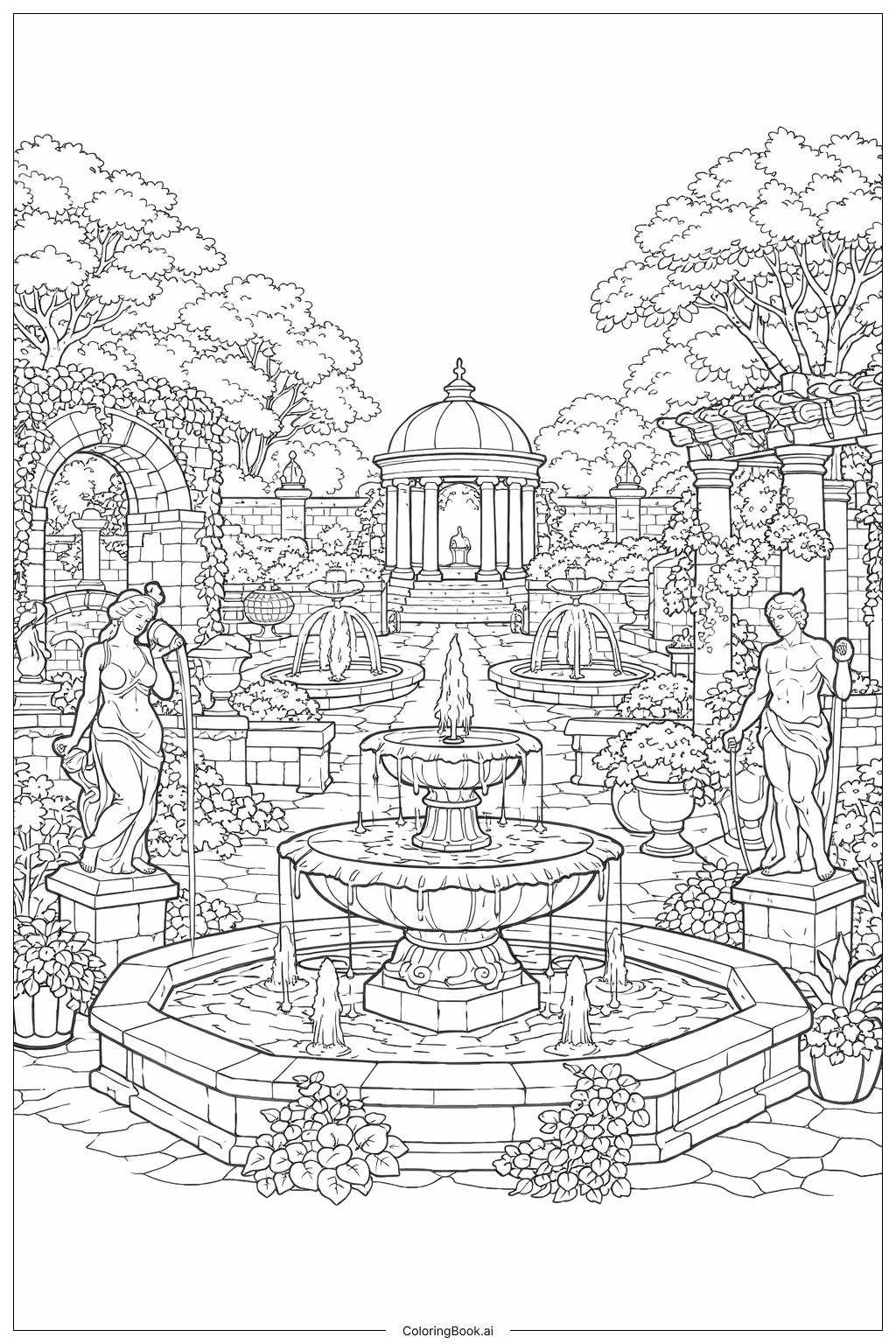
Coloring tips: How to color Resurrection Ancient Garden coloring page well?
Start with the background sky using soft shades of light blue, pale yellow, and peach to suggest a peaceful sunrise. Use warm golden tones for the rays of light radiating from the central figure. Color the figure's robes in clean white or soft ivory to represent purity and new life. For the garden, use a variety of greens for the leaves and grass, and add bright colors like pink, red, yellow, and purple for the flowers. The stone pathways and walls look great in gray or sandy beige tones. Add warm brown shades to tree trunks and branches. Use soft orange or yellow for butterflies and gentle blue or brown for birds. Keep the overall mood calm and glowing by blending light colors throughout. Children can freely choose their favorite flower colors to make the garden feel personal and joyful.
Coloring challenges: Which parts are difficult to color and need attention for Resurrection Ancient Garden coloring page?
• Central Figure Robes: The flowing robes of the central figure contain many curved folds and overlapping layers. Coloring these folds with subtle shading requires careful attention. Using two or three tones of the same color — a base shade and a slightly darker one for shadows — will help the fabric look three-dimensional. This can be tricky for younger colorists who are still developing blending skills.
• Radiant Light Effects: The beams of light spreading outward from the figure are delicate and narrow. Keeping these areas light while gradually deepening the surrounding sky requires a steady hand and careful gradual shading. Pressing too hard with colored pencils or using too much paint can accidentally darken areas that should feel bright and glowing.
• Dense Garden Foliage: The garden includes many overlapping leaves, branches, and flower petals. Each element sits close to others, making it easy for colors to bleed together. Carefully coloring one section at a time and allowing lighter colors to dry before adding darker neighbors will help keep the details clean and distinct.
• Stone Textures: The ancient stone walls and pathways have uneven, textured surfaces. Capturing this rough, weathered look means layering multiple neutral tones like gray, beige, and soft brown. Flat single-color application may make the stones look plain, so adding light and shadow variation is important but requires patience.
• Small Symbolic Details: Butterflies, birds, and small decorative motifs scattered throughout the scene are tiny and intricate. These small elements need fine-tipped tools for accurate coloring. Skipping or rushing these details can reduce the richness of the overall composition.
Benefits of coloring books: Advantages of drawing Resurrection Ancient Garden coloring page
Coloring this Resurrection Ancient Garden page offers a wide range of wonderful benefits for children and families. The peaceful, spiritual theme helps young colorists slow down, breathe, and focus their attention — building mindfulness and emotional calm. As children choose colors for flowers, light, and robes, they practice decision-making and develop their personal sense of creativity and style. Working through the detailed foliage and stone textures strengthens fine motor skills and hand-eye coordination, which are important for writing and everyday tasks. The image also encourages curiosity about history, nature, and deeper themes like hope, renewal, and new beginnings. Discussing the meaning of the scene with a parent or teacher can spark thoughtful conversations and help children connect art to life. Completing a complex and beautiful page like this builds confidence and a sense of achievement. For older children and teens, the intricate details offer a satisfying challenge that develops patience and perseverance. Overall, this coloring page is a gentle, enriching activity that nurtures the mind, the heart, and the imagination all at once.