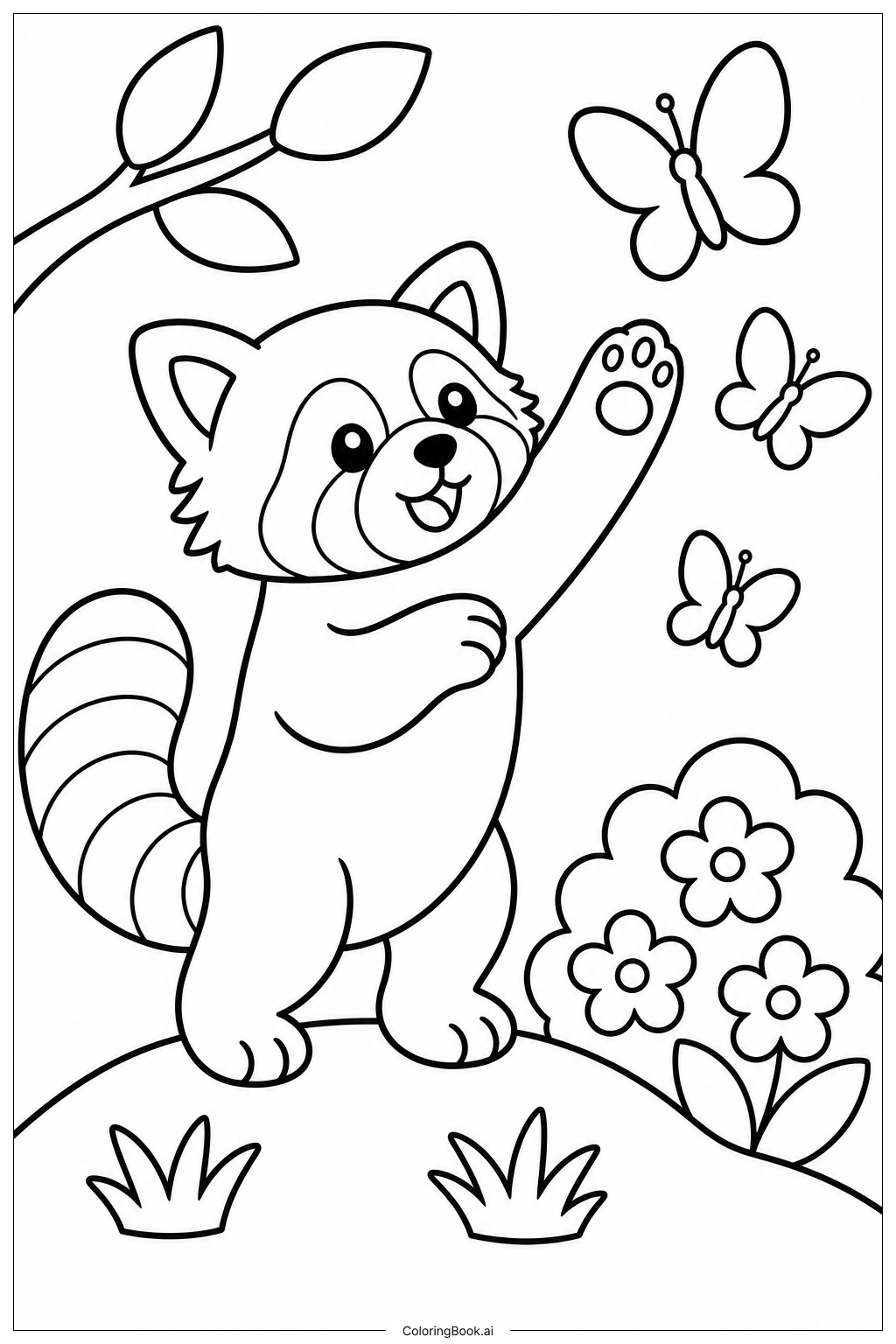
Coloring tips: How to color Red Panda With Butterfly Friends coloring page well?
For the red panda, use rich reddish-brown or rusty orange tones for the body and tail, with creamy white or light beige for the face, ears, and chest. The tail rings can alternate between darker brown and the lighter rust color. Make the eyes dark brown or black with white highlights to create that sparkly, lively look. The nose should be dark. For the butterflies, you can choose vibrant colors like orange and black for monarch-style butterflies, or try blues, purples, yellows, and pinks for a magical garden feel. Add small dots or patterns on the butterfly wings for extra detail. Color the leaves in various shades of green, from light lime to deep forest green, with brown stems. You can add touches of yellow or orange to some leaves for an autumn feel. Use light brown or gray for any branches or woody elements.
Coloring challenges: Which parts are difficult to color and need attention for Red Panda With Butterfly Friends coloring page?
• Fur Texture and Direction: The red panda's coat features many flowing lines that indicate fluffy fur texture. Children need to follow these directional lines carefully while coloring to create a realistic furry appearance. This requires patience and attention to keep colors flowing in the same direction as the drawn lines, which can be challenging for younger colorists who tend to use random strokes.
• Butterfly Wing Details: The butterfly wings contain intricate patterns with small sections and delicate veining. Staying inside these tiny areas requires fine motor control and a steady hand. Children may find it difficult to color the small compartments without going over the lines, especially when switching between multiple colors to create authentic butterfly patterns.
• Tail Ring Patterns: The red panda's distinctive ringed tail has alternating bands that curve and follow the tail's shape. Maintaining consistent color separation between rings while following the curved contours is tricky. Children must be careful not to blend the colors where rings meet and keep each band uniform in color intensity.
• Layering and Overlapping Elements: The composition shows leaves, butterflies, and the red panda overlapping in various places. Determining which element is in front and which is behind requires visual planning. Children need to decide their coloring order and manage color transitions where elements meet to create depth.
• Maintaining Consistent Shading: To make the image look three-dimensional, children may want to add lighter and darker shades to show volume. This requires understanding where light would naturally fall and gradually blending colors, which is an advanced technique that takes practice to master.
Benefits of coloring books: Advantages of drawing Red Panda With Butterfly Friends coloring page
Coloring this red panda and butterfly scene offers wonderful developmental benefits for children. It helps improve fine motor skills and hand-eye coordination as they carefully color within the lines and handle different detailed areas. The intricate patterns teach patience and focus, encouraging children to slow down and pay attention to small details. This image also provides an educational opportunity to learn about red pandas and butterflies, sparking curiosity about wildlife and nature. Children can explore color theory by mixing and matching different shades for the fur, butterflies, and leaves. The peaceful nature scene promotes relaxation and stress relief, creating a calming activity that helps children unwind. As they complete the page, children experience a sense of accomplishment and pride in their artwork. The creative freedom in choosing colors for the butterflies especially encourages self-expression and imagination, making this coloring page both fun and beneficial for young artists.