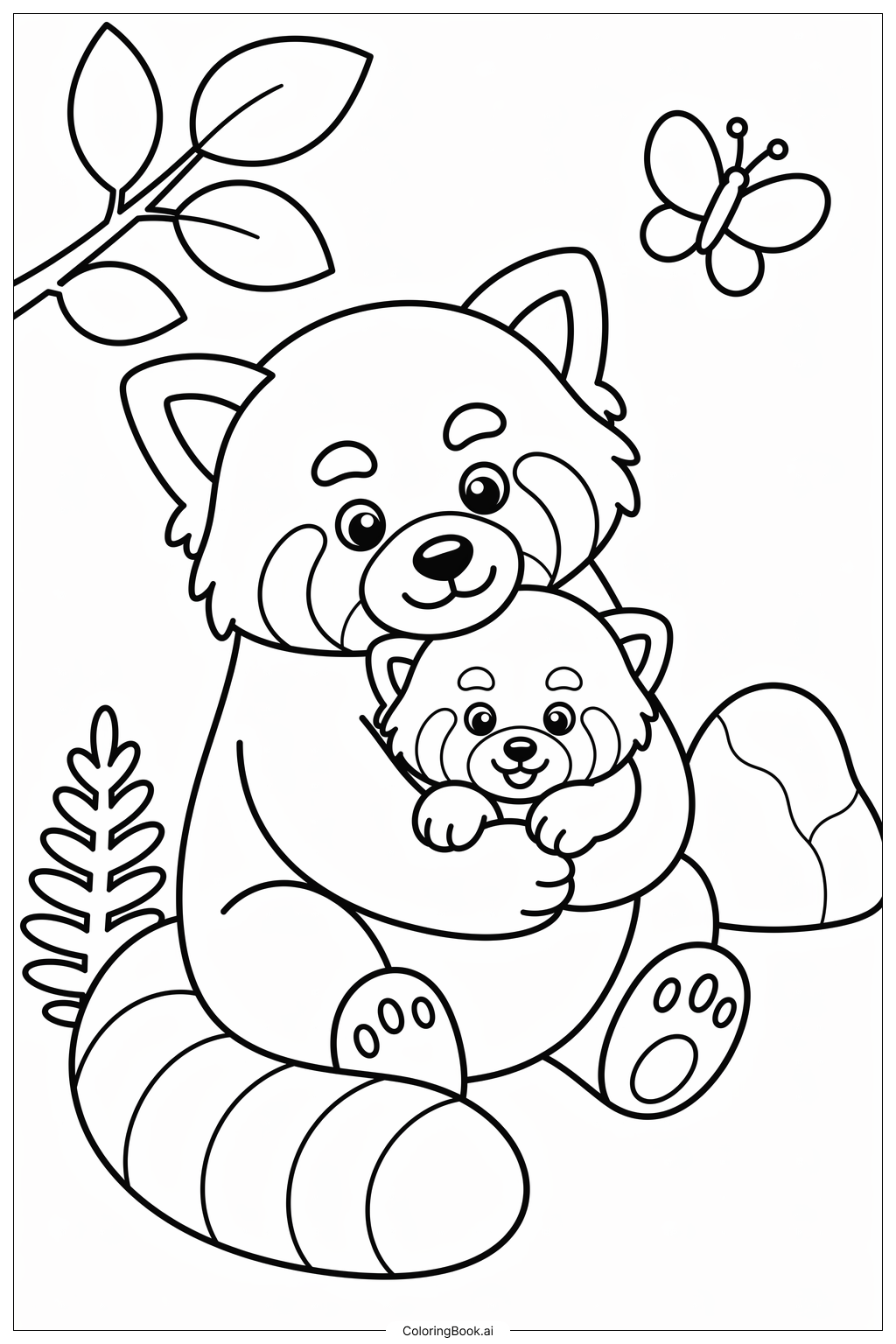
Coloring tips: How to color Red Panda With Baby Cub coloring page well?
Start with warm reddish-brown tones for the main body fur of both the parent and baby red panda. Use darker russet or burnt sienna shades for deeper areas. Color the facial markings with white or cream, including the tear stripes and the areas around the muzzle. The ears can be shaded with light pink inside and reddish-brown on the outer edges. For the distinctive ringed tail, alternate between dark brown or black bands and lighter reddish-orange sections. The paws and lower legs typically feature black or very dark brown fur. Add soft gray or beige for the belly areas. Consider using colored pencils to layer different shades, creating depth and dimension in the fluffy fur. Blend colors gently where they meet to achieve a soft, natural appearance that captures the red panda's adorable charm.
Coloring challenges: Which parts are difficult to color and need attention for Red Panda With Baby Cub coloring page?
• Fur Texture Details: The image contains intricate fur patterns that require careful attention. The fluffy coat of both the parent and baby red panda includes many fine lines representing individual fur strands. Young colorists may find it challenging to stay within these detailed areas, especially around the face and paws. Using sharp colored pencils and taking time to color slowly will help achieve the best results without crossing lines.
• Tail Ring Patterns: The red panda's signature ringed tail presents a unique coloring challenge. The alternating bands need to be colored in contrasting shades to create the distinctive striped pattern. Children must carefully identify where each ring begins and ends, maintaining consistent color within each section. This requires planning ahead and possibly numbering or marking the sections before coloring.
• Layering and Shading: Creating realistic depth in the red panda's fur requires layering multiple shades of similar colors. The parent's body wraps around the baby, creating shadows and highlights that make the image three-dimensional. Understanding where to place darker tones for shadows and lighter tones for highlights can be difficult for beginners. Practice blending colors smoothly in less detailed areas first.
• Facial Features: The delicate facial markings, including the tear stripes, small nose, and whiskers, demand precision. The white and cream areas must remain distinct from the reddish-brown fur surrounding them. Small details like the eyes require steady hands and fine-tipped coloring tools to avoid smudging or coloring outside the tiny spaces provided.
Benefits of coloring books: Advantages of drawing Red Panda With Baby Cub coloring page
Coloring this heartwarming red panda family scene offers wonderful developmental benefits for children. The detailed fur patterns and intricate features help improve fine motor skills and hand-eye coordination as young artists carefully navigate small spaces. Working with the various textures and patterns encourages focus and concentration, building patience and attention span. Choosing color combinations for the red panda's coat stimulates creativity and decision-making skills. The nurturing theme of parent and baby promotes emotional awareness and discussions about family bonds and care. Completing this detailed image provides a strong sense of accomplishment, boosting confidence and self-esteem. The calming, repetitive motion of coloring also serves as a relaxing activity that reduces stress and anxiety, making it perfect for quiet time or mindfulness practice.