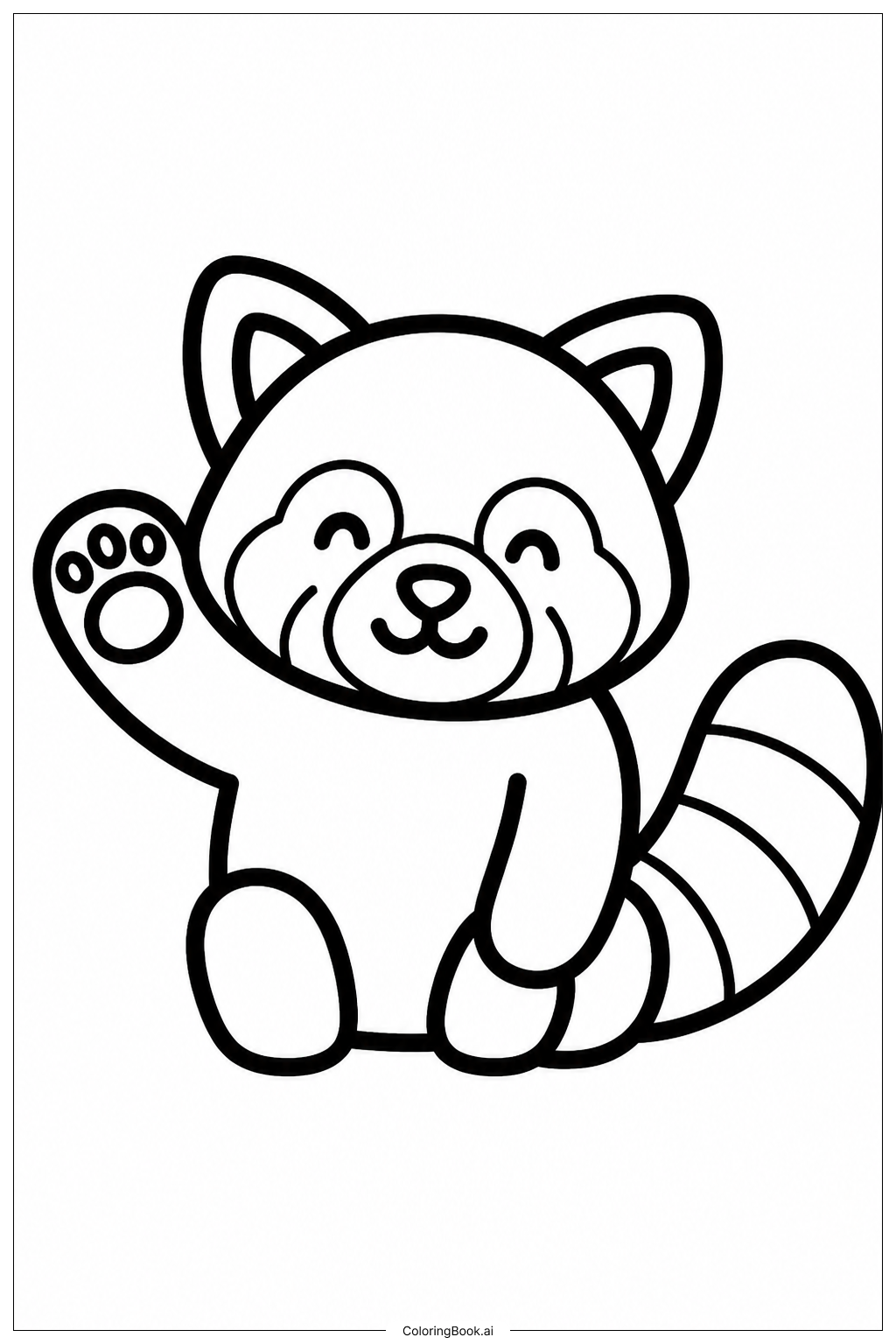
Coloring tips: How to color Red Panda Waving Paw coloring page well?
Red pandas have beautiful rusty-red or reddish-brown fur on their backs and sides. Color the face with white or cream tones, extending down to the chest. The ears can be white on the inside with darker edges. Use dark brown or black for the legs and belly area. The bushy tail features distinctive reddish-brown rings alternating with lighter tan or cream bands. Add soft pink to the nose and inner paw pads. The eyes can be dark brown or black with a gentle shine. Consider using colored pencils to create soft blending between the red-brown body and white facial markings. You can add subtle orange or amber tones to create dimension in the fur, and use light gray or tan for shading to make your red panda look three-dimensional and lifelike.
Coloring challenges: Which parts are difficult to color and need attention for Red Panda Waving Paw coloring page?
• Fur Texture and Direction: Creating realistic fur texture requires careful attention to line direction and layering. The red panda's coat has different fur lengths and densities across its body, with longer fur on the tail and shorter fur on the face. Young colorists may find it challenging to use short, directional strokes to suggest fur rather than solid coloring. The key is using light pressure and building up color gradually while following the natural growth patterns of the fur.
• Color Transitions and Blending: The red panda features complex color transitions between the rusty-red body, white face, and dark legs. Achieving smooth gradients where these colors meet requires patience and blending skills. The tail rings present a particular challenge as each band needs to be distinct yet naturally flow into the next. Using multiple shades of brown, orange, and cream helps create depth, but blending them seamlessly takes practice and a light touch.
• Facial Features and Expression: The red panda's face contains small, detailed areas including eyes, nose, and mouth that require precision coloring. Keeping within the lines of these tiny features while maintaining the friendly expression can be difficult for younger children. The eyes especially need careful attention to create the warm, inviting look with highlights and proper shading to avoid a flat appearance.
• Dimensional Shading: Adding shadows and highlights to make the red panda appear three-dimensional rather than flat is an advanced skill. Determining where shadows fall under the raised paw, along the body curves, and within the fluffy tail requires understanding of light sources and form. This challenge helps develop spatial awareness but may frustrate beginners who are still mastering basic coloring techniques.
Benefits of coloring books: Advantages of drawing Red Panda Waving Paw coloring page
Coloring this friendly red panda offers wonderful developmental benefits for children and relaxation for adults. The combination of large areas like the body and tail with smaller detailed sections like the face provides varied coloring experiences that build fine motor skills and hand-eye coordination. Following the natural color patterns of red pandas teaches children about wildlife and encourages curiosity about endangered species and conservation. The cute, welcoming pose with the waving paw creates an emotional connection that makes the coloring experience joyful and engaging. Working on fur texture and color blending develops artistic techniques and patience. The moderately complex design offers enough challenge to maintain interest without becoming frustrating, making it perfect for building confidence and concentration skills. Completing this adorable red panda provides a sense of accomplishment and creates a beautiful finished piece worthy of display.