Coloring tips: How to color Red Panda Taking A Nap Tree coloring page well?
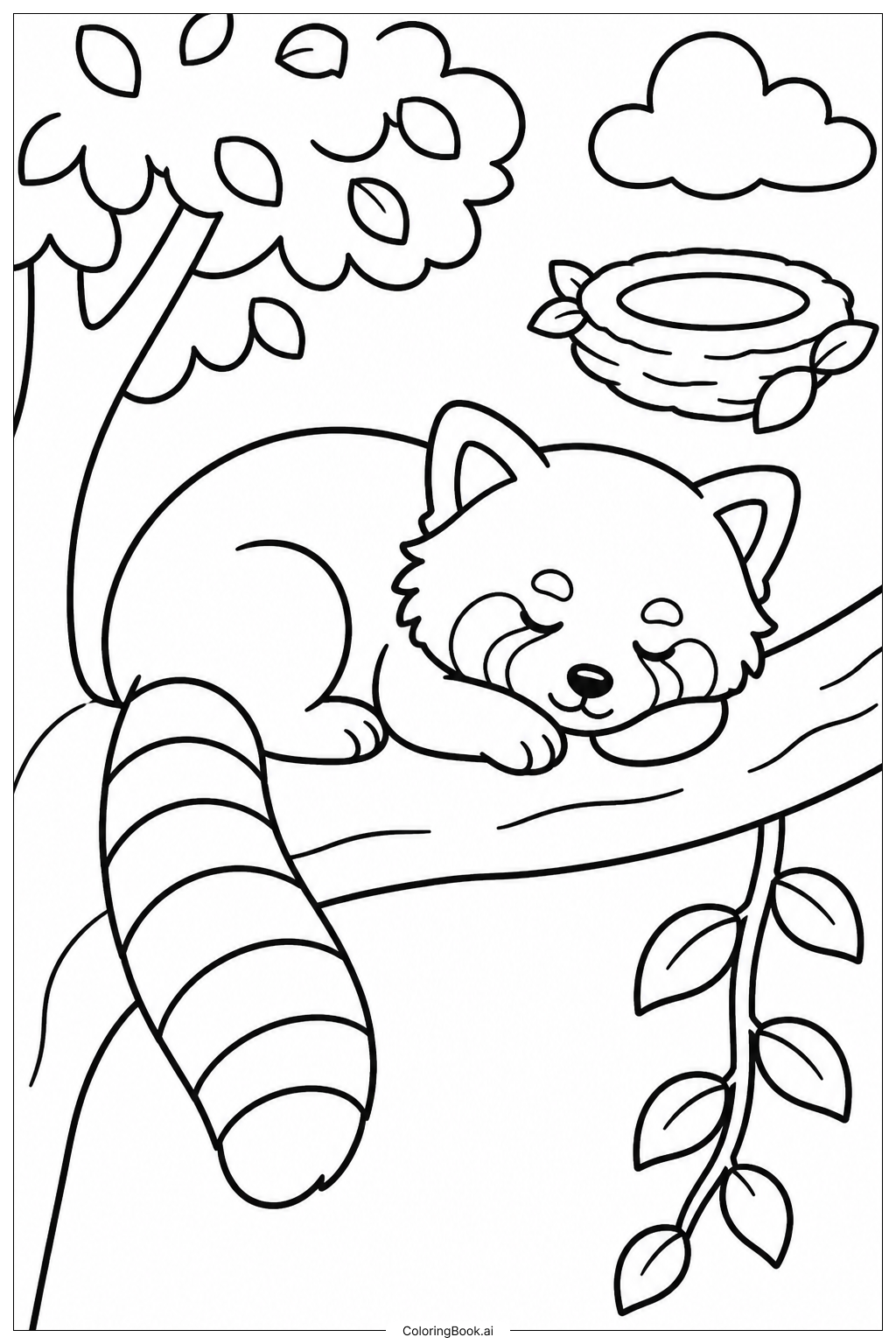
Start with the red panda using rusty orange and reddish-brown tones for the body and tail. Color the face with cream or light tan, adding darker brown markings around the eyes and on the ears. The fluffy tail can feature alternating rings of rust-red and cream colors. For the tree branch, use various shades of brown from light tan to deep chocolate, adding darker lines to show bark texture. The leaves can be colored in different shades of green, from lime to forest green, or use autumn colors like yellow, orange, and red for a seasonal look. Consider adding soft blue or purple shadows under the red panda to show depth. The background can remain light or be filled with soft sky blue to create contrast.
Coloring challenges: Which parts are difficult to color and need attention for Red Panda Taking A Nap Tree coloring page?
• Fur Texture Details: The red panda's fluffy coat requires careful layering and blending to achieve a realistic appearance. Children need to use light strokes in the same direction to create the illusion of soft fur, particularly on the bushy tail and around the body. This requires patience and control to avoid heavy-handed coloring that might flatten the texture.
• Facial Feature Precision: The red panda's face contains small, intricate details including the eye markings, ear shapes, and delicate facial features. Coloring within these tiny areas without crossing lines can be challenging, especially the distinctive tear-mark patterns that run from the eyes. Young artists may struggle to maintain steady hand control in these confined spaces.
• Bark Texture Variation: The tree branch presents a challenge with its natural wood grain patterns and uneven surface. Creating realistic bark requires using multiple shades of brown and adding darker lines to show cracks and texture. Children must understand how to layer colors and create depth rather than using a single flat color.
• Leaf and Foliage Layering: The leaves surrounding the scene overlap each other, creating areas where some leaves are in front of others. Distinguishing between these layers and choosing appropriate color variations to show depth and dimension requires spatial awareness and planning before coloring begins.
Benefits of coloring books: Advantages of drawing Red Panda Taking A Nap Tree coloring page
Coloring this peaceful red panda scene offers wonderful benefits for children. It helps develop fine motor skills through careful coloring of detailed fur textures and small facial features. The image encourages focus and concentration as children work on the intricate patterns and textures. Learning about red pandas and their tree-dwelling habits sparks curiosity about wildlife and nature conservation. The calming subject of a sleeping animal promotes relaxation and mindfulness during the coloring process. Children practice color recognition and mixing by creating realistic fur tones and natural woodland colors. The various textures in the image teach kids how to use different coloring techniques for fur, bark, and leaves. This activity builds patience and attention to detail while creating a beautiful finished artwork they can be proud of.