Coloring tips: How to color Red Panda Sleeping Ball coloring page well?
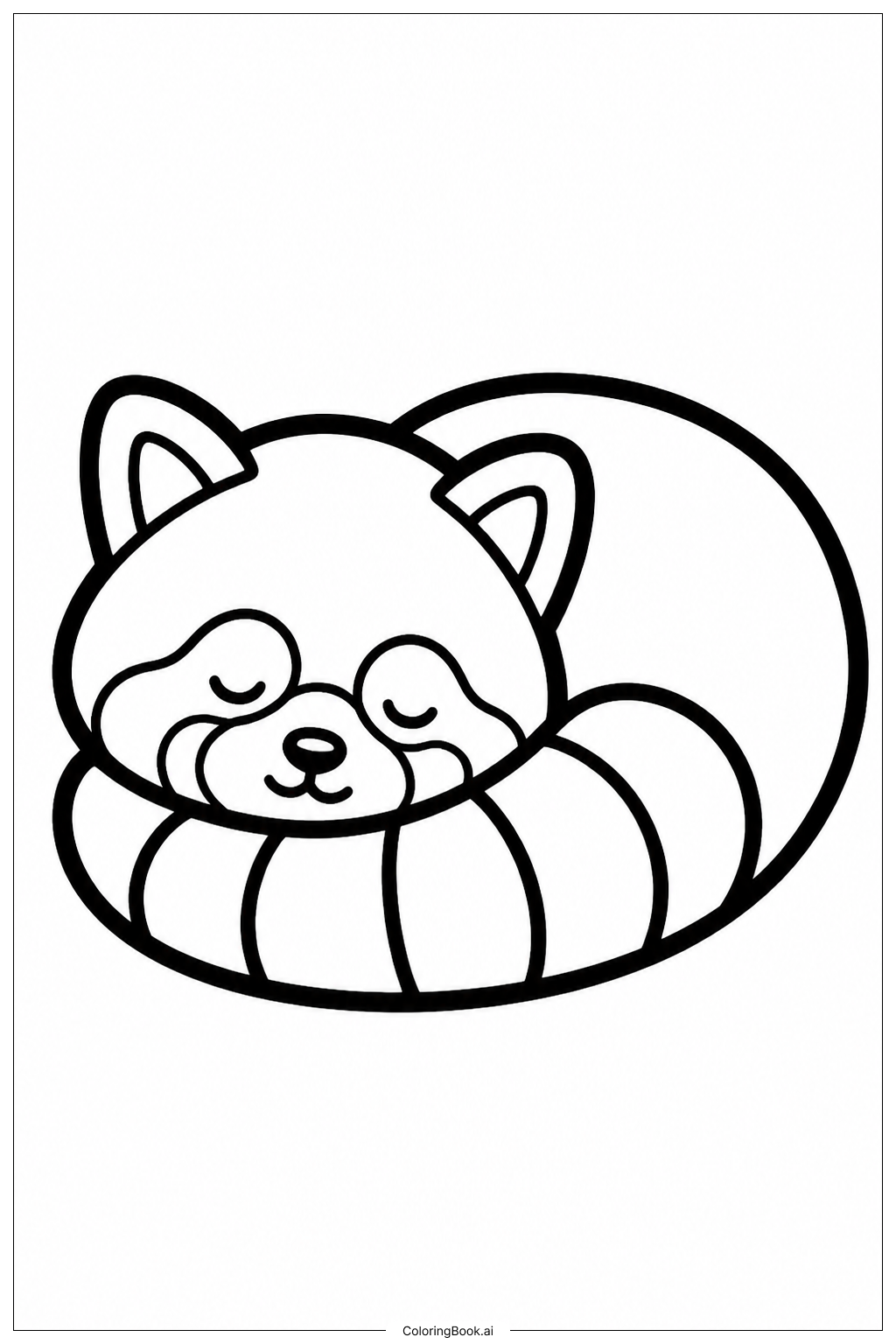
Start with the red panda's signature rusty-red or auburn color for most of the body and tail. Use darker reddish-brown shades for the legs and feet. The facial markings should be white or cream, including the areas around the eyes, cheeks, and muzzle. Add soft brown or tan to the inner ears. The tear-mark stripes can be colored in dark reddish-brown or deep rust tones. For the tail, create beautiful rings by alternating between the rusty-red base color and darker brown or orange-brown bands. The nose should be black or very dark brown. Consider adding gentle shading with colored pencils to show the roundness of the curled body and the fluffiness of the tail. Layer lighter and darker reds together to create depth and dimension in the fur.
Coloring challenges: Which parts are difficult to color and need attention for Red Panda Sleeping Ball coloring page?
• Fur Texture Details: The image contains numerous flowing lines that represent individual fur strands throughout the tail and body. Coloring these delicate details requires patience and careful attention to avoid crossing lines or creating unintended color bleeds. Young children may find it challenging to stay within these fine linear boundaries, while older colorists can use them to create realistic fur direction and texture through strategic shading.
• Tail Ring Patterns: The red panda's distinctive tail features multiple ring bands that curve and wrap around the circular sleeping position. Maintaining consistent color alternation while following the curved contours of each ring segment can be tricky. Colorists must carefully track which sections belong to which ring, especially where the tail overlaps or curves sharply, to achieve an authentic and visually pleasing pattern.
• Facial Feature Precision: The small, delicate facial features including the closed eyes, tiny nose, and tear-mark stripes require precise coloring with fine-tipped tools. The white facial markings must be preserved or colored very lightly to contrast with the darker surrounding fur. Getting the symmetry right on both sides of the face while working in a small space presents a challenge for maintaining the red panda's sweet, peaceful expression.
• Creating Dimensional Roundness: Since the red panda is curled in a ball shape, colorists need to understand light and shadow to make the form appear three-dimensional rather than flat. This involves using darker shades in recessed areas where the body curves inward and lighter tones on the upper surfaces. Blending colors smoothly to show the gentle curves requires more advanced coloring techniques.
Benefits of coloring books: Advantages of drawing Red Panda Sleeping Ball coloring page
Coloring this peaceful red panda helps children develop fine motor skills and hand-eye coordination as they carefully fill the detailed fur textures and small facial features. The repetitive pattern of the tail rings provides excellent practice for pattern recognition and sequential thinking. The calming subject matter of a sleeping animal encourages relaxation and mindfulness during the coloring process, making it a perfect quiet-time activity. Children learn about red pandas, an endangered species, fostering wildlife awareness and conservation values. The challenge of creating realistic fur texture through layering and shading builds confidence in artistic abilities. The circular composition naturally draws the eye inward, helping improve focus and concentration. Successfully completing this detailed image provides a strong sense of accomplishment and pride in creative work.