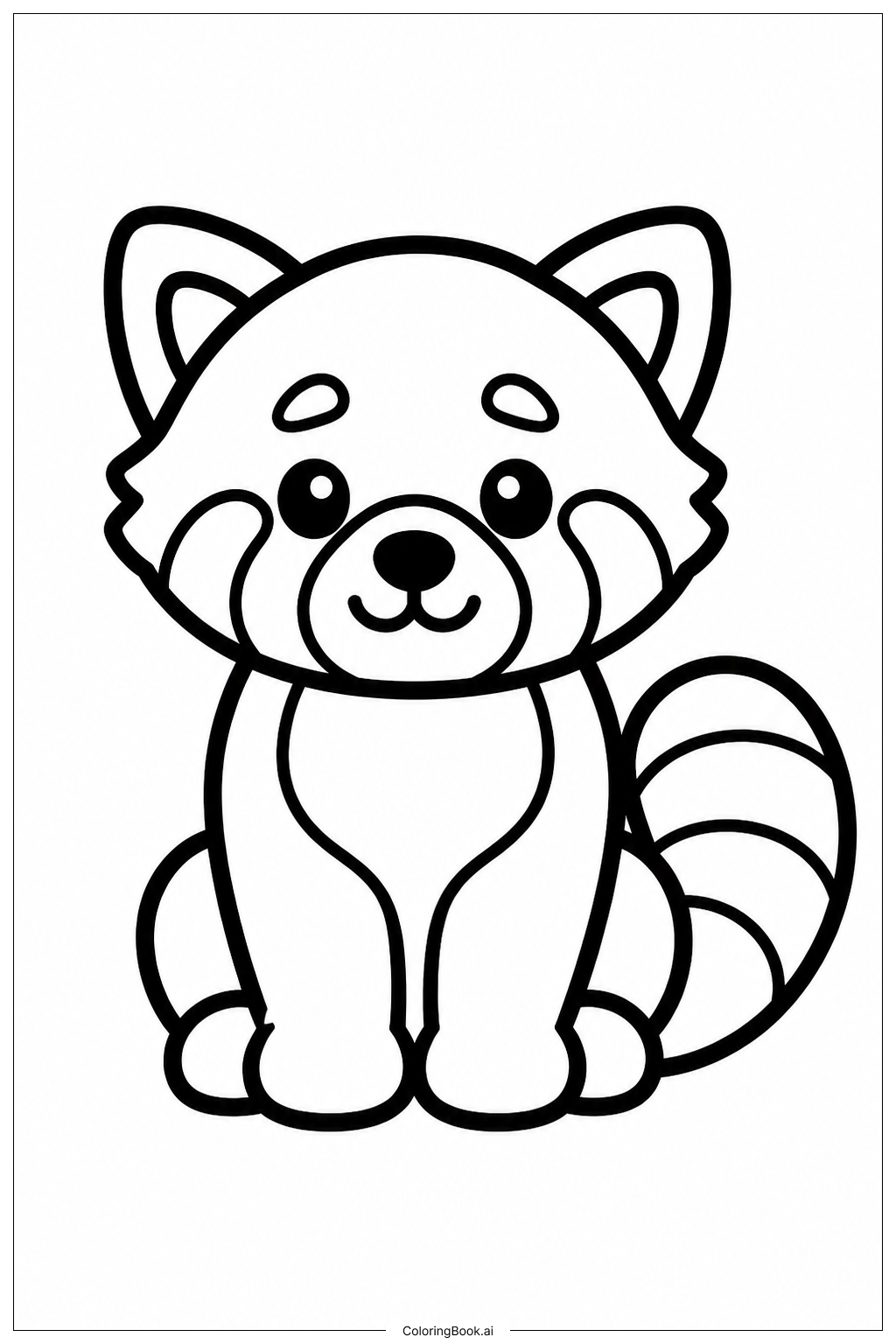
Coloring tips: How to color Red Panda Sitting Smile coloring page well?
Start with the red panda's signature reddish-brown color for the main body and tail. Use rich rust, copper, or burnt orange tones to capture the warm fur. The face typically has white markings around the eyes and cheeks, with darker reddish-brown tear marks running from the eyes down to the mouth. The ears can be colored with a mix of russet on the outside and white or cream on the inside. For the tail rings, alternate between darker reddish-brown and lighter tan or cream bands. The belly and chest area are usually darker, ranging from deep brown to black. The nose should be black, and the eyes can be dark brown or black with a sparkle of white for liveliness. Consider adding light shading around the fur edges to create depth and dimension, making your red panda look soft and fluffy.
Coloring challenges: Which parts are difficult to color and need attention for Red Panda Sitting Smile coloring page?
• Fur Texture and Direction: Creating realistic fur texture requires careful attention to stroke direction and layering. Young colorists may find it challenging to use short, directional strokes that follow the natural fur patterns rather than simply filling in solid blocks of color. Building up layers gradually to achieve a soft, fluffy appearance takes patience and practice with different coloring techniques.
• Tail Ring Patterns: The red panda's distinctive ringed tail presents a unique challenge in maintaining consistent spacing and smooth transitions between the alternating dark and light bands. Children need to carefully plan where each ring begins and ends, ensuring the rings curve naturally around the cylindrical shape of the tail. Keeping the boundaries neat while creating a three-dimensional rounded appearance requires steady hand control and spatial awareness.
• Facial Feature Precision: The small, delicate details of the face including the eyes, nose, tear marks, and ear interiors demand precise coloring within tight spaces. Young artists must exercise fine motor control to stay within the lines of these tiny features while still achieving good color saturation. The expressive eyes especially require careful work to maintain their sparkle and personality without accidentally coloring outside the boundaries.
• Color Blending and Shading: Achieving natural-looking depth through color gradation is an advanced skill that many children are still developing. The red panda's fur requires subtle transitions from lighter to darker tones, particularly around the face, belly, and limbs. Understanding where to place shadows and highlights to create a rounded, three-dimensional appearance challenges young colorists to think beyond flat coloring.
Benefits of coloring books: Advantages of drawing Red Panda Sitting Smile coloring page
Coloring this cheerful red panda helps children develop essential fine motor skills through detailed work on small facial features and fur patterns. The intricate tail rings and fur textures encourage focus and concentration, building patience and attention to detail. This activity promotes color recognition and mixing skills as children learn to create various shades of brown, orange, and cream to achieve realistic fur tones. The friendly, smiling expression of the red panda creates an emotional connection that makes the coloring experience joyful and stress-relieving. Working on this image also provides educational value, as children learn about red pandas and their distinctive physical characteristics. The moderate complexity level offers an achievable challenge that builds confidence and provides a sense of accomplishment when completed, encouraging artistic self-expression and creativity.