Coloring tips: How to color Red Panda Sharing Bamboo coloring page well?
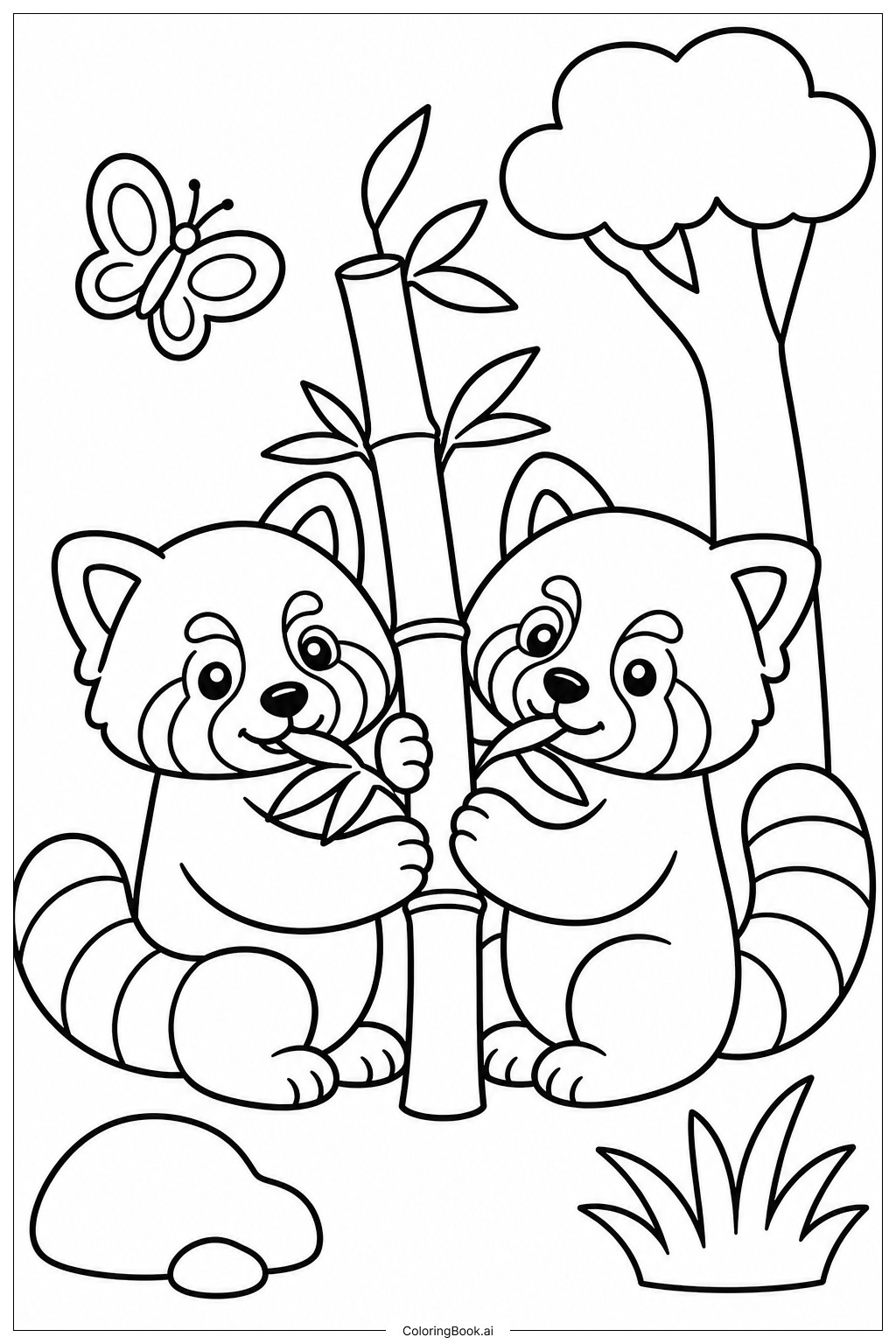
Start with the red pandas using warm reddish-brown tones for their main body fur, creating soft gradients from rust to burnt sienna. Color their facial markings with white and cream, adding light tan shading around the edges. Use deep brown or black for their legs and the lower portions of their tails. Their eyes can be dark brown with a hint of sparkle. For the bamboo stalks, choose various shades of green - from yellow-green to deep forest green - creating segments with slightly different tones. Add touches of yellow or tan where bamboo joints appear. Color the leaves in different green hues to create natural variation. Consider adding subtle background shading with light greens or soft blues to make the pandas stand out while maintaining the forest atmosphere.
Coloring challenges: Which parts are difficult to color and need attention for Red Panda Sharing Bamboo coloring page?
• Fur Texture and Layering: The red pandas have fluffy, multi-layered fur that requires careful color blending to achieve a realistic appearance. Their coats combine reddish-brown bodies with contrasting white facial markings and dark legs, demanding smooth transitions between different color zones. Creating depth in the thick fur, especially on their bushy tails, challenges colorists to use multiple shades and directional strokes that follow the natural fur flow.
• Bamboo Segments and Depth: The bamboo stalks feature distinctive segmented patterns that need consistent spacing and alignment. Coloring multiple overlapping bamboo pieces while maintaining depth perception requires strategic shading - lighter tones for foreground stalks and darker shades for background elements. The cylindrical shape of each bamboo segment needs subtle gradients to appear three-dimensional rather than flat.
• Facial Detail Precision: The red pandas have intricate facial markings with tear-streak patterns, rounded ears with white edges, and small expressive features. Coloring within these delicate boundary lines while maintaining symmetry between both pandas requires steady hand control and attention to detail, especially around the eyes and nose areas.
• Leaf Variation and Natural Look: The numerous bamboo leaves throughout the composition need color variation to avoid monotony while maintaining botanical accuracy. Each leaf should show subtle shading to indicate its angle and position relative to light sources, creating a natural forest canopy effect without overwhelming the main subjects.
Benefits of coloring books: Advantages of drawing Red Panda Sharing Bamboo coloring page
Coloring this red panda scene offers wonderful developmental benefits for young artists. It strengthens fine motor skills and hand-eye coordination through detailed work on facial features and fur textures. The image teaches children about endangered species and wildlife conservation in an engaging, hands-on way. Working with the various shades needed for realistic fur and bamboo encourages color theory understanding and blending techniques. The sharing theme promotes positive social values like kindness and friendship. Completing this moderately complex design builds patience, focus, and concentration skills. The natural setting introduces botanical elements, sparking curiosity about animal habitats and ecosystems. This calming woodland scene also provides stress relief and mindfulness practice, making it suitable for both children and adults seeking creative relaxation.