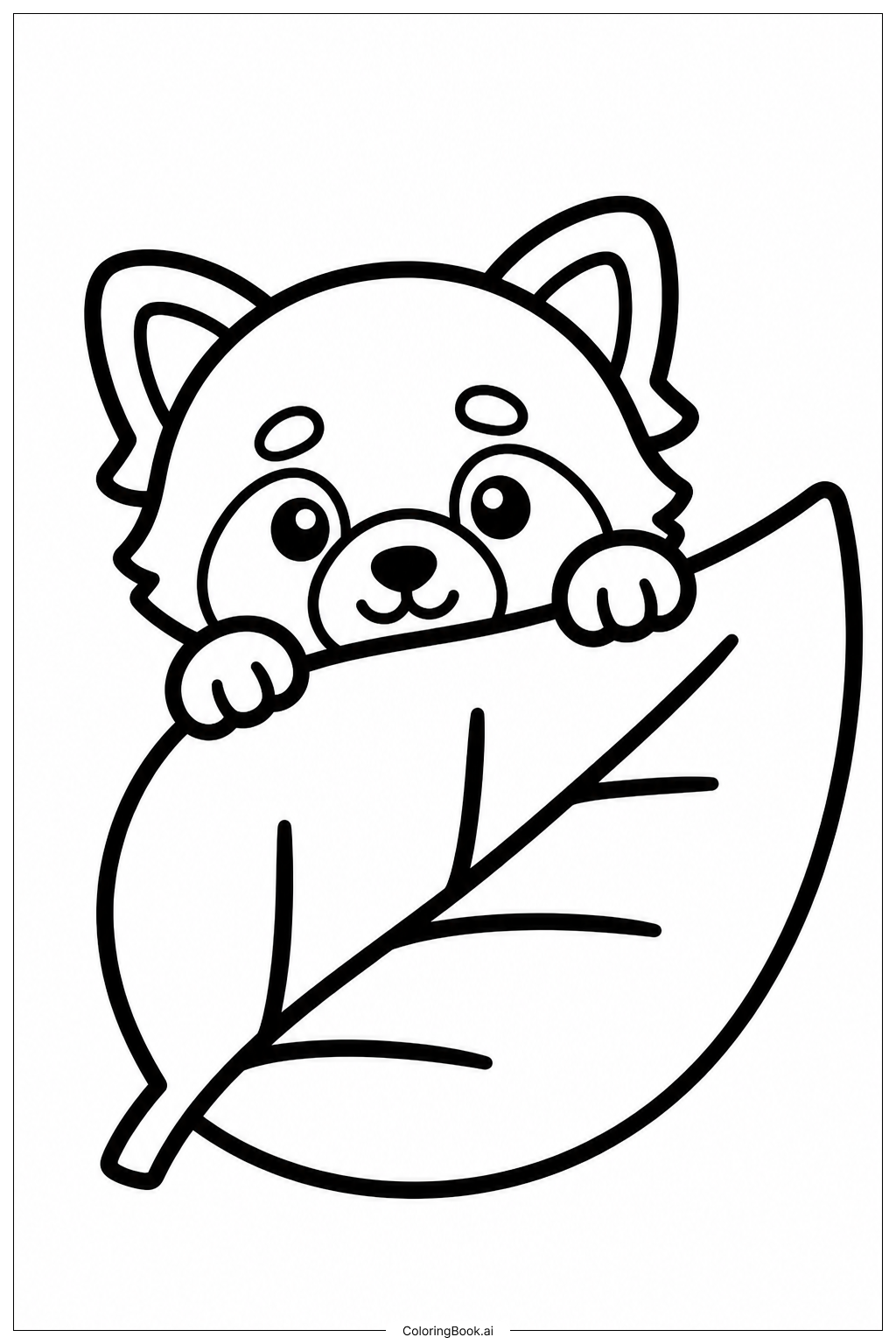
Coloring tips: How to color Red Panda Peeking From Leaf coloring page well?
For the red panda, use rich reddish-brown or russet tones for the body and tail, with cream or white for the face markings, cheeks, and ear tufts. The nose can be black or dark brown, and the eyes should be dark with a gentle highlight to bring them to life. Consider adding darker shading around the facial features to create depth. The large leaf offers wonderful opportunities for green variations. Try using different shades of green, from lime to forest green, or even autumnal colors like yellow, orange, and brown if you want a seasonal feel. The leaf veins can be highlighted with lighter or darker tones to make them stand out. For the background, soft pastels or light washes create a dreamy forest atmosphere without overwhelming the main subject.
Coloring challenges: Which parts are difficult to color and need attention for Red Panda Peeking From Leaf coloring page?
• Fur Texture and Direction: The red panda's fluffy coat requires careful attention to create a realistic appearance. Young colorists may find it challenging to show the soft, thick texture of the fur using color variation and shading techniques. Consider using short, directional strokes or layering colors to build up depth and dimension in the fur areas, particularly around the face, ears, and body.
• Facial Feature Details: The red panda's face contains intricate details including distinctive markings, expressive eyes, and small features like the nose and mouth. Staying within the lines of these small areas requires good fine motor control and concentration. Children may need to use fine-tipped coloring tools and work slowly to color the face accurately without smudging into adjacent areas.
• Leaf Vein Patterns: The large leaf features detailed vein structures that create many small sections to color. Deciding whether to color these veins differently from the leaf surface, and maintaining consistent colors throughout the intricate pattern, can be challenging. Younger children might find it difficult to navigate the narrow spaces between veins without accidentally crossing lines.
• Color Blending and Shading: Creating realistic depth in both the red panda's fur and the leaf requires understanding of light and shadow. Choosing where to place darker tones for shadows and lighter tones for highlights demands spatial awareness and artistic judgment that may be difficult for beginners or younger colorists to master.
Benefits of coloring books: Advantages of drawing Red Panda Peeking From Leaf coloring page
Coloring this red panda scene offers wonderful developmental benefits for children. The detailed facial features and fur textures help improve fine motor skills and hand-eye coordination as children carefully control their coloring tools within small spaces. The image encourages focus and concentration, promoting mindfulness and relaxation as young artists work through the various elements. Learning about red pandas through this activity can spark curiosity about wildlife and nature, fostering environmental awareness and appreciation for endangered species. The combination of the animal and botanical elements provides opportunities to explore natural color palettes and learn about realistic coloring techniques. Successfully completing this moderately detailed image builds confidence and a sense of accomplishment. The adorable subject matter makes the coloring experience enjoyable and emotionally engaging, which can reduce stress and anxiety while encouraging creative expression and color experimentation.