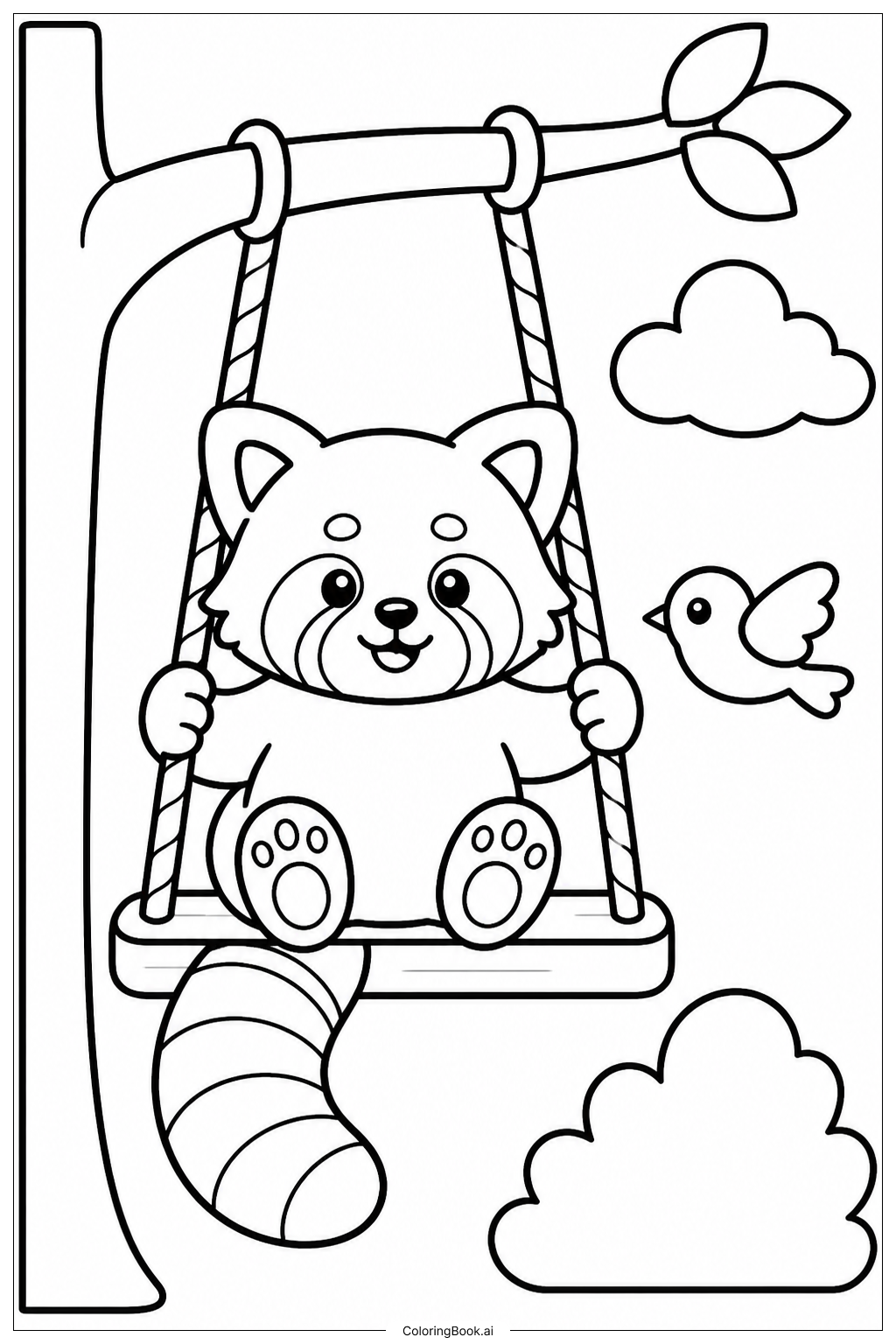
Coloring tips: How to color Red Panda On Swing coloring page well?
Start with the red panda's distinctive russet-orange fur on its back, sides, and tail. Use darker reddish-brown shades for depth and texture. Color the face with cream or light tan, adding soft browns around the eyes and ears. The belly and inner legs work beautifully in white or pale cream. For the wooden swing, try warm browns with darker lines to show wood grain texture. The ropes can be tan, beige, or natural hemp colors. Add black for the nose, eye pupils, and leg markings. Consider using lighter pressure for softer areas like the belly, and heavier strokes for the thick, fluffy tail. Blend colors gently where the fur changes from dark to light to create a realistic, three-dimensional appearance.
Coloring challenges: Which parts are difficult to color and need attention for Red Panda On Swing coloring page?
• Fur Texture and Direction: The red panda's coat requires careful attention to fur direction and layering. The tail is especially challenging with its thick, bushy texture and subtle color variations. Young colorists need to use short, directional strokes to create realistic fur patterns rather than solid coloring, which demands patience and fine motor control.
• Color Transitions and Blending: Red pandas have distinct color zones that transition from russet-orange to cream to dark brown. Blending these areas smoothly without harsh lines or muddy colors requires skill. The face especially needs gentle blending around the cheeks and eye markings to achieve a natural, soft appearance.
• Fine Facial Details: The small facial features including the eyes, nose, and ear details require precision coloring within tiny spaces. Children may find it challenging to stay within the lines of the small rounded ears and to color the delicate eye markings without smudging into surrounding areas.
• Wood Grain and Rope Texture: The wooden swing seat needs realistic wood grain lines, and the ropes require texture to look three-dimensional rather than flat. Creating convincing texture in these elements while maintaining consistent color adds an extra layer of complexity to the overall image.
Benefits of coloring books: Advantages of drawing Red Panda On Swing coloring page
Coloring this charming red panda scene helps children develop essential fine motor skills and hand-eye coordination. The varied elements—from soft fur to wooden textures—teach different coloring techniques and encourage creative exploration. This image promotes patience and focus as children work through detailed areas like the fluffy tail and facial features. Learning about red pandas through coloring fosters appreciation for wildlife and endangered species conservation. The peaceful swing scene creates a calming, mindful activity that reduces stress and anxiety. Children practice color recognition and blending while experimenting with warm earth tones and natural colors. Completing this detailed image builds confidence and a sense of accomplishment, especially when tackling challenging fur textures and transitions.