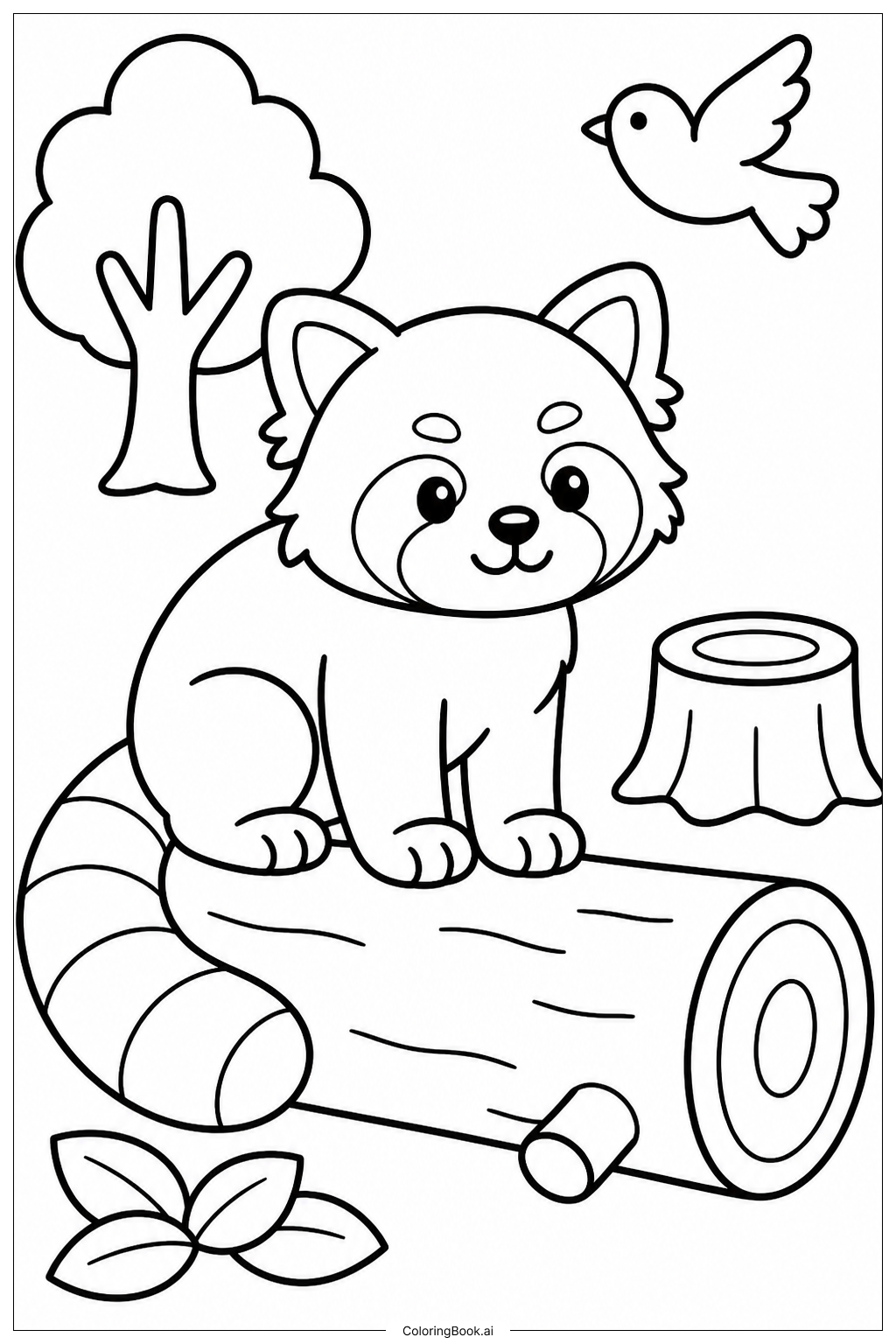
Coloring tips: How to color Red Panda On A Log coloring page well?
Start with the red panda's face using warm orange-brown tones for the main fur areas. Color the facial markings with cream or white around the eyes, cheeks, and muzzle. The ears can be reddish-brown with lighter inner sections. Use darker browns or black for the nose, eyes, and eye markings. The body fur should be a rich rusty-red or reddish-brown color. For the signature tail, alternate between reddish-brown and cream or tan rings to create the striped pattern. The paws and legs can be darker, using deep brown or black shades. Color the log with various brown tones - lighter tans for the wood grain and darker browns for the bark texture and shadows. Add depth by using multiple shades of brown to show the log's natural texture and roundness.
Coloring challenges: Which parts are difficult to color and need attention for Red Panda On A Log coloring page?
• Tail Ring Patterns: The red panda's distinctive ringed tail requires careful attention to create even, alternating bands of color. Children need to maintain consistent spacing between rings and ensure the stripes follow the tail's curve naturally. This takes patience and planning to avoid colors bleeding into adjacent rings.
• Fur Texture and Direction: Depicting realistic fur texture involves understanding that fur grows in different directions across the body. The face has shorter fur radiating from the nose, while the body has longer, flowing fur. Coloring in the direction of fur growth with short strokes or gentle blending creates depth, but this technique can be challenging for younger artists.
• Facial Feature Details: The red panda's face includes small, intricate areas like the eyes, nose, and distinctive white markings around the face. Staying within these tiny boundaries requires steady hands and precision. The contrast between dark and light facial markings must be maintained to preserve the red panda's characteristic appearance.
• Log Texture and Dimension: Creating realistic wood grain and bark texture involves using multiple brown shades and understanding how light affects curved surfaces. The log needs darker tones on shadowed areas and lighter tones where light hits. Showing depth and roundness while maintaining the organic, irregular patterns of natural wood presents a moderate challenge.
• Color Blending and Shading: Achieving realistic fur appearance requires smooth color transitions rather than flat, single colors. Blending oranges, reds, and browns together while adding shadows under the body and tail creates dimension but demands practice with pressure control and color layering techniques.
Benefits of coloring books: Advantages of drawing Red Panda On A Log coloring page
Coloring this red panda scene helps children develop fine motor skills through the detailed fur patterns and small facial features. The varied textures between the soft fur and rough bark encourage kids to experiment with different coloring techniques and strokes. This image teaches about endangered animals and their natural habitats, sparking curiosity about wildlife conservation. The tail's ring pattern provides excellent practice for creating repetitive designs with consistency. Working with warm color palettes of reds, oranges, and browns helps children understand color families and harmonious combinations. The peaceful composition promotes relaxation and mindfulness as young artists focus on bringing this gentle creature to life. Completing this detailed image builds confidence and patience, especially when managing the intricate elements like facial markings and wood texture.