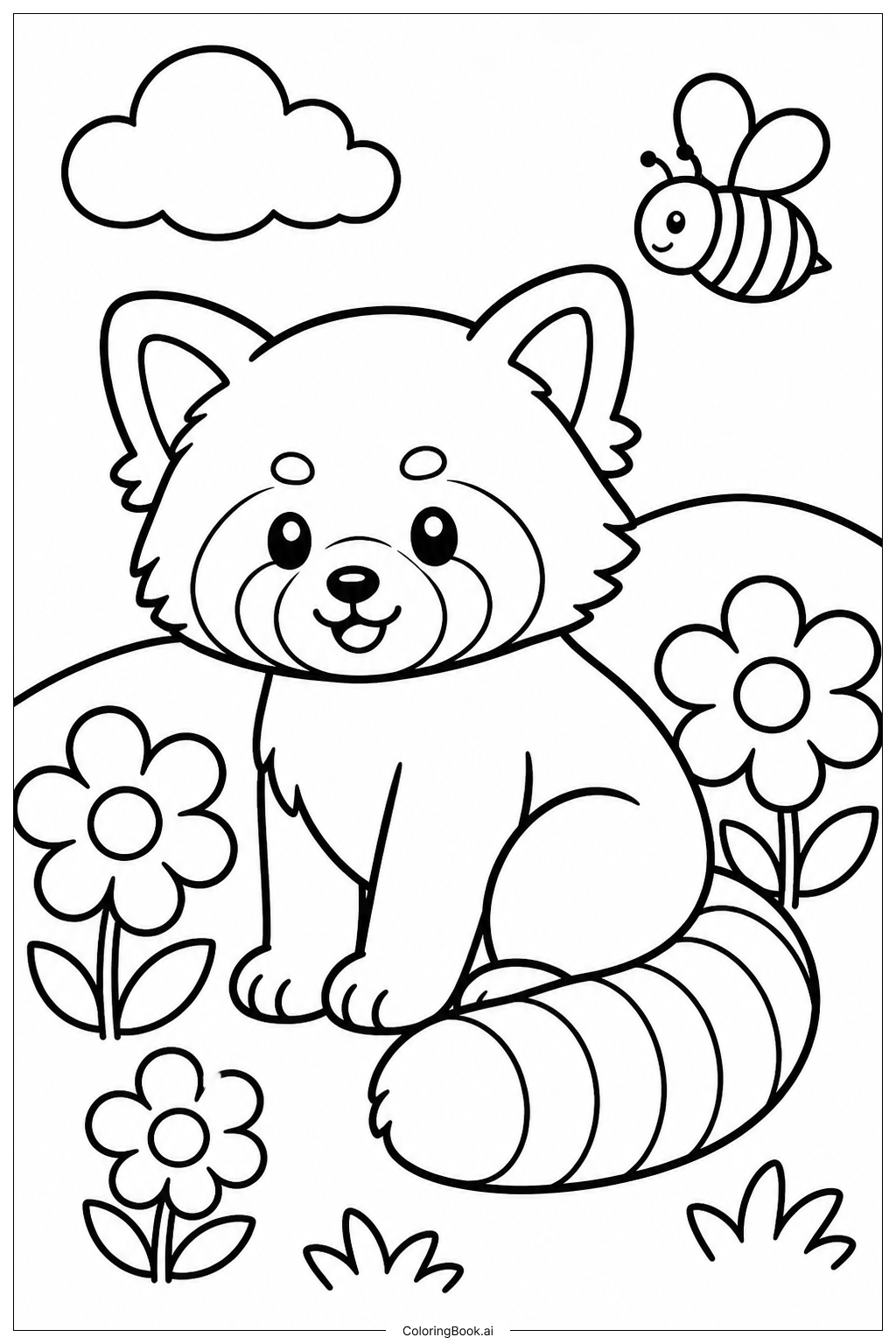
Coloring tips: How to color Red Panda In Flower Meadow coloring page well?
For the red panda, use rich reddish-brown tones for the body and tail, with cream or white for the face markings and inner ears. The distinctive facial features include darker tear marks running from the eyes. The fluffy tail can have alternating bands of russet and cream colors. For the flower meadow, let your creativity bloom! Use bright yellows and whites for daisies, with vibrant pinks, purples, and blues for the surrounding wildflowers. Color the grass in various shades of green, from light spring green to deeper forest tones, to create depth. Add golden yellows or warm oranges to flower centers for extra detail. Consider using soft blues or lavenders for background flowers to create a dreamy atmosphere. The leaves can be colored in different green shades to add variety and richness to the meadow setting.
Coloring challenges: Which parts are difficult to color and need attention for Red Panda In Flower Meadow coloring page?
• Fur Texture and Layering: The red panda's fur requires careful attention to create a realistic, fluffy appearance. Coloring the multiple layers and directional flow of fur, especially on the thick tail and body, can be challenging. Young colorists may find it difficult to blend colors smoothly to achieve the soft texture. The tail's striped pattern requires precision to alternate between light and dark bands evenly.
• Intricate Flower Details: The meadow contains numerous flowers with delicate petals, each requiring individual attention. Staying within the lines of small petals and flower centers demands patience and fine motor control. Children may struggle with the repetitive nature of coloring many similar flowers while maintaining color consistency or creating intentional variety.
• Facial Feature Precision: The red panda's face includes small, detailed areas such as the eyes, nose, and distinctive tear-mark patterns. These features require steady hands and careful color choices to maintain the creature's sweet expression. The contrast between light and dark facial markings must be handled thoughtfully to preserve the character's charm.
• Background Depth and Complexity: Creating visual depth in the flower meadow involves using different color intensities and shades. Younger artists may find it challenging to distinguish foreground flowers from background elements. Balancing the busy floral environment while keeping the red panda as the focal point requires thoughtful color planning and restraint.
Benefits of coloring books: Advantages of drawing Red Panda In Flower Meadow coloring page
Coloring this Red Panda In Flower Meadow page offers wonderful developmental benefits for children. It enhances fine motor skills and hand-eye coordination through detailed work on fur texture and small flower petals. The image encourages color recognition and decision-making as children choose appropriate natural colors or explore creative color combinations. The repetitive nature of coloring multiple flowers builds patience and focus while providing a calming, meditative experience. Learning about red pandas and meadow ecosystems during coloring promotes environmental awareness and appreciation for wildlife. The complexity of the scene builds confidence as children complete different sections, from simple grass areas to more challenging fur details. This coloring page also stimulates creativity, allowing children to imagine the red panda's natural habitat while developing their artistic expression and color-blending techniques.