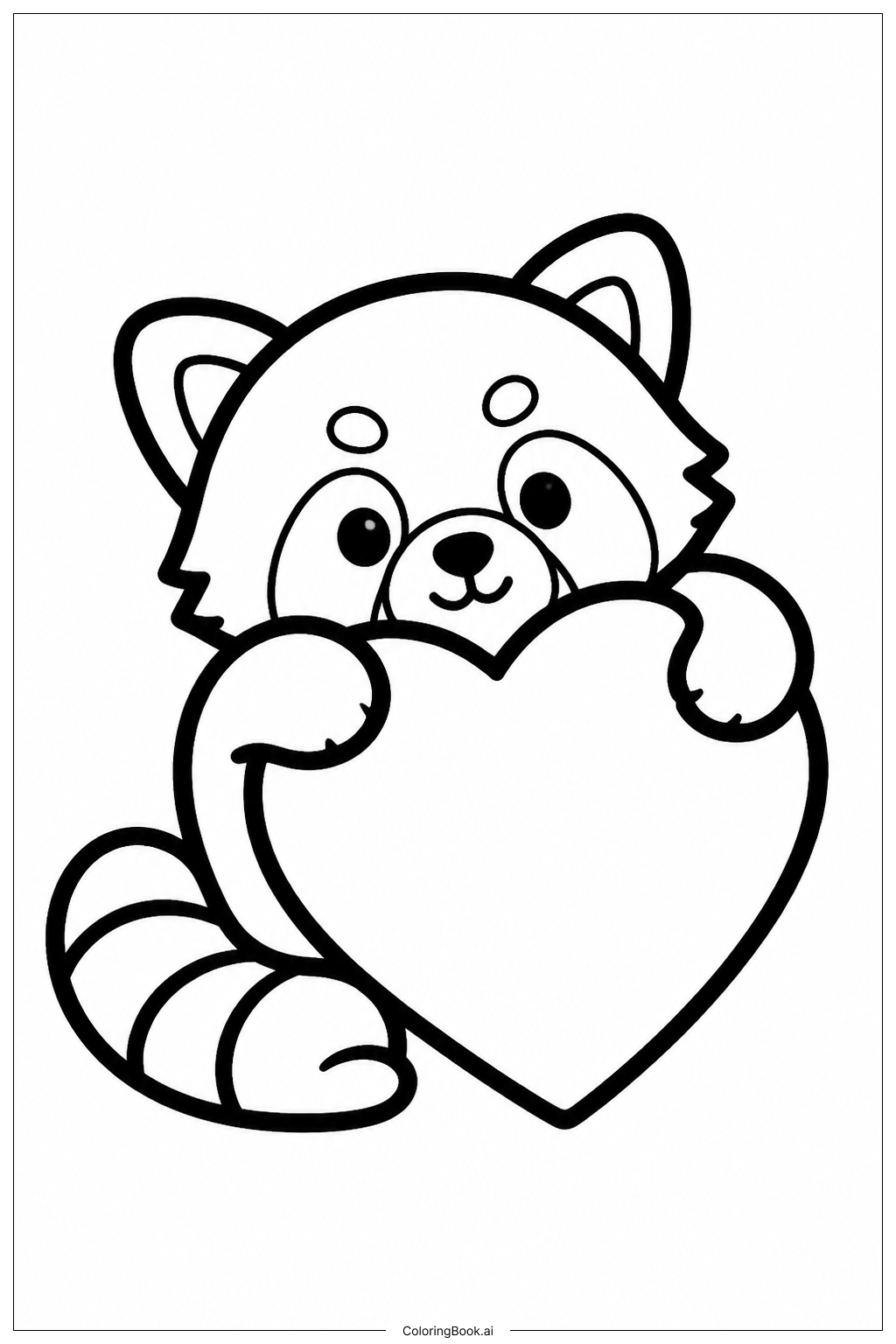
Coloring tips: How to color Red Panda Hugging Heart coloring page well?
Start with the red panda's signature reddish-brown fur for the body, using rusty oranges and warm browns. Color the face lighter with cream or tan tones, and add darker brown around the eyes to create the natural mask-like markings. The ears can have reddish-brown edges with lighter cream insides. For the magnificent tail, alternate between dark brown or black rings and lighter reddish-brown sections. The heart offers creative freedom - try classic red or pink, or explore purples, oranges, or even rainbow gradients. Consider adding gentle shading under the paws and around the edges to create depth. Use darker browns or grays for subtle shadows beneath the panda and around the heart's edges to make the image pop off the page.
Coloring challenges: Which parts are difficult to color and need attention for Red Panda Hugging Heart coloring page?
• Fur Texture and Direction: The red panda's fluffy coat requires careful attention to create a realistic fur appearance. Young colorists may find it challenging to maintain consistent strokes that follow the natural direction of fur growth. The chest and tail areas especially need delicate layering techniques to achieve a soft, fluffy look without making the colors too dark or muddy.
• Tail Ring Patterns: The distinctive ringed pattern on the bushy tail presents a precision challenge. Keeping the alternating bands evenly spaced and smoothly colored requires steady hand control. Children may struggle with staying within the boundaries of each ring section, and achieving good contrast between light and dark rings without color bleeding between sections takes practice and patience.
• Facial Feature Details: The small, delicate features of the red panda's face, including the eyes, nose, and mouth, require fine motor control and careful coloring within tiny spaces. Creating the natural darker markings around the eyes while keeping the lighter facial areas distinct can be tricky. Achieving the gentle, sweet expression requires subtle color transitions that younger children might find difficult.
• Dimensional Shading: Adding depth to make the panda appear three-dimensional and the heart look rounded requires understanding where shadows naturally fall. Determining where to place darker tones under the paws, along the sides of the body, and around the heart's curves challenges spatial reasoning skills and may be difficult for beginners to visualize and execute properly.
Benefits of coloring books: Advantages of drawing Red Panda Hugging Heart coloring page
Coloring this heartwarming red panda design helps children develop fine motor skills and hand-eye coordination, especially when working on the detailed tail rings and facial features. The image encourages emotional expression and recognition by depicting an affectionate scene, helping young artists connect colors with feelings of love and care. It provides an excellent opportunity to learn about red pandas and wildlife conservation while being creative. The varied elements - from large simple shapes like the heart to intricate details like fur texture - accommodate different skill levels, building confidence as children progress. The act of choosing colors and applying them mindfully promotes relaxation and stress relief. This design also teaches patience and focus, as completing the detailed sections requires concentration and persistence, valuable skills that transfer to academic settings.